


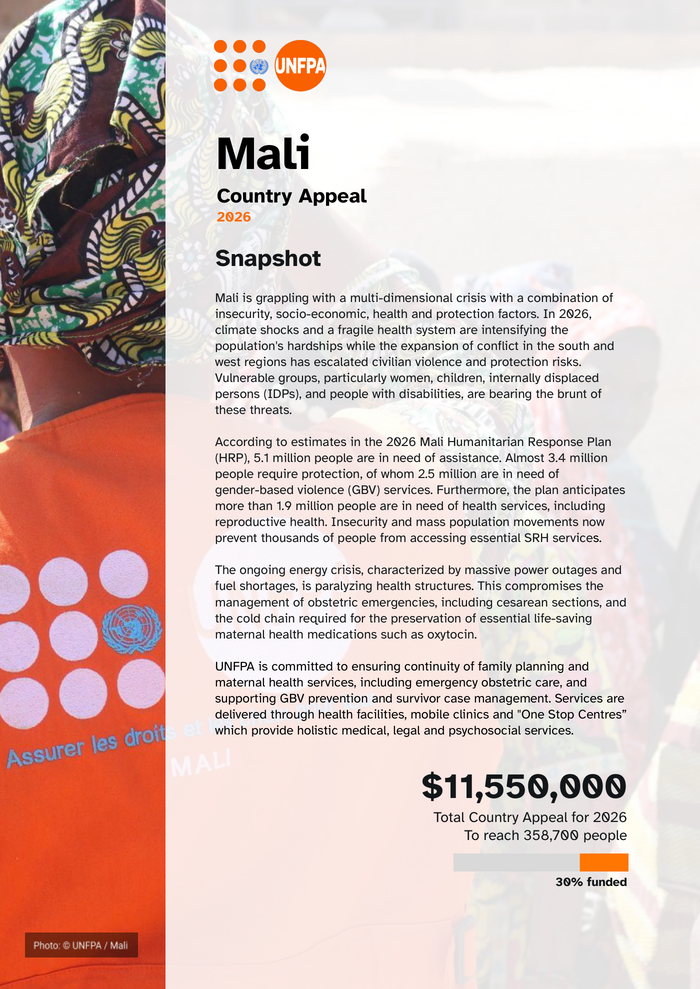
Country: Mali Source: United Nations Population Fund Please refer to the attached file. Mali is facing a complex, multi-dimensional crisis driven by insecurity, socio-economic pressures, and gaps in health and protection services. In 2026, climate shocks and a fragile health system are deepening vulnerabilities, while the spread of conflict into the south and west has intensified violence against civilians and heightened protection risks. The most affected are vulnerable groups—particularly women, children, internally displaced persons, and people with disabilities. An estimated 5. 1 million people require humanitarian assistance. Of these, nearly 3. 4 million need protection services, including 2. 5 million who require gender-based violence (GBV) support. In addition, over 1. 9 million people need access to healthcare, including reproductive health services. Severe funding shortages have led to the cancellation of 12, 500 caesarean section kits—almost 40 per cent of national needs—restricting access to essential emergency obstetric care for pregnant women, whose assisted birth rate remains below 50 per cent. UNFPA is committed to ensuring the continuity of family planning and maternal health services, including emergency obstetric care, and supporting GBV prevention and survivor case management. Services are delivered through health facilities, mobile clinics, and One Stop Centres which provide holistic medical, legal and psychosocial services. In 2026, UNFPA requires a total of US$ 11. 55 million to reach 193, 700 people with SRH services and 165, 000 people with GBV prevention and response programmes in Mali. As of April, the total amount received is US $3. 54 million, leaving 70 per cent of the required funding still unmet.



GrowthPakistan brings you the latest news to keep an eye on Pakistan’s startup ecosystem. Business keeps you growing when you stay aware of your competitors' moves. GrowthPakistan offers Business, Tech, Global Tech, Global, Auto, and Startup News straight from industries all around the globe. This platform will help you identify upcoming opportunities not only in Pakistan but worldwide.
Email : growthpakistan@gmail.com
Whatsapp : +92320-9497079
© growthpakistan