


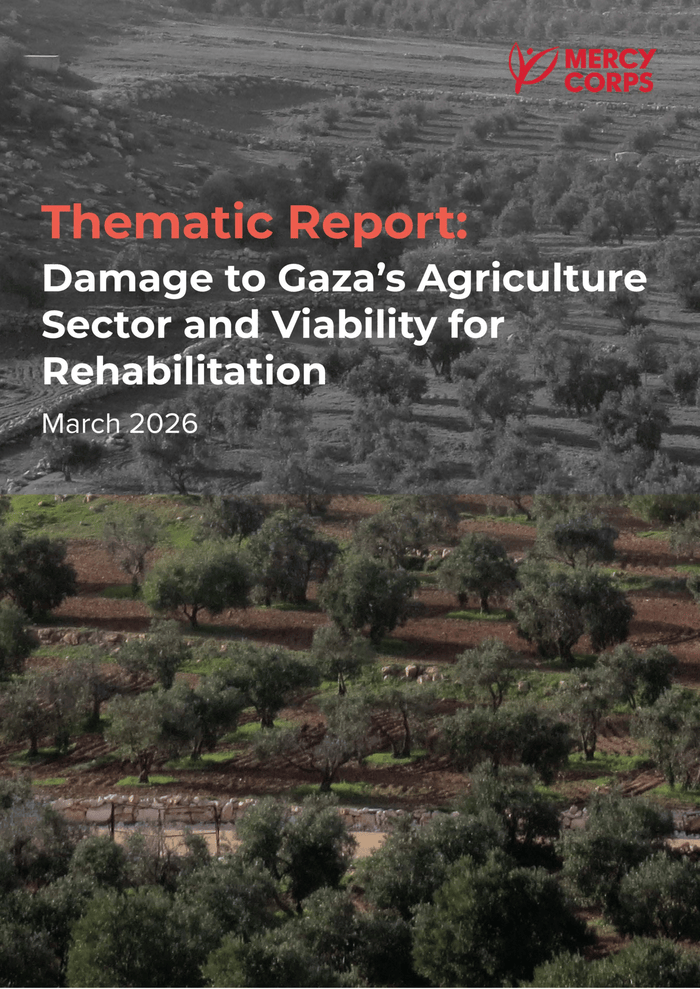
Country: occupied Palestinian territory Source: Mercy Corps Please refer to the attached file. After more than two years of virtually unbroken war, Gaza’s agricultural sector has been reduced to a state of devastation. A combination of years of bombardment, coupled with the protracted imposition of military no-go zones, and the threats of deadly attack have forcibly displaced farmers and growers, destroying much of the land they left behind. By the time of the ceasefire in October 2025, only 4 percent of Gaza’s cropland is both accessible and not damaged, alongside 17 percent of greenhouses, 9 percent of agricultural wells, and 7 percent of agricultural infrastructure. The majority of all cropland (54 percent) remains damaged and while 33 percent of lands are accessible, they are too damaged to be utilized. In addition to loss of access, the physical condition of farmland has deteriorated severely due to the impact of heavy military machinery, repeated shelling, and environmental contamination from munitions, untreated waste, and damage to groundwater. The following report contributes to the understanding of the scale of destruction inflicted upon Gaza’s agricultural sector. It examines the present and projected impacts of the crisis, highlighting how the current damage is likely to reverberate across future recovery efforts. It analyzes the ongoing efforts by Palestinian communities to sustain limited cultivation activities in pursuit of short-term food security amid widespread disruption. Additionally, it provides an analysis of current patterns of land use to offer additional details on potential for agricultural rehabilitation. The report closes with a summary of innovative agricultural activities that can complement conventional reconstruction efforts, centered on strengthening agricultural resilience in Gaza through the integration of smart farming strategies and decentralized water solutions. These approaches offer pathways to improve productivity, optimize resource use, and reduce dependence on increasingly scarce resources such as water, energy and arable land. While not substitutes for the urgent rehabilitation of core agricultural infrastructure these interventions serve as complements to further early recovery planning and the resumption of Gaza’s food production capacity following the war.



GrowthPakistan brings you the latest news to keep an eye on Pakistan’s startup ecosystem. Business keeps you growing when you stay aware of your competitors' moves. GrowthPakistan offers Business, Tech, Global Tech, Global, Auto, and Startup News straight from industries all around the globe. This platform will help you identify upcoming opportunities not only in Pakistan but worldwide.
Email : growthpakistan@gmail.com
Whatsapp : +92320-9497079
© growthpakistan