


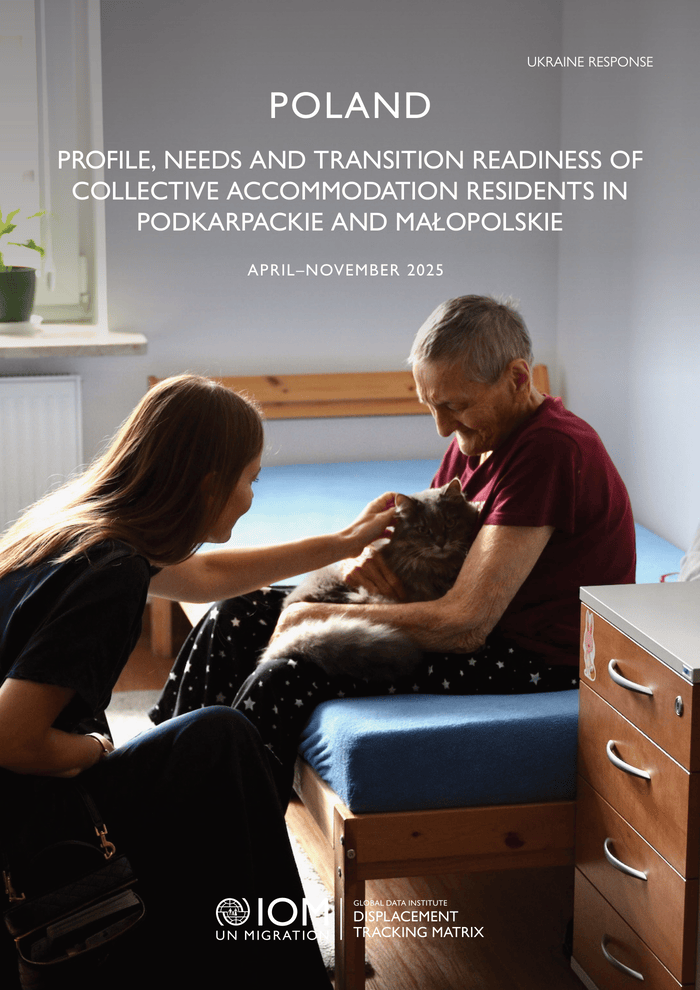
Countries: Poland, Ukraine Source: International Organization for Migration Please refer to the attached file. IOM Poland collected data on the profile of refugees from Ukraine living in collective accommodation facilities. The study sought to provide a thorough overview of residents’ demographic characteristics, identify their most pressing needs—including health care, psychological support, and access to essential services—and assess their readiness to move towards more independent living arrangements. The survey was conducted in two voivodeships in locations supported by IOM Poland in 2025: in Podkarpackie between April and May 2025, and in Małopolskie between October and November 2025. In total, 195 respondents participated in the survey. In Podkarpackie, data collection coincided with a more stable period in shelter regulations, while in Małopolskie, the survey was conducted shortly after changes to the rules on social support provision for Ukrainians under Temporary Protection. As a result, some of the variation between regions may reflect the policy context and evolving legal conditions. Key findings: Among respondents, 54 per cent had at least one older person in their household, and 40 per cent reported holding a disability certificate. The majority of respondents were not employed, with only 22 per cent reporting employment and 16 per cent reporting that they were unemployed and seeking work. Among those employed, roughly 80 per cent needed to supplement their income with additional financial support. Income was the primary barrier to independent living across all age groups, with health cited as a close second—especially among respondents who did not indicate income as a barrier and among middle-aged or older respondents. Housing costs were a greater concern for households with children. Sixty-eight per cent of respondents self-reported that they were not ready to live independently. The proportion was higher among older participants, with 87 per cent of individuals aged 65 or above reporting that they were not ready. Overall, 31 per cent of respondents reported accessing some form of psychological support. Participants who attended support groups reported improved well-being and better stress management. Health issues were a major factor contributing to long-term stays in collective accommodations.



GrowthPakistan brings you the latest news to keep an eye on Pakistan’s startup ecosystem. Business keeps you growing when you stay aware of your competitors' moves. GrowthPakistan offers Business, Tech, Global Tech, Global, Auto, and Startup News straight from industries all around the globe. This platform will help you identify upcoming opportunities not only in Pakistan but worldwide.
Email : growthpakistan@gmail.com
Whatsapp : +92320-9497079
© growthpakistan