

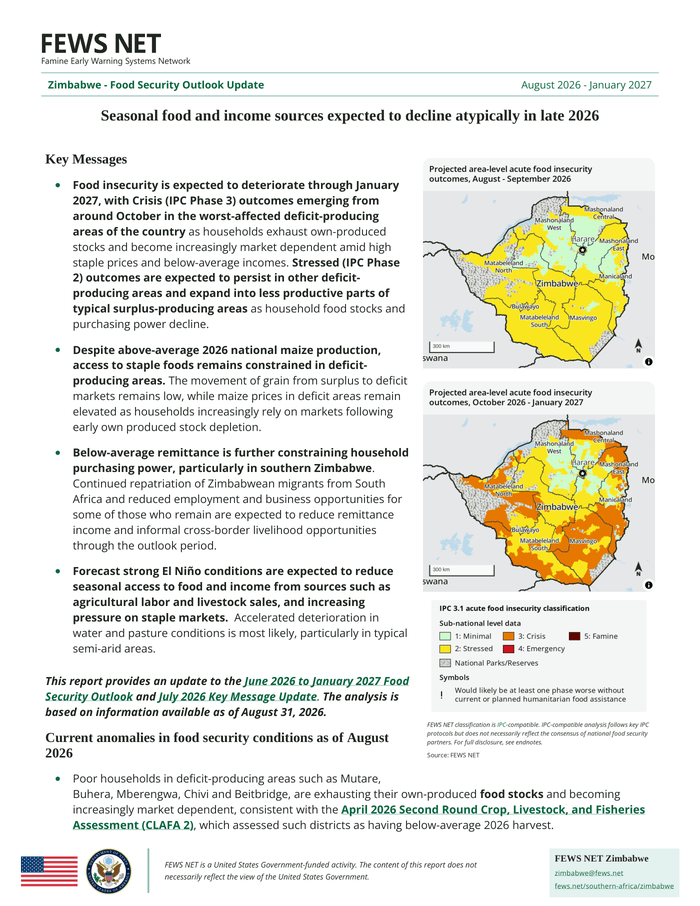
Country: Zimbabwe Source: Famine Early Warning System Network Please refer to the attached file. Key Messages Food insecurity is expected to deteriorate through January 2027, with Crisis (IPC Phase 3) outcomes emerging from around October in the worst-affected deficit-producing areas of the country as households exhaust own-produced stocks and become increasingly market dependent amid high staple prices and below-average incomes. Stressed (IPC Phase 2) outcomes are expected to persist in other deficit-producing areas and expand into less productive parts of typical surplus-producing areas as household food stocks and purchasing power decline. Despite above-average 2026 national maize production, access to staple foods remains constrained in deficit-producing areas. The movement of grain from surplus to deficit markets remains low, while maize prices in deficit areas remain elevated as households increasingly rely on markets following early own produced stock depletion. Below-average remittance is further constraining household purchasing power, particularly in southern Zimbabwe. Continued repatriation of Zimbabwean migrants from South Africa and reduced employment and business opportunities for some of those who remain are expected to reduce remittance income and informal cross-border livelihood opportunities through the outlook period. Forecast strong El Niño conditions are expected to reduce seasonal access to food and income from sources such as agricultural labor and livestock sales, and increasing pressure on staple markets. Accelerated deterioration in water and pasture conditions is most likely, particularly in typical semi-arid areas.
Zimbabwe Food Security Outlook Update: Seasonal food and income sources expected to decline atypically in late 2026, August 2026 – January 2027

RELATED ARTICLES


