


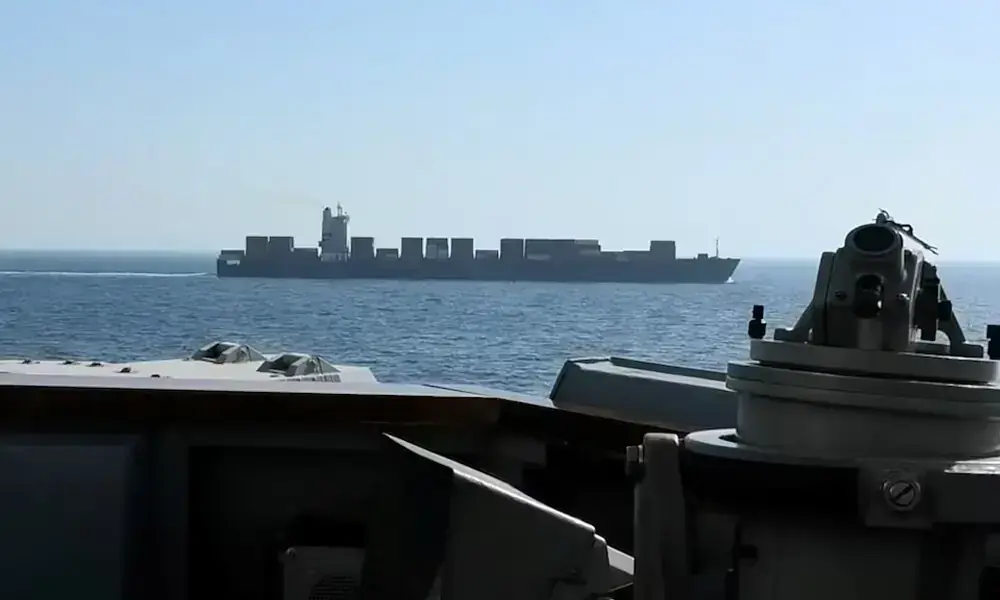
WASHINGTON/CAIRO: The United Arab Emirates said it was under attack from Iranian missiles and drones on Tuesday, even as Washington said a shaky ceasefire was intact despite an exchange of fire the previous day as US forces attempted to force open the Strait of Hormuz. The US military said it had destroyed six Iranian small boats, as well as cruise missiles and drones, after President Donald Trump sent the navy to escort stranded tankers through the strait in a campaign he called “Project Freedom”. US Defence Secretary Pete Hegseth said the operation to protect commercial ships was temporary and the four-week-old truce was not over. “We’re not looking for a fight, ” he told a press conference. “Right now the ceasefire certainly holds, but we’re going to be watching very, very closely. ” Iran fired missiles at US ships on Monday and attacked the UAE, a key regional ally of Washington, with missiles and drones. READ MORE: US ‘suffocating’ Iran with blockade: Treasury chief After issuing a new map of the Strait of Hormuz with an expanded Iranian area of control, Iran’s Revolutionary Guards warned vessels on Tuesday to stick to the corridors it had set or face a “decisive response”. Trump said Iran’s military had been reduced to firing “peashooters” and Tehran wanted peace, despite public sabre-rattling. “They play games, but let me just tell you, they want to make a deal, ” he told reporters in the Oval Office. Shortly after Hegseth spoke on Tuesday, the UAE’s defence ministry said its air defences were again dealing with missile and drone attacks coming from Iran. ‘Right to respond’ The Gulf Arab state’s foreign ministry said in a statement that the attacks were a serious escalation and posed a direct threat to the country’s security, adding that the UAE reserved its “full and legitimate right” to respond. There was no immediate comment on that from Iran, though earlier its parliament speaker, Mohammad Baqer Qalibaf, had said breaches of the ceasefire by the US and its allies endangered shipping through the strait, which carries a large share of the world’s oil and fertilizer supplies. “We know well that the continuation of the current situation is unbearable for the United States, while we have not even begun yet, ” he said in a social media post. The Strait of Hormuz has been virtually shut since the United States and Israel began attacks on Iran on February 28, triggering disruptions that have pushed up commodity prices around the world.



GrowthPakistan brings you the latest news to keep an eye on Pakistan’s startup ecosystem. Business keeps you growing when you stay aware of your competitors' moves. GrowthPakistan offers Business, Tech, Global Tech, Global, Auto, and Startup News straight from industries all around the globe. This platform will help you identify upcoming opportunities not only in Pakistan but worldwide.
Email : growthpakistan@gmail.com
Whatsapp : +92320-9497079
© growthpakistan