

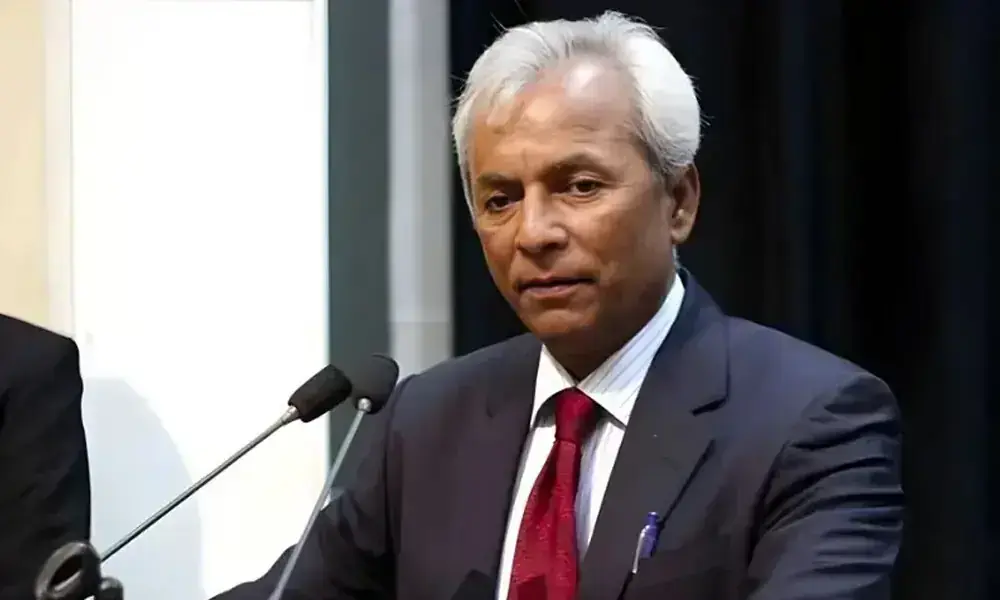
KARACHI: Sindh Governor Syed Muhammad Nihal Hashmi on Saturday called for urgent and collective action to address the growing threat of climate change, warning that environmental protection had become one of the most pressing challenges facing Pakistan and the world. Speaking as chief guest at a World Environment Day ceremony held here at the Governor House, Hashmi said Pakistan was among the countries most vulnerable to climate change despite contributing less than one percent of global greenhouse gas emissions, making environmental protection and climate resilience a national priority. “Environmental protection has become the need of the hour, ” the Governor said, adding that the growing impact of climate change requires collective consciousness, a coordinated strategy and concrete action at all levels. “ He said environmental sustainability could no longer be treated as a secondary issue, pointing to rising temperatures, water scarcity, extreme weather events, environmental degradation and increasing pressure on natural resources as challenges requiring immediate attention. Hashmi urged citizens to adopt environmentally responsible lifestyles and promote the sustainable use of natural resources to help mitigate the effects of climate change and protect future generations. He highlighted the dangers posed by excessive plastic consumption, wastage of water resources and indiscriminate cutting of trees, stressing that environmental degradation threatened not only ecosystems but public health, food security and long-term economic development. “We must jointly struggle against the unnecessary use of plastic, the waste of water resources and the indiscriminate cutting of trees so that future generations can inherit a clean, safe and healthy environment, ” he said. The Governor described afforestation as one of the most effective and practical tools available to combat climate change, absorb carbon emissions, reduce pollution and improve environmental conditions. “Planting a tree is not merely a campaign; it is a guarantee for a safer future for generations to come, ” he said. Hashmi said the Governor House remained committed to supporting initiatives aimed at reducing environmental pollution, expanding green spaces and promoting sustainable development throughout Sindh. He emphasised that meaningful progress would require cooperation among government institutions, civil society organisations, educational institutions, environmental groups and the private sector. “No single institution can address climate challenges alone. Collective responsibility and coordinated action are essential for building a climate-resilient and environmentally sustainable future, ” he said. Pakistan faces a range of climate-related threats, including recurring heatwaves, erratic monsoon rains, devastating floods, prolonged droughts, rapid glacier melt in the northern regions, sea-level rise along the coastline, deforestation, biodiversity loss and worsening air pollution in urban centres. Environmental experts have repeatedly ranked the country among the world’s most climate-vulnerable nations despite its relatively small contribution to global emissions. Pakistan’s environmental challenges have been compounded by rapid urbanisation, population growth, air and water pollution, land degradation and the depletion of natural resources. Climate-related disasters have inflicted significant economic losses in recent years while threatening livelihoods, agriculture and infrastructure across the country. The country has also launched a number of initiatives to address environmental and climate challenges, including large-scale afforestation and mangrove restoration projects, expansion of protected areas, promotion of renewable energy, climate-resilient infrastructure development, disaster risk reduction programmes, improved early warning systems and implementation of national adaptation strategies. As a signatory to the United Nations Framework Convention on Climate Change and the Paris Agreement, Pakistan has pledged to reduce greenhouse gas emissions, expand renewable energy, strengthen climate resilience, protect forests and ecosystems, and enhance adaptation measures under its Nationally Determined Contributions (NDCs). Pakistan continues to advocate internationally for climate justice and greater climate financing for vulnerable developing nations disproportionately affected by global warming. The ceremony was attended by government officials, environmental experts, civil society representatives, students and activists, who discussed the importance of environmental conservation and greater public participation in climate action. At the conclusion of the event, the governor formally launched a tree plantation campaign by planting a sapling on the Governor House premises. He urged citizens of Sindh province to actively participate in afforestation efforts and appealed to every individual to plant at least one tree as a contribution toward a greener and healthier Pakistan. “A green, clean and secure future depends on our actions today, ” Hashmi said. “Protecting the environment is a shared national responsibility that requires the participation of every citizen. ” The event was part of a broader series of awareness activities marking World Environment Day, observed globally to encourage action for environmental protection, climate resilience and sustainable development. Copyright Business Recorder, 2026
Sindh Governor calls for urgent collective action on climate change

RELATED ARTICLES


