


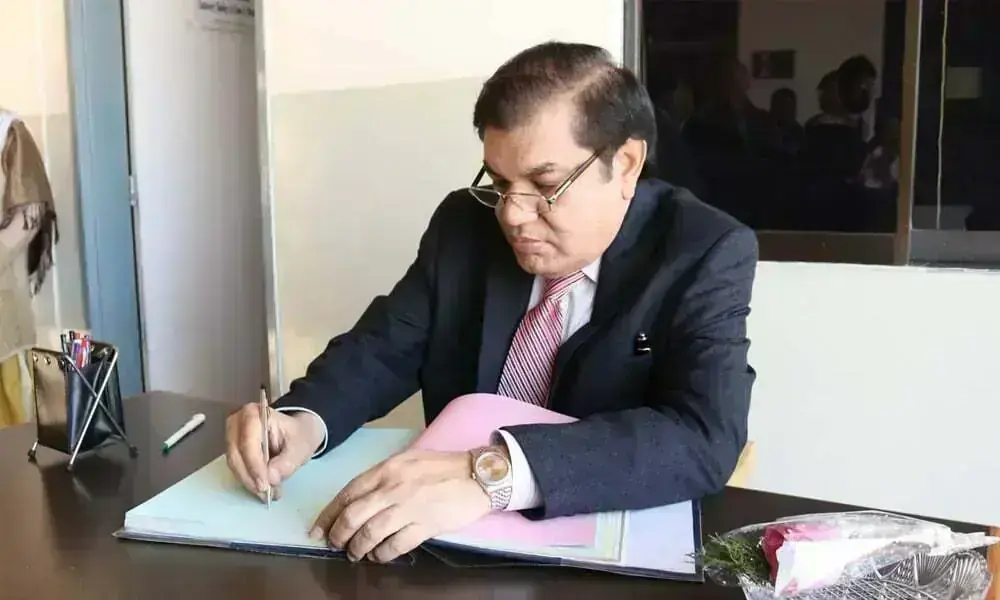
KARACHI: Mian Zahid Hussain, President Pakistan Businessmen and Intellectuals Forum & All Karachi Industrial Alliance, Chairman National Business Group Pakistan and Chairman Policy Advisory Board FPCCI, has strongly commended the Law and Justice Commission of Pakistan for prioritizing Alternative Dispute Resolution (ADR) to tackle the mounting crisis of banking defaults. FPCCI President Atif Ikram Sheikh and Mian Zahid Hussain, while speaking at the high-level meeting of the Law and Justice Commission of Pakistan held in Islamabad on April 30, 2026, stated that the nation’s judicial system is currently groaning under the weight of an unprecedented backlog, with official statistics indicating that more than 2. 37 million cases are pending across the superior and district judiciaries. Within this overwhelming bottleneck, banking tribunals and civil courts are inundated with around 30, 000 recovery suits and execution petitions related to non-performing loans. These financial disputes have effectively paralyzed hundreds of billions of rupees, stifling corporate liquidity and restricting the economic growth of the country. The vital session was chaired by the Chief Justice of Pakistan and was attended by key stakeholders, including Federal Finance Minister Muhammad Aurangzeb, Attorney General Pakistan Mansoor Usman Awan, FBR Chairman Rashid Mahmood Langrial, President of the Federation of Pakistan Chambers of Commerce and Industry (FPCCI) Atif Ikram Sheikh, Chairman of the FPCCI Policy Advisory Board Mian Zahid Hussain, and the President of the Pakistan Banks Association. Mian Zahid Hussain said that during the extensive deliberations, it was observed that traditional litigation in banking defaults often stretches over multiple years, eroding the value of the disputed assets and inflating legal expenditures for both the creditors and the borrowers. He highlighted that the current ratio of non-performing loans remains a significant hurdle to private sector credit expansion, particularly for Small and Medium Enterprises. When commercial banks are forced to provision heavily against toxic loans trapped in prolonged judicial stays, their capacity to lend to productive sectors is severely curtailed. Implementing robust Alternative Dispute Resolution mechanisms, such as commercial mediation and out-of-court arbitration, offers a pragmatic and rapid mechanism to clear this backlog and recycle capital back into the formal economy. Mian Zahid Hussain assured that the business community, represented by the FPCCI, fully supports the Chief Justice’s visionary approach to integrating ADR into the financial sector’s regulatory framework. At the meeting, FPCCI President Atif Ikram Sheikh presented a compelling case for the institutionalization of mediation centers dedicated exclusively to corporate and banking disputes. Such a move would not only alleviate the crushing burden on judges but also save genuine businesses from the reputational destruction associated with public litigation. Out-of-court settlements allow for flexible restructuring and debt rescheduling, preserving jobs and sustaining industrial operations that would otherwise face liquidation due to the government’s policy shifts and temporary cash flow constraints. In his concluding remarks, Mian Zahid Hussain urged the State Bank of Pakistan and the Ministry of Finance to act swiftly on the policy recommendations. He stressed that adopting a mandatory ADR protocol before the formal initiation of banking recovery suits is no longer a choice but a dire economic necessity. Fostering a culture of commercial conciliation will drastically improve Pakistan’s ease of doing business metrics, attract foreign direct investment, and ensure that the banking sector remains a catalyst for national prosperity rather than a graveyard for distressed capital. Copyright Business Recorder, 2026



GrowthPakistan brings you the latest news to keep an eye on Pakistan’s startup ecosystem. Business keeps you growing when you stay aware of your competitors' moves. GrowthPakistan offers Business, Tech, Global Tech, Global, Auto, and Startup News straight from industries all around the globe. This platform will help you identify upcoming opportunities not only in Pakistan but worldwide.
Email : growthpakistan@gmail.com
Whatsapp : +92320-9497079
© growthpakistan