


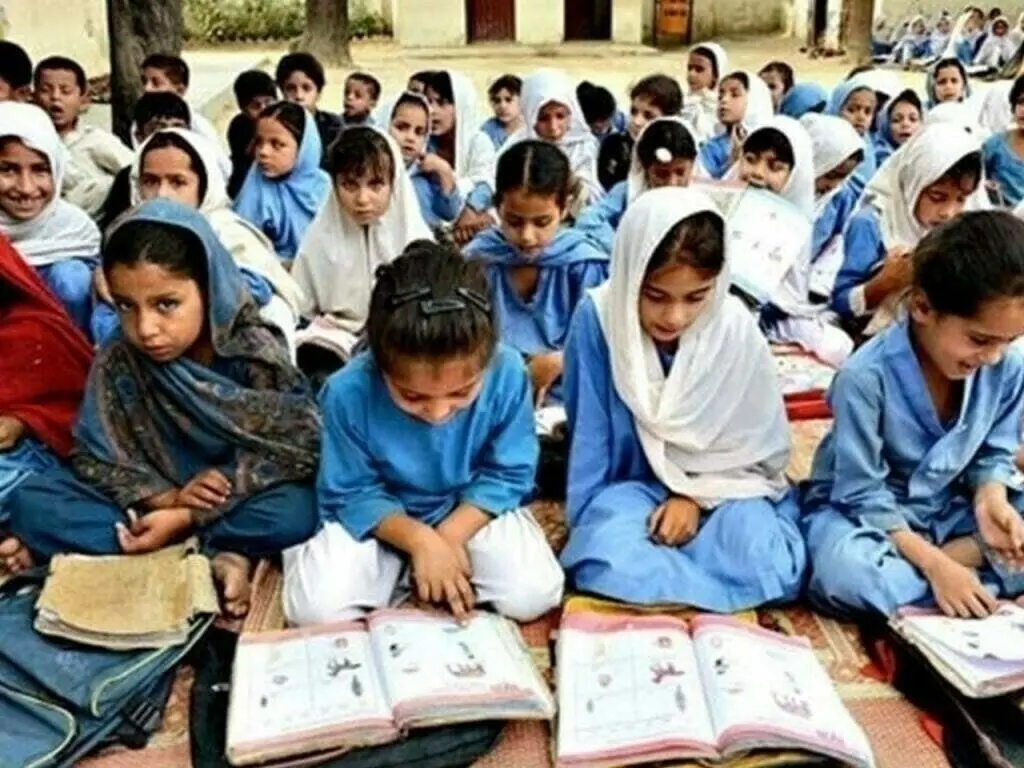
EDITORIAL: It turns out that a legal requirement that 10 per cent of seats in private schools be reserved for free education has, in practice, turned into a multi-billion-rupee gap between promise and delivery. The Islamabad High Court was recently informed that private educational institutions in the federal capital are collectively withholding Rs5-6 billion annually by failing to implement this mandatory scholarship quota. The numbers are not abstract. Out of roughly 389, 000 students enrolled in 1, 571 institutions, at least 38, 900 should be receiving free education under the law. Most are not. The implications extend far beyond regulatory non-compliance. This is a structural failure in enforcing a basic right guaranteed under the Right to Free and Compulsory Education Act, 2012. The law is clear, the arithmetic straightforward and the intended beneficiaries well defined. Yet enforcement remains partial, delayed and uncertain. What should have functioned as a built-in equaliser within an increasingly privatised education system has instead become a source of implicit revenue for institutions that choose to ignore their obligations. Clearly, regulatory oversight has not kept pace with the scale of the problem. The Private Educational Institutions Regulatory Authority has acknowledged that data collection and verification are still ongoing, despite the legal framework having been in place for years. Committees have been formed and notices issued, but these steps fall short of ensuring actual compliance. A system that remains stuck at the stage of compiling lists cannot credibly claim to be enforcing the law. The judicial dimension adds another layer of concern. The case that brought these discrepancies into the open was withdrawn just as the magnitude of the financial shortfall entered the public record. The timing raises uncomfortable questions. Whether the withdrawal reflects pressure, settlement or procedural manoeuvring, the effect is the same: the absence of a definitive ruling, no direction for recovery of funds and no precedent to compel future compliance. In practical terms, the status quo remains intact. This episode also exposes a deeper policy contradiction. The government’s “No Child Left Behind” initiative aims to bring 25, 000 out-of-school children into the system. Yet the existing legal requirement for free seats in private schools could, if enforced, accommodate a significantly larger number without additional fiscal outlay. Instead of unlocking this capacity, the state is attempting to build parallel solutions while leaving a far more effective mechanism underutilised. The broader consequences for the education system are difficult to ignore. Private institutions benefit from operating within a regulated framework that grants them legitimacy, access to land and, in some cases, indirect support. In return, they are expected to contribute to social inclusion through the scholarship quota. When that obligation is treated as optional, the system shifts further towards exclusion, reinforcing a divide between those who can pay and those who cannot. This matters even more in the context of Pakistan’s demographic profile. With one of the largest youth populations in the world, the country’s economic future will depend heavily on its ability to educate and equip this cohort. A demographic dividend is not automatic. It requires sustained investment in human capital, particularly at the foundational level. When tens of thousands of legally mandated school seats remain out of reach, the risk of that dividend turning into a demographic strain becomes more pronounced. The issue, therefore, is not confined to private schools or regulatory bodies. It speaks to the credibility of policy itself. Laws that are not enforced invite disregard. Obligations that are not monitored create incentives for evasion. Over time, this erodes trust in institutions and weakens the very framework intended to expand access and opportunity. Correcting this course does not require new legislation. It requires implementation. A transparent audit of all private institutions, verification of scholarship allocations and clear penalties for non-compliance would establish that the law carries consequences. Just as importantly, the process must remain insulated from abrupt reversals that undermine accountability. The numbers presented before the court have already made the scale of the issue clear. What remains uncertain is whether the state will act on them. Copyright Business Recorder, 2026



GrowthPakistan brings you the latest news to keep an eye on Pakistan’s startup ecosystem. Business keeps you growing when you stay aware of your competitors' moves. GrowthPakistan offers Business, Tech, Global Tech, Global, Auto, and Startup News straight from industries all around the globe. This platform will help you identify upcoming opportunities not only in Pakistan but worldwide.
Email : growthpakistan@gmail.com
Whatsapp : +92320-9497079
© growthpakistan