


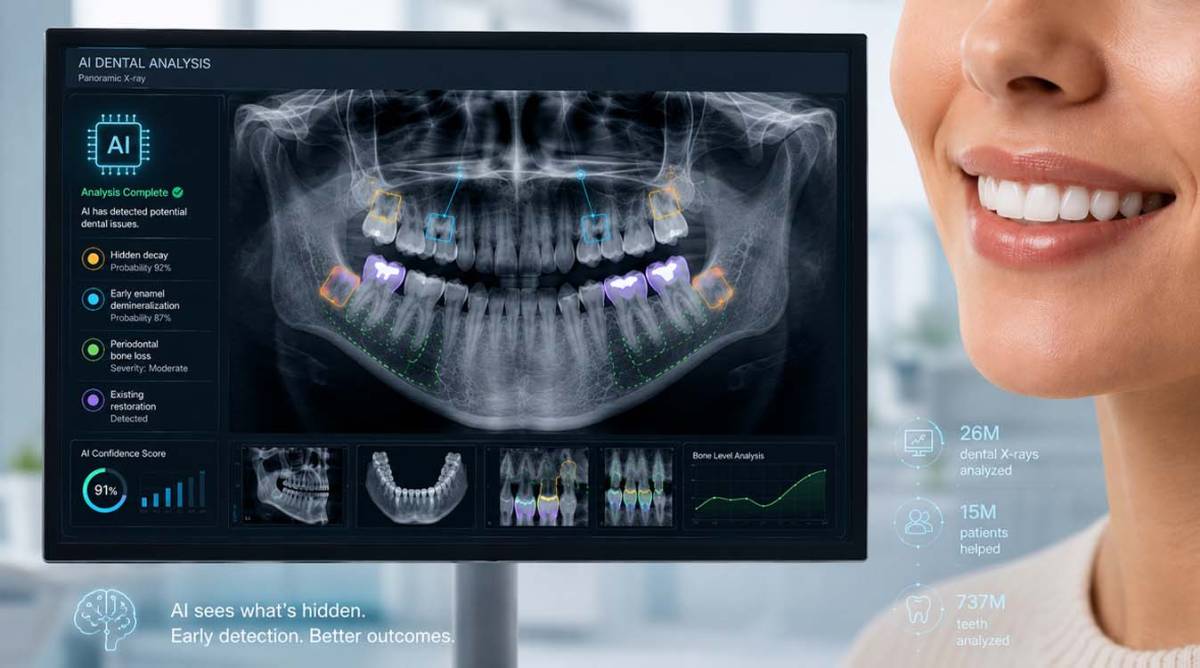
What if your teeth looked healthy, felt perfectly normal—and were quietly developing disease that could eventually require fillings, root canal treatment or even extraction? That is the question raised by one of the largest oral health analyses ever conducted. The newly published Pearl Oral Health Index has analysed more than 26 million dental X-rays, 15 million adult patients and an unprecedented 737 million individual teeth, creating what its developers describe as the world’s largest radiographic assessment of oral health ever performed. Using an FDA-cleared artificial intelligence platform to interpret dental radiographs, the project offers an unusually detailed picture of how oral disease develops, how it is treated and how access to dental care influences long-term outcomes. Why this study matters Unlike traditional oral health surveys that rely primarily on clinical examinations of relatively small groups of participants, the Pearl Oral Health Index analysed millions of routine dental radiographs collected between April 2024 and March 2026 from adults across all 50 US states, Washington, DC, and the United Kingdom. Dental X-rays often reveal disease long before symptoms develop. Early enamel demineralisation, hidden cavities between teeth, periodontal bone loss and other conditions may remain completely painless for months—or even years—before patients realise something is wrong. The report therefore provides insights into the “silent phase” of oral disease, when preventive treatment is often still possible. AI suggests hidden decay may be far more common One of the report’s most striking observations concerns untreated tooth decay. According to Pearl’s analysis, radiographic evidence of untreated decay appears substantially more common than estimates generated through conventional population surveys. The company reports an average of 6. 07 decayed teeth per patient within its radiographic dataset, compared with substantially lower estimates reported through traditional examination-based surveillance programmes. Pearl argues that radiographic AI can identify early disease that may not yet be visible during routine visual examination alone. Because the methodologies differ, experts caution that direct comparisons should be interpreted carefully. Nevertheless, the findings reinforce a message widely accepted within dentistry: many dental diseases remain undetected until radiographic examination is performed. Pain is often a late warning sign Perhaps the most important message emerging from the Index is that absence of pain should never be mistaken for absence of disease. Tooth decay frequently begins beneath the enamel or between adjacent teeth where patients cannot see it. Gum disease may also progress silently while slowly destroying the bone supporting teeth. By the time pain appears, treatment may already be considerably more complex and expensive. The findings strengthen long-standing recommendations from dental professionals that regular examinations and appropriate radiographic assessment remain essential—even for people who believe their teeth feel completely healthy. Young adults emerge as an unexpected high-risk group Contrary to what many people might assume, the study indicates that younger adults may be accumulating substantial amounts of untreated dental disease. Among individuals aged 18 to 24 years, approximately 52% of identified disease remained untreated—the highest proportion among all age groups analysed. Researchers suggest several factors may contribute to this trend, including interrupted dental attendance after leaving home, financial pressures, reduced continuity of care and delayed routine check-ups during early adulthood. Older adults generally showed a lower proportion of untreated disease, likely reflecting previous restorative treatment accumulated over many years rather than healthier teeth. The first permanent molars deserve special attention The report also highlights the importance of first permanent molars. Although these teeth account for only around 14% of the permanent dentition, they represented approximately 24% of detected carious lesions and nearly one-third of all restorations in the analysed dataset. Evidence of disease frequently appeared in these teeth during the late teenage years, reinforcing their importance for preventive care through fluoride use, dietary counselling and regular dental monitoring. Dental care systems shape treatment decisions The Index also compared treatment patterns between the United States and the United Kingdom. Within the analysed dataset, UK patients averaged 6. 36 missing teeth, compared with 2. 16 among US patients. Similarly, approximately 31% of affected teeth in the UK cohort had been extracted compared with 14. 5% in the US. The report emphasises that these differences should not automatically be interpreted as reflecting better or worse dentistry. Instead, they likely reflect broader differences in healthcare financing, treatment accessibility, reimbursement systems, patient preferences and clinical decision-making within different healthcare models. Geography also influences oral health Another notable finding concerns access to dental care. Patients living in American ZIP codes without resident dentists experienced a 40% higher rate of tooth extraction than patients living in areas with greater dentist availability. The report suggests that delayed access to care often means teeth become non-restorable before patients eventually seek treatment, increasing the likelihood of extraction rather than preservation. Although these data relate specifically to the United States, public health experts have long recognised that geographical access remains a major determinant of oral health worldwide. AI is changing dentistry—but dentists remain central The report also illustrates how artificial intelligence is beginning to reshape dental diagnostics. Pearl’s AI platform analyses radiographs by highlighting areas that may represent dental caries, periodontal bone loss, calculus deposits and other abnormalities, providing clinicians with additional decision-support during diagnosis. The company stresses that the technology is designed to assist—not replace—dentists, supporting more consistent interpretation of radiographs and helping patients better understand their oral health findings. What this means beyond the United States Although the Pearl Oral Health Index is based primarily on data from the United States with comparative UK data, its broader message extends well beyond either country. The World Health Organization estimates that oral diseases affect nearly 3. 5 billion people worldwide, making them among the most common non-communicable diseases globally. The new analysis reinforces an increasingly important lesson for patients everywhere: routine dental visits should not be driven solely by pain. By the time symptoms appear, opportunities for simple preventive care may already have been lost. As artificial intelligence becomes more widely integrated into clinical dentistry, large-scale radiographic analyses such as this may help health systems identify disease earlier, improve preventive strategies and better understand the true burden of oral disease across populations. Stay informed, stay alert! pk/06-Jul-2026/ai-analysis-737-million-teeth-hidden-oral-disease-pearl-oral-health-index” target=”_blank” rel=”nofollow noopener noreferrer”>Read full story on Dental News



GrowthPakistan brings you the latest news to keep an eye on Pakistan’s startup ecosystem. Business keeps you growing when you stay aware of your competitors' moves. GrowthPakistan offers Business, Tech, Global Tech, Global, Auto, and Startup News straight from industries all around the globe. This platform will help you identify upcoming opportunities not only in Pakistan but worldwide.
Email : growthpakistan@gmail.com
Whatsapp : +92320-9497079
© growthpakistan