


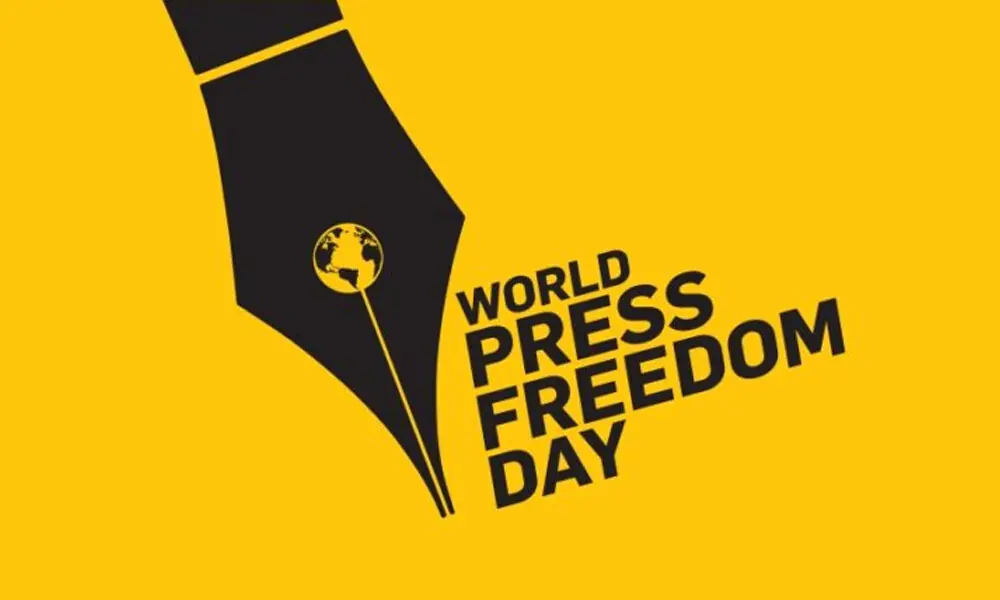
KARACHI: Journalists, political leaders, labour representatives and civil society activists on Sunday marked ‘World Press Freedom Day’ with a strong call for an end to censorship, repeal of restrictive laws and urgent measures to protect media workers, as a seminar jointly organised by the Karachi Union of Journalists (KUJ) and the Human Rights Commission of Pakistan (HRCP) in Karachi Press Club. Speakers included PPP MNA Sharmila Farooqui, Dr Tauseef Ahmed, KUJ President Tahir Hassan Khan, Secretary of KUJ Liaqat Kashmiri, senior journalists Mazhar Abbas and Lala Asad Pathan, senior trade union leader Habibuddin Junaidi, Nasir Mansoor of the National Trade Union Federation, and women labour leader Zehra Khan. Participants noted that this year’s World Press Freedom Day is being observed in Pakistan under “extremely inimical conditions, ” not only for journalists but also for citizens seeking to exercise their constitutional rights to freedom of expression and access to information. The gathering expressed grave concern over increasing restrictions, intimidation tactics and economic pressures facing the media industry. The resolution adopted at the seminar demanded that the government and its institutions to immediately halt censorship and harassment of journalists. It stated that fears long expressed by media professionals following the introduction of the Pakistan Electronic Crimes Act (PECA) have materialised, with the law allegedly being misused to intimidate journalists and suppress independent reporting. Calling for the repeal of PECA, the participants stressed that such legislation undermines democratic norms and discourages accountability. They argued that a democratic system must be rooted in participation, transparency and free debate rather than coercion and suppression. Speakers paid tribute to the longstanding struggle of journalists’ bodies, including the Pakistan Federal Union of Journalists and KUJ, for press freedom. They highlighted the sacrifices made by media workers in defending the public’s right to information, noting that these efforts continue despite mounting challenges. The resolution also urged political parties and lawmakers to take up the issue during upcoming budget sessions, calling for immediate policy interventions to safeguard journalists’ livelihoods. Participants further called for the development of a similar regulatory framework to ensure minimum wages and a structured service system for employees in electronic and digital media sectors, which currently lack uniform protections. Concerns were also raised about internal practices within media organisations. The resolution highlighted the need to prevent diversion of government advertisement revenues away from workers’ welfare and criticised disparities in salary structures, where a few officials receive disproportionately high compensation while many employees face financial hardship. The resolution also called for tax exemptions on media-related equipment and immediate clearance of outstanding payments owed to media houses, with a condition that these funds be used to settle journalists’ salaries. Additionally, it proposed the introduction of soft loan schemes to help media workers purchase or build homes, addressing long-standing financial vulnerabilities within the profession. The seminar ended with a renewed pledge by participants to continue advocating for an independent and secure media environment in Pakistan, despite the challenges. Copyright Business Recorder, 2026



GrowthPakistan brings you the latest news to keep an eye on Pakistan’s startup ecosystem. Business keeps you growing when you stay aware of your competitors' moves. GrowthPakistan offers Business, Tech, Global Tech, Global, Auto, and Startup News straight from industries all around the globe. This platform will help you identify upcoming opportunities not only in Pakistan but worldwide.
Email : growthpakistan@gmail.com
Whatsapp : +92320-9497079
© growthpakistan