

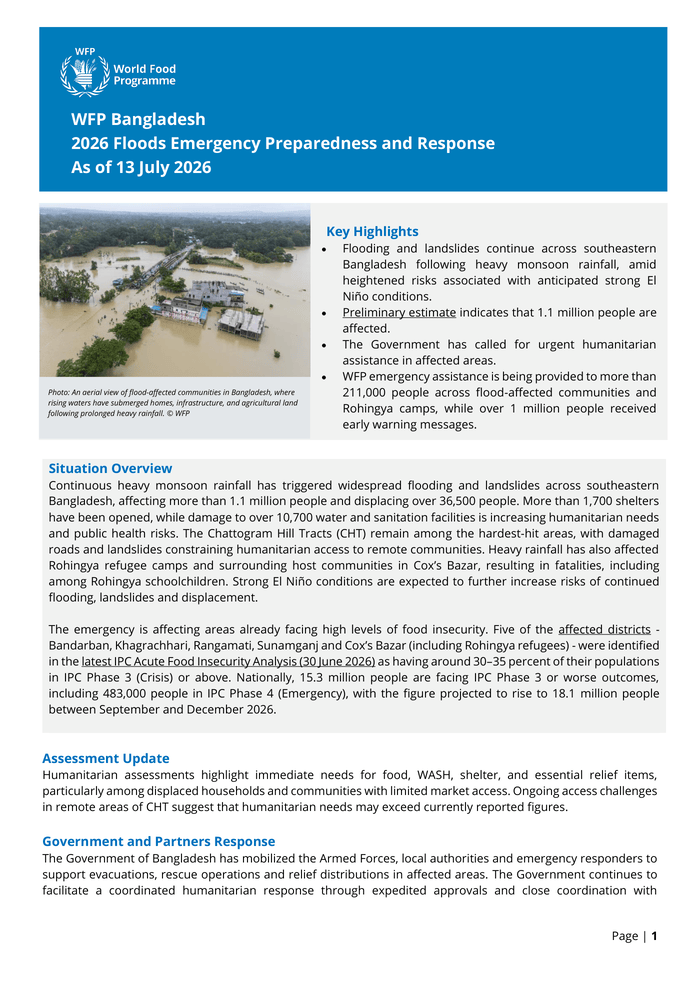
Countries: Bangladesh, Myanmar Source: World Food Programme Please refer to the attached file. Key Highlights • Flooding and landslides continue across southeastern Bangladesh following heavy monsoon rainfall, amid heightened risks associated with anticipated strong El Niño conditions. • Preliminary estimate indicates that 1. 1 million people are affected. • The Government has called for urgent humanitarian assistance in affected areas. • WFP emergency assistance is being provided to more than 211, 000 people across flood-affected communities and Rohingya camps, while over 1 million people received early warning messages. Situation Overview Continuous heavy monsoon rainfall has triggered widespread flooding and landslides across southeastern Bangladesh, affecting more than 1. 1 million people and displacing over 36, 500 people. More than 1, 700 shelters have been opened, while damage to over 10, 700 water and sanitation facilities is increasing humanitarian needs and public health risks. The Chattogram Hill Tracts (CHT) remain among the hardest-hit areas, with damaged roads and landslides constraining humanitarian access to remote communities. Heavy rainfall has also affected Rohingya refugee camps and surrounding host communities in Cox’s Bazar, resulting in fatalities, including among Rohingya schoolchildren. Strong El Niño conditions are expected to further increase risks of continued flooding, landslides and displacement. The emergency is affecting areas already facing high levels of food insecurity. Five of the affected districts – Bandarban, Khagrachhari, Rangamati, Sunamganj and Cox’s Bazar (including Rohingya refugees) – were identified in the latest IPC Acute Food Insecurity Analysis (30 June 2026) as having around 30–35 percent of their populations in IPC Phase 3 (Crisis) or above. Nationally, 15. 3 million people are facing IPC Phase 3 or worse outcomes, including 483, 000 people in IPC Phase 4 (Emergency), with the figure projected to rise to 18. 1 million people between September and December 2026.
WFP Bangladesh: 2026 Floods Emergency Preparedness and Response (As of 13 July 2026)

RELATED ARTICLES


