


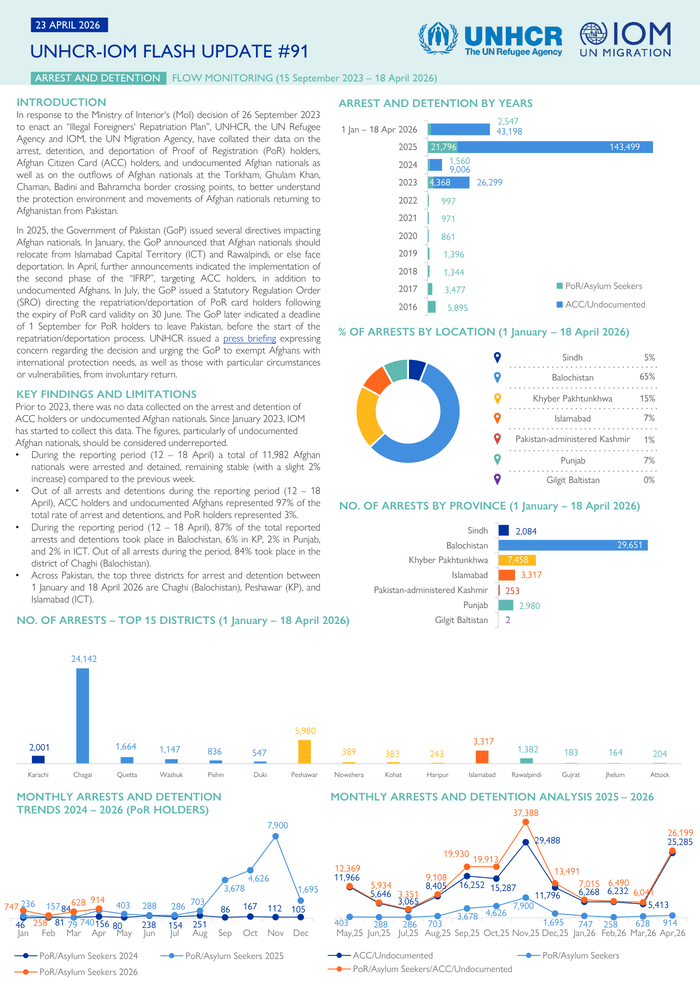
Countries: Pakistan, Afghanistan Sources: International Organization for Migration, UN High Commissioner for Refugees Please refer to the attached file. INTRODUCTION In response to the Ministry of Interior’s (MoI) decision of 26 September 2023 to enact an “Illegal Foreigners’ Repatriation Plan”, UNHCR, the UN Refugee Agency and IOM, the UN Migration Agency, have collated their data on the arrest, detention, and deportation of Proof of Registration (PoR) holders, Afghan Citizen Card (ACC) holders, and undocumented Afghan nationals as well as on the outflows of Afghan nationals at the Torkham, Ghulam Khan, Chaman, Badini and Bahramcha border crossing points, to better understand the protection environment and movements of Afghan nationals returning to Afghanistan from Pakistan. In 2025, the Government of Pakistan (GoP) issued several directives impacting Afghan nationals. In January, the GoP announced that Afghan nationals should relocate from Islamabad Capital Territory (ICT) and Rawalpindi, or else face deportation. In April, further announcements indicated the implementation of the second phase of the “IFRP”, targeting ACC holders, in addition to undocumented Afghans. In July, the GoP issued a Statutory Regulation Order (SRO) directing the repatriation/deportation of PoR card holders following the expiry of PoR card validity on 30 June. The GoP later indicated a deadline of 1 September for PoR holders to leave Pakistan, before the start of the repatriation/deportation process. UNHCR issued a press briefing expressing concern regarding the decision and urging the GoP to exempt Afghans with international protection needs, as well as those with particular circumstances or vulnerabilities, from involuntary return.



GrowthPakistan brings you the latest news to keep an eye on Pakistan’s startup ecosystem. Business keeps you growing when you stay aware of your competitors' moves. GrowthPakistan offers Business, Tech, Global Tech, Global, Auto, and Startup News straight from industries all around the globe. This platform will help you identify upcoming opportunities not only in Pakistan but worldwide.
Email : growthpakistan@gmail.com
Whatsapp : +92320-9497079
© growthpakistan