

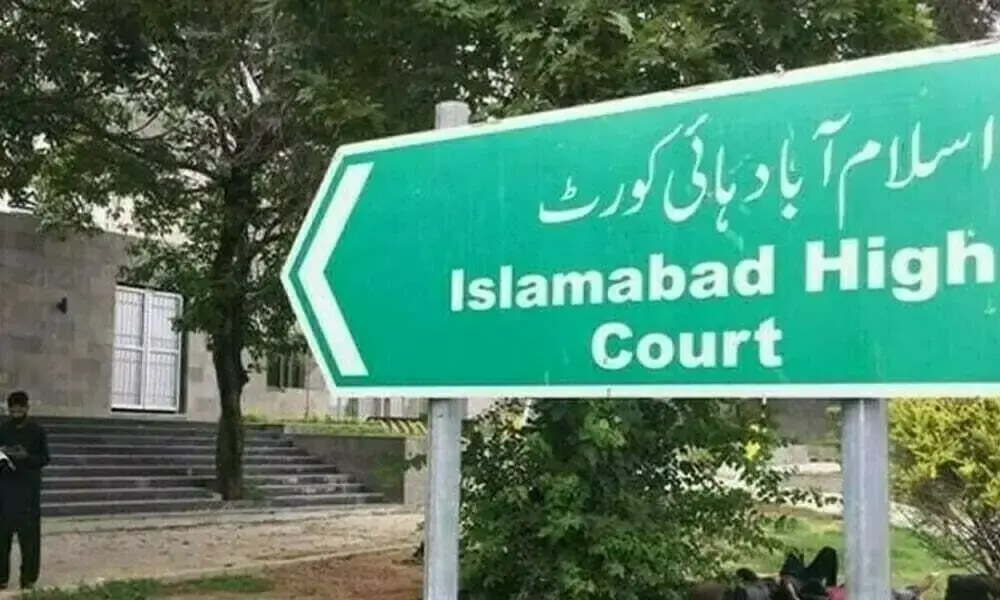
ISLAMABAD: The Islamabad High Court (IHC) issued notices to the Federal Tax Ombudsman (FTO) and the President’s Office regarding the initiation of suo moto proceedings under the FTO Ordinance, 2000. A single bench of Justice Khadim Hussain Soomro heard the Revenue Division and the Federal Board of Revenue (FBR) petitions against the series of orders passed by the President of Pakistan on December 17 and 22, 2025, as well as implementation directives issued during 2025–2026 by the Federal Tax Ombudsman arising out of 43 suo motu proceedings initiated in 2022–2023. Hafiz Ahsaan Ahmad Khokhar, representing the Revenue Division and FBR, challenged the jurisdiction exercised by the FTO and the legality of the impugned presidential orders. He argued that the Federal Tax Ombudsman (FTO), while purporting to act under Section 9(1) of the Federal Tax Ombudsman Ordinance, 2000, initiated a broad range of suo motu proceedings during 2022–2023 which, in their true legal character, did not fall within the statutory definition of “maladministration” under Section 2(3) of the Ordinance. Khokhar contended that instead of addressing administrative lapses or abuse of authority, the proceedings ventured into core fiscal and adjudicatory domains, including tax assessments, determination of liability, appellate functions, audit mechanisms, withholding tax compliance, digital tax systems, and internal regulatory processes of the FBR. He stated that such matters are expressly excluded from the jurisdiction of the FTO under Section 9(2) of the Ordinance, which bars intervention in matters relating to assessment, adjudication, and determination of tax liability where statutory remedies such as appeal, review, or revision are available under the Income Tax Ordinance, 2001. The counsel further contended that the assumption of jurisdiction by the FTO in such matters was coram non judice, ultra vires, and without lawful authority, rendering the entire proceedings void ab initio. The petitions also challenged the consolidated presidential orders dated December 17 and 21, 2025, passed under Section 32 of the Ordinance. Counsel argued that although the President acknowledged the existence of a jurisdictional bar under Section 9 (2), the simultaneous observation that the ouster clause was “not absolute” was legally inconsistent, self-contradictory, and contrary to the plain language of the statute. It was submitted that where Parliament has expressly excluded jurisdiction, no executive authority can dilute, reinterpret, or partially negate such exclusion. The petitioners’ lawyer further argued that both the FTO’s recommendations and the presidential orders suffered from fundamental legal infirmities, including misreading, non-reading, and misconstruction of Sections 2 (3), 9 (1), and 9 (2) of the Ordinance. Counsel maintained that jurisdictional defects strike at the root of the matter and cannot be cured through endorsement, ratification, or subsequent implementation actions. He also submitted that the proceedings did not involve any actionable “maladministration” as contemplated under Section 2 (3), which requires demonstrable elements such as negligence, abuse of authority, undue delay, or failure to act by public officials. Instead, the impugned actions related to policy-oriented fiscal matters and statutory tax processes are governed by a complete adjudicatory framework under tax laws, falling outside the Ombudsman’s lawful remit. The petitioners also asserted that the impugned proceedings undermined the independence, finality, and statutory sanctity of tax adjudication mechanisms, including decisions rendered by Commissioners Inland Revenue (Appeals) and other competent forums. By creating what was described as a parallel oversight structure, the FTO had allegedly exceeded its statutory mandate and encroached upon areas reserved exclusively for tax authorities under the law. Copyright Business Recorder, 2026
Suo moto proceedings under FTO Ordinance: IHC issues notices to FTO, President’s Office

RELATED ARTICLES


