


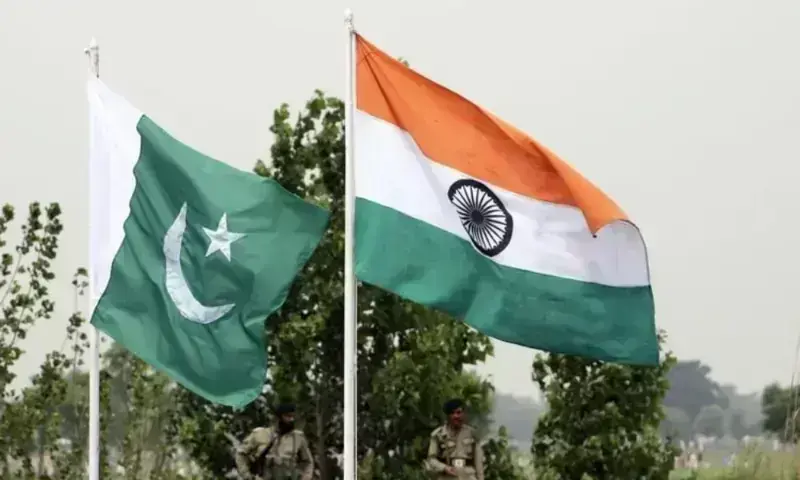
ISLAMABAD: Over one hundred civil society representatives from Pakistan and India have jointly appealed to the two prime ministers to take “meaningful and sustained” steps to restore peace, dialogue and cooperation in South Asia. The appeal was coordinated by O. P. Shah, who heads the New Delhi-based think tank, Centre for Peace and Progress. The signatories said unrelenting hostility was depriving millions of young people of “opportunities, prosperity and a secure future”. “India and Pakistan combined are home to nearly one-fifth of humanity. The people of both countries deserve a future defined by peace, development, connectivity and cooperation, rather than perpetual mistrust and confrontation, ” they said in their appeals to Prime Ministers Shehbaz Sharif and Narendra Modi on Tuesday. In joint appeal, over 100 civil society representatives say Pakistan-India acrimony is robbing both nations of ‘a secure future’ The Pakistani signatories include former foreign minister Khurshid Mahmud Kasuri, former ambassador to New Delhi Ashraf Jehangir Qazi, academic Pervez Hoodbhoy, former senator Farhatullah Babar, and civil society figures Beena Sarwar, Salima Hashmi, Mohammad Mehdi and educationist A. H. Nayyar, among others. Among the signatories on the Indian side are Dr Farooq Abdullah, Mirwaiz Umar Farooq, Mehbooba Mufti, Mani Shankar Aiyar, Prof Manoj Jha, former RAW chief A. S. Dulat, Jawhar Sircar, Prof Saifuddin Soz and Prof Apoorvanand, among others. The 116 signatories urged both governments to consider confidence-building measures across diplomatic, economic, cultural and people-to-people tracks. They called for restoring full diplomatic relations, reinstating the High Commissioners in Islamabad and New Delhi, and resumption of visa services. The civil society representatives suggested the two governments reopen bilateral talks on all outstanding issues, including the Jammu and Kashmir dispute, and consider measures for demilitarisation and de-escalation. The framework for dialogue agreed upon between 2004 and 2007 could serve as a starting point, they said. Trade and travel The signatories sought the reopening of the Wagah-Attari land border, resumption of the Srinagar-Muzaffarabad and Lahore-Delhi bus services, and restarting of the Samjhauta Express and Thar Express trains. They said people from the two countries be also allowed to travel on the Kargil–Skardu route. The appeal sought reopening of the two countries’ airspace to commercial airlines. It urged reopening of commercial channels, reinstating the Most Favoured Nation status and promoting regional economic integration. The signatories observed that since people-to-people contacts were essential for defusing tensions and removing misgivings, travel restrictions should be eased. The two governments should consider promoting pilgrimage tourism and visits to heritage sites, the appeal said, suggesting reopening of the Kartarpur Sahib corridor and Neelum Valley’s Sharada Peeth as the first steps. The signatories further called for lifting restrictions on media outlets and digital platforms, allowing journalists to travel and work freely, and promoting exchanges of delegations to counter disinformation. “We respectfully request you to listen to the aspirations of common people and choose engagement over isolation, dialogue over hostility and cooperation over confrontation, ” the appeal concluded. Published in Dawn, July 1st, 2026



GrowthPakistan brings you the latest news to keep an eye on Pakistan’s startup ecosystem. Business keeps you growing when you stay aware of your competitors' moves. GrowthPakistan offers Business, Tech, Global Tech, Global, Auto, and Startup News straight from industries all around the globe. This platform will help you identify upcoming opportunities not only in Pakistan but worldwide.
Email : growthpakistan@gmail.com
Whatsapp : +92320-9497079
© growthpakistan