

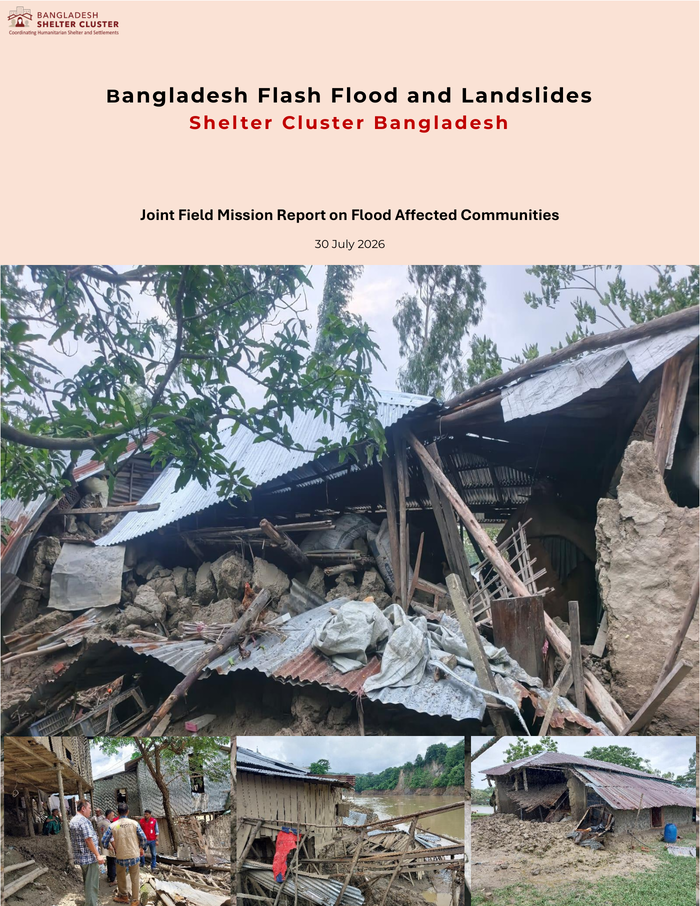
Country: Bangladesh Sources: Shelter Cluster, UN High Commissioner for Refugees Please refer to the attached file. The Shelter Cluster Bangladesh conducted a joint field mission from 20-22 July 2026 in Satkania, Banshkhali, Bandarban Sadar, and Pekua to assess flood and landslide impacts on housing and identify priority shelter needs. The mission involved field observations, community consultations, and interviews with local authorities. Key findings show that the July 2026 flash floods and landslides affected approximately 1. 28 million people, with 436, 000 requiring humanitarian assistance. A total of 74, 479 houses were damaged or destroyed, while thousands of water and sanitation facilities were also affected. Vulnerable kancha houses made of mud, bamboo, and CGI sheets suffered the most severe damage due to prolonged flooding, erosion, and landslides. The disaster also severely impacted livelihoods, damaging cropland, fisheries, livestock, and local businesses, reducing the ability of affected households to recover using their own resources. Priority shelter needs identified by the mission include: House repair support. CGI sheets for roof and wall repairs. Plinth raising and flood protection measures. Essential household items and kitchen sets. Shelter toolkits for self-repair. Cash assistance for shelter recovery. Integrated shelter and sanitation support, including latrines. The report concludes that shelter recovery is one of the most urgent humanitarian priorities. It recommends immediate assistance to repair damaged homes and longer-term investments in resilient housing, flood protection, and safer construction practices to reduce future disaster risks
Shelter Cluster: Bangladesh Flash Flood and Landslides – Joint Field Mission Report on Flood Affected Communities (30 July 2026)

RELATED ARTICLES


