


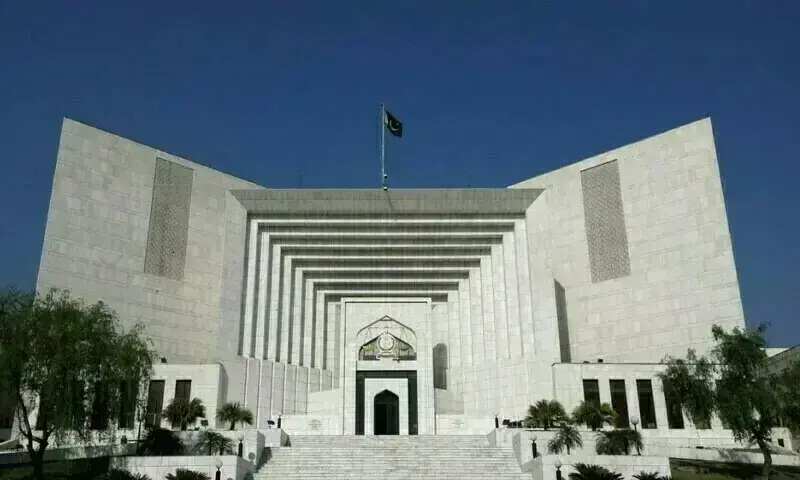
• Restores headmistress’ penalty for negligence in protecting female teachers • Orders strict anti-harassment mechanisms, law enforcement ISLAMABAD: The Supreme Court on Friday restored a severe penalty imposed on a government school headmistress for gross negligence in failing to prevent the sexual harassment of female teachers under her supervision. A two-judge SC bench, headed by Justice Muhammad Ali Mazhar and comprising Justice Musarrat Hilali, also issued wide-ranging guidelines to all educational institutions, requiring strict enforcement of workplace harassment laws. In a 12-page judgement authored by Justice Mazhar, the court observed that the sexual harassment of female teachers by male colleagues in any educational institution was “a grave transgression, illegal behaviour and a violation of law, ethics, workplace dignity and self-respect”. The judgement explained that unsolicited comments, remarks, jokes or messages of a sexual nature, catcalling and other inappropriate behaviour, pressure for illicit favours in exchange for job benefits, attempts at unsolicited physical contact, and the creation of a hostile or unsafe work environment not only violate a person’s dignity and safety but also undermine the environment of the entire institution. Such conduct, it said, creates an insecure workplace for female teachers and hampers their ability to impart education effectively with proper application of mind and professional skills. The court also set aside the Dec 8, 2023, order of the Punjab Service Tribunal, Lahore, which had reduced the punishment awarded to headmistress Shazia Iqbal. The tribunal had modified the penalty from forfeiture of five years of past service to forfeiture of one year. While serving as principal/headmistress (BS-17) at the Government Special Education Centre, Lyalpur Town, Faisalabad, Shazia Iqbal was issued a show-cause notice under the Punjab Employees Efficiency, Discipline and Accountability Act, 2006. According to the allegations, the headmistress committed grave negligence by overlooking the fact that special therapist (BS-17) Kamran Khan was illegally residing on the premises of the Government Special Education Centre. He was allegedly in the habit of molesting female teachers by blackmailing them, forcing them into illicit relations and threatening them with dire consequences, thereby seriously affecting the institution’s atmosphere and rendering it unconducive to education. Justice Mazhar observed that educational institutions were regarded as an alma mater (nourishing mother) — revered centres of learning and knowledge that shape a person’s career, intellectual development, professional identity and personality. Such institutions, he said, deserve lifelong reverence from every pupil and alumnus for nurturing their personal and academic growth. In its guidelines, the SC stressed the need to ensure a foolproof and healthy workplace environment in all educational institutions employing both male and female teachers. The judgement called for every institution to adopt a clear internal harassment policy and establish an effective reporting mechanism involving senior management, including the head of the institution, so that complaints could be fairly investigated. Where allegations are proved through due process, disciplinary action should be taken against those found involved in such immoral and unlawful conduct. The court ruled that departmental inquiries should be conducted independently and should not necessarily await decisions by the Federal Ombudsperson or provincial ombudsmen for protection against harassment of women at the workplace. Justice Mazhar observed that the head of every educational institution bears an onerous responsibility to foster a workplace environment that clearly conveys zero tolerance for sexual harassment, while promoting professionalism and dedication as the institutional standard. Considering the seriousness and sensitivity of the issue, the court directed its office to send copies of the judgement to the federal education secretary, chief secretaries, secretaries of school and higher education of all provinces, the Federal Ombudsperson and provincial ombudsmen. The authorities were directed to ensure the elimination of sexual harassment at the grassroots level in all public and private educational institutions through meaningful measures and strict enforcement of the Code of Conduct for Protection against Harassment of Women at Workplace, framed under Sections 2(c) and 11 of the Protection against Harassment of Women at Workplace Act, 2010. The court directed the federal and provincial education ministries to issue office orders or circulars requiring all heads of government and private educational institutions to prominently display the Code of Conduct for Protection against Harassment of Women at the Workplace in English as well as vernacular languages. It also ordered every government and private educational institution to constitute an in-house inquiry committee, as required under the law, to deal with harassment complaints so that an aggrieved female teacher could submit her complaint directly to the committee instead of relying solely on the head of the institution to take action. Published in Dawn, July 11th, 2026



GrowthPakistan brings you the latest news to keep an eye on Pakistan’s startup ecosystem. Business keeps you growing when you stay aware of your competitors' moves. GrowthPakistan offers Business, Tech, Global Tech, Global, Auto, and Startup News straight from industries all around the globe. This platform will help you identify upcoming opportunities not only in Pakistan but worldwide.
Email : growthpakistan@gmail.com
Whatsapp : +92320-9497079
© growthpakistan