


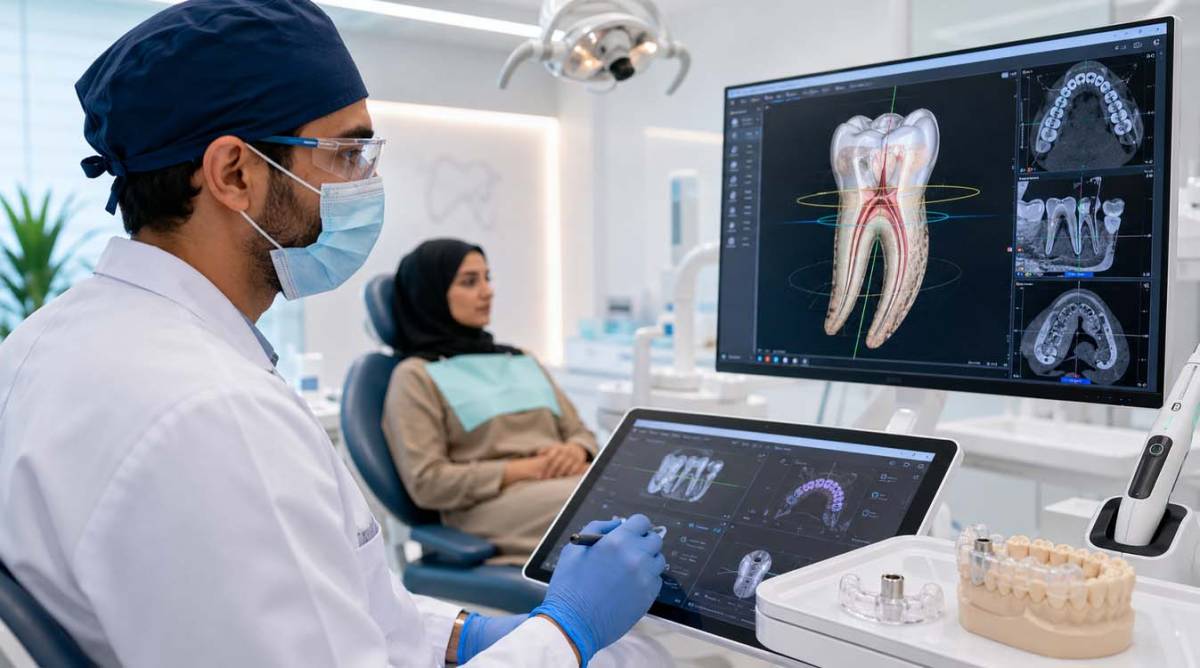
A growing number of dental practitioners in Saudi Arabia view guided endodontic access (GEA) as a major advancement in modern endodontics, yet the technology has not become a routine part of clinical practice due to financial, educational, and workflow-related challenges. A new study conducted by researchers at the University of Ha’il has found that while awareness, knowledge, and acceptance of guided endodontic techniques are generally high among Saudi dentists, significant obstacles continue to limit broader implementation in everyday practice. The findings provide an important snapshot of how one of dentistry’s most promising digital innovations is being received by clinicians and what may be required to move it from a specialized technology to a mainstream treatment approach. What is guided endodontic access? Guided endodontic access is a digitally driven technique that combines cone beam computed tomography (CBCT), intraoral scanning, computer-assisted treatment planning, and 3D-printed surgical guides to help clinicians locate and access root canals with exceptional precision. The technology is particularly valuable in complex cases involving calcified canals, pulp canal obliteration, and anatomically challenging teeth where conventional freehand access can be difficult, time-consuming, and potentially more invasive. By creating a customized digital pathway to the root canal, guided endodontics allows clinicians to preserve more healthy tooth structure while reducing the risk of procedural errors. As minimally invasive dentistry continues to gain momentum worldwide, guided endodontics is increasingly being viewed as one of the most significant technological developments in modern root canal treatment. Saudi dentists show strong confidence in the technology To better understand adoption patterns, researchers conducted a cross-sectional survey assessing dentists’ awareness, knowledge, training levels, perceptions of clinical usefulness, and views regarding barriers to implementation. The results revealed overwhelmingly positive attitudes toward guided endodontics. Most respondents reported familiarity with the technique and indicated that they had received at least some level of formal education or training related to guided procedures. Participants broadly agreed that guided endodontic access improves treatment precision, enhances patient safety, and offers particular benefits in difficult endodontic cases where canal location presents a significant clinical challenge. Many practitioners also described the technology as an important advancement for the future of endodontic care and supported its inclusion in undergraduate dental education and continuing professional development programs. Clinical evidence continues to strengthen The favorable perception among Saudi dentists reflects a growing body of scientific evidence supporting guided endodontic procedures. Researchers noted that recent studies have demonstrated the technique’s ability to improve accuracy during access cavity preparation compared with conventional methods. Particularly noteworthy is a 2025 randomized controlled trial that found guided endodontic access produced significantly lower deviations during canal access procedures than traditional freehand techniques in teeth affected by pulp canal obliteration. Such findings have reinforced confidence among clinicians seeking more predictable outcomes in highly challenging cases. The technology’s ability to preserve tooth structure while improving procedural accuracy aligns closely with the broader movement toward conservative and minimally invasive dental care. If dentists like it, why isn’t everyone using it? Despite strong enthusiasm, the study identified a clear gap between awareness and routine clinical use. Respondents consistently highlighted three major barriers: • High costs associated with equipment, software, and digital infrastructure• Additional planning time required for digital workflows and guide fabrication• Need for specialized training and technical expertise These concerns mirror challenges seen across other areas of digital dentistry, where adoption often depends not only on clinical benefits but also on affordability, accessibility, and ease of integration into daily practice. For many clinicians, particularly those working in smaller practices, the investment required for CBCT systems, intraoral scanners, planning software, and 3D printing technologies remains substantial. Researchers suggested that economic considerations continue to play a decisive role in determining whether new digital technologies transition from innovation to routine practice. Experience and education influence adoption One of the study’s most notable findings was the relationship between professional experience and willingness to adopt guided endodontics. Practitioners with advanced academic qualifications and greater clinical experience reported higher levels of knowledge, more extensive training, and stronger interest in integrating guided techniques into practice. Researchers believe this may reflect increased exposure to digital technologies through postgraduate education, specialist training programs, professional networks, scientific conferences, and continuing education activities. The finding highlights the important role that lifelong learning plays in accelerating the adoption of emerging dental technologies. Why dental schools may hold the key The researchers emphasized that education could be the most effective solution to closing the gap between interest and implementation. According to the study, many dentists unfamiliar with digital workflows may perceive guided procedures as complex or time-consuming without fully appreciating the potential benefits in treatment accuracy and efficiency. Integrating digital treatment planning, CBCT interpretation, intraoral scanning, and guided endodontic workflows into undergraduate and postgraduate curricula could help future dentists become more comfortable with these technologies from the outset of their careers. Experts increasingly argue that digital dentistry education is no longer optional but essential as technologies such as artificial intelligence, computer-guided treatment planning, and additive manufacturing become more deeply integrated into clinical practice. The future of minimally invasive endodontics The findings arrive at a time when dentistry is undergoing rapid digital transformation. Technologies such as AI-assisted diagnostics, digital treatment planning, guided surgery, intraoral scanning, and 3D printing are reshaping multiple dental specialties. Within endodontics, guided access techniques represent a shift toward greater precision, predictability, and tissue preservation. Researchers suggest that as equipment becomes more accessible, costs decline, and training opportunities expand, guided endodontic access may become increasingly common in routine clinical practice. For now, however, the Saudi study highlights a reality seen across much of digital dentistry: clinicians are ready for innovation, but implementation still depends on overcoming practical barriers. Study details The research, titled “Knowledge, attitudes, and perceived barriers toward guided endodontic access among dental practitioners in Saudi Arabia: A cross-sectional study, ” was published online in BMC Oral Health on June 4, 2026. The study provides valuable insight into how dental professionals perceive one of endodontics’ most rapidly evolving technologies and what steps may be necessary to support its wider adoption in clinical care. Stay informed, stay alert pk/18-Jun-2026/saudi-dentists-guided-endodontics-adoption-barriers-study” target=”_blank” rel=”nofollow noopener noreferrer”>Read full story on Dental News



GrowthPakistan brings you the latest news to keep an eye on Pakistan’s startup ecosystem. Business keeps you growing when you stay aware of your competitors' moves. GrowthPakistan offers Business, Tech, Global Tech, Global, Auto, and Startup News straight from industries all around the globe. This platform will help you identify upcoming opportunities not only in Pakistan but worldwide.
Email : growthpakistan@gmail.com
Whatsapp : +92320-9497079
© growthpakistan