


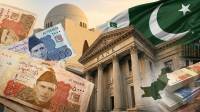
Pakistan’s latest decision to retire Rs1. 2 trillion of domestic debt owed to the State Bank of Pakistan ahead of schedule deserves attention not merely because of the size of the repayment, but because of what it says about the country’s evolving approach to public debt management. At a time when Pakistan’s debt burden remains one of the most persistent constraints on economic policy, retiring debt before maturity is an important signal. The government’s latest payment is reportedly the largest single early repayment of domestic debt undertaken so far, taking the cumulative amount of domestic debt retired ahead of schedule to more than Rs5. 92 trillion since October 2024. But there is a bigger question that policymakers, economists and taxpayers should be asking: Is Pakistan actually reducing its debt problem—or simply becoming better at rearranging it? That distinction matters. The significance of Rs1. 2 trillion The government’s latest repayment surpasses the previous record of Rs1. 133 trillion retired in August 2025. Before that, the government had made a series of early repayments, including Rs826 billion in October 2024, Rs200 billion in November 2024, Rs273 billion in March 2025 and Rs500 billion in June 2025. This is not insignificant. Early retirement can reduce future interest obligations, improve the maturity profile of public debt and provide greater flexibility to the central bank and the government. It can also demonstrate that the authorities are moving away from the traditional Pakistani model of borrowing simply to repay previous borrowing. There is, however, a danger in celebrating the repayment without examining where the money came from and what happens next. Pakistan’s domestic debt stock remains enormous. According to the State Bank of Pakistan’s latest monetary data, government domestic debt stood at around Rs57. 6 trillion by March 2026, compared with Rs54. 47 trillion a year earlier. Gross public debt stood at more than Rs83 trillion. In other words, Rs5. 92 trillion of early retirement is impressive, but it must be placed against a debt mountain that remains vastly larger. 2 Decades And $2 Trillion Later, What Did The US Gain From The Afghanistan War? Debt repayment is good. Debt accumulation is the real challenge. Pakistan’s fundamental fiscal problem has never been simply that governments borrow. Governments everywhere borrow. The problem is that Pakistan has repeatedly borrowed to finance consumption, fiscal deficits, old liabilities and debt servicing rather than generating enough economic growth to make tomorrow’s debt easier to service. The country’s central government debt stock increased by roughly Rs5. 7 trillion during FY26, reaching about Rs83. 6 trillion by the end of June 2026. Domestic debt alone increased by approximately Rs5 trillion to around Rs59. 9 trillion. This creates an uncomfortable paradox. On one side, the government is retiring large chunks of debt ahead of schedule. On the other, the overall debt stock continues to rise. Therefore, the real test is not whether Islamabad can make another Rs1 trillion payment. The real test is whether Pakistan can create a fiscal system in which new borrowing grows more slowly than the economy’s capacity to repay it. The SBP dimension There is another reason this development matters. The relationship between the government and the State Bank has historically been at the centre of Pakistan’s fiscal and monetary problems. When governments rely excessively on domestic borrowing, banks and the central bank effectively become major financiers of the state. That can crowd out private-sector credit, complicate monetary policy and create what economists often describe as fiscal dominance. The decision to retire debt owed to the SBP therefore has significance beyond accounting. It potentially strengthens the balance sheet of the central bank while reducing the government’s direct liability. But the broader principle must be maintained: the central bank cannot become an indirect fiscal escape route for governments. A healthier Pakistan needs a fiscal authority capable of living within its means and a central bank capable of pursuing monetary stability without constantly accommodating government financing requirements. The Senate Says Devolution Could Save Rs 6 Trillion. Does The Math Add Up? The interest bill is the elephant in the room For ordinary Pakistanis, debt figures can sometimes appear abstract. Rs1. 2 trillion is difficult to visualise. But the consequences become much clearer when translated into the government’s annual budget. Every rupee that goes toward debt servicing is a rupee that cannot simultaneously be spent on schools, hospitals, infrastructure, policing, water systems or productive investment. Pakistan’s debt problem therefore isn’t merely about the amount owed. It is about the opportunity cost of servicing that debt. The government’s own Fiscal Policy Statement showed total public debt rising from Rs71. 25 trillion in June 2024 to Rs80. 52 trillion in June 2025, while debt per capita increased from roughly Rs294, 000 to Rs333, 000 during the same period. That should put the current Rs1. 2 trillion repayment into perspective. Yes, early repayment is positive. But it will only become transformational if it is accompanied by a sustained reduction in the structural drivers of borrowing. Pakistan needs to stop treating debt management as financial engineering For decades, Pakistan has become extremely proficient at refinancing. Maturity is extended. Short-term debt becomes longer-term debt. Domestic debt is substituted with external financing. Expensive borrowing is replaced with cheaper borrowing when market conditions allow. And occasionally, debt is retired ahead of schedule. All of these can be useful tools. But they are still tools. They are not a substitute for economic reform. The country’s debt trajectory ultimately depends on whether the state can increase revenues without strangling formal economic activity, reduce unnecessary expenditure, reform loss-making public-sector enterprises, improve energy-sector governance and generate enough economic growth to expand the denominator against which debt is measured. The State Bank itself has repeatedly stressed the importance of fiscal reforms, revenue mobilisation and expenditure discipline for sustainable growth. .That is where the real battle lies. From Access To Learning: Pakistan’s Unfinished Education Agenda The tax system remains critical Pakistan cannot permanently borrow its way out of a revenue problem. The country needs a broader and more equitable tax base. For years, governments have relied disproportionately on existing taxpayers while large segments of the economy remain outside the effective tax net or operate with significant informality. The Federal Board of Revenue reportedly achieved its revised FY26 collection target of Rs13 trillion, yet the government still required substantial borrowing because revenues remained insufficient to finance overall expenditure. This is the heart of the problem. If tax collection rises but expenditure rises alongside it, the fiscal deficit does not disappear. And if the government continues borrowing to bridge that gap, debt repayment—even early repayment—becomes an exercise in running faster simply to stay in the same place. There is nevertheless a positive signal It would be unfair to dismiss the Rs1. 2 trillion repayment. It represents a meaningful improvement in debt-management discipline. The government’s decision to retire debt before maturity suggests that policymakers are paying greater attention to the cost and structure of borrowing rather than merely its availability. The Debt Policy Statement issued earlier this year also noted that domestic debt had declined during the first quarter of FY26 following a proactive decision to retire Rs1 trillion of SBP debt. This indicates that the latest repayment is part of a broader strategy rather than an isolated transaction. Pakistan should build on that strategy. But it should also communicate clearly to the public whether these repayments are producing measurable savings in future interest costs and how much fiscal space is actually being created. Moody’s has already noticed the improvement—but issued a warning The Cost Of Learning The timing is particularly interesting because Moody’s recently upgraded Pakistan’s sovereign rating from Caa1 to B3 with a stable outlook. The rating agency cited improvements in governance, the external position and fiscal metrics, while noting that lower domestic financing costs and monetary easing had improved debt affordability. But Moody’s also highlighted the vulnerabilities that remain: a narrow revenue base, weak debt affordability, structural weaknesses in the external account and constraints on investment and high-productivity growth. That is perhaps the most balanced way to look at Pakistan’s current economic story. There is progress. But progress is not the same thing as resolution. What should happen next? The government should use the current window of relative macroeconomic stability to undertake reforms that are politically difficult but economically unavoidable. First, every major early debt repayment should be accompanied by transparent disclosure of the interest savings generated. Second, the government must resist the temptation to replace retired debt with new expensive borrowing. Third, fiscal consolidation must move beyond increasing tax rates and focus on widening the tax base. Fourth, public-sector enterprises that continuously consume taxpayers’ money need structural reform rather than perpetual bailouts. Fifth, energy-sector circular debt must be tackled through governance, recovery and efficiency reforms rather than repeated financial adjustments. And finally, Pakistan needs a growth model based on exports, investment and productivity rather than consumption financed by borrowing. The Rs1. 2 trillion questionThe most important question surrounding the government’s latest move is therefore not: “How much debt did Pakistan repay?” It is: “Why did Pakistan need to accumulate so much debt in the first place—and have we fixed the reasons that forced us to borrow?” IMF Debt, IPPs, China-Pakistan Corridor Explained | Khurram Husain If the answer is yes, the Rs1. 2 trillion repayment could mark the beginning of a genuine change in Pakistan’s fiscal culture. If the answer is no, it will remain an impressive number inside an otherwise familiar cycle: borrow, refinance, repay, borrow again. Pakistan has demonstrated that it can retire debt early. Now it needs to demonstrate something far more difficult: that it can build an economy in which governments do not have to borrow at the same pace in the first place. That is the real measure of fiscal responsibility. And that is where the success or failure of Pakistan’s current economic stabilisation story will ultimately be decided.



GrowthPakistan brings you the latest news to keep an eye on Pakistan’s startup ecosystem. Business keeps you growing when you stay aware of your competitors' moves. GrowthPakistan offers Business, Tech, Global Tech, Global, Auto, and Startup News straight from industries all around the globe. This platform will help you identify upcoming opportunities not only in Pakistan but worldwide.
Email : growthpakistan@gmail.com
Whatsapp : +92320-9497079
© growthpakistan