


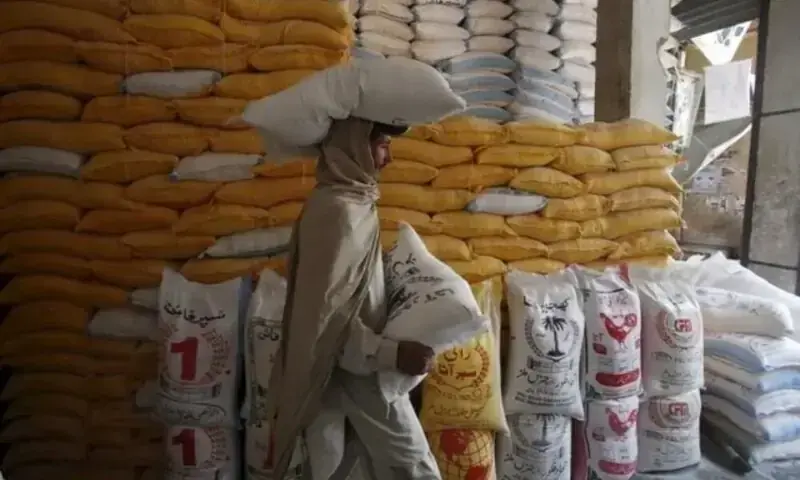
Pakistan is set to import one million tonnes of wheat as the federal government finds strategic reserves insufficient to meet the provinces’ requirements. More surprisingly, Punjab — the country’s only wheat-surplus province — has also sought 1m tonnes. Wheat imports are not unusual for Pakistan. The country has imported wheat in several financial years over the past decade to bridge supply gaps or rebuild strategic reserves. What makes the current decision unprecedented, however, is its timing. It comes barely three months after harvest, despite repeated official claims, made until only a few weeks ago, that 29. 8m tonnes of domestic production, along with over 2m tonnes of carryover stocks, would be sufficient to meet the country’s annual requirements. Adding to the puzzle, poultry feed mills are not consuming wheat this year because maize — the poultry sector’s preferred feed grain — is considerably cheaper. Moreover, the border with Afghanistan has remained closed to both formal exports and cross-border smuggling. Yet wheat prices have surged from around Rs3, 300 to Rs4, 700 per 40 kg since harvest — well above the import parity price. It reflects a significant supply-demand imbalance. All these developments raise serious questions about the credibility of official wheat production estimates, adequacy of strategic reserves, and the overall management of Pakistan’s wheat supply chain. The proposed 1m tonne import has revived farmers’ fears of a repeat of FY24, when imports triggered a price collapse The core issue is that, while complying with international financial institutions’ conditions, Pakistan’s federal and provincial governments pursued a wheat policy that failed to balance the interests of farmers, who produce the crop, and consumers, who seek affordable flour. They abandoned the decades-old public procurement system without first establishing a credible market-based alternative that could ensure fair returns for farmers, market stability, and adequate strategic reserves. Since Punjab province produces 77 per cent of Pakistan’s wheat, its wheat policy largely shapes the country’s wheat supply chain. Over the last three crops, it adopted three different policies: in 2024, it abruptly stopped wheat procurement from farmers; in 2025, it introduced the Electronic Warehouse Receipt system; and in 2026, it shifted to a private sector-led procurement model by engaging 11 companies. However, none of these delivered the desired results. Meanwhile, despite claiming wheat market deregulation, the Punjab government increasingly relied on administrative interventions — district-specific prices, artificial price caps, raids on stocks held by farmers and private stockists, and restrictions on wheat movement during 2025 and 2026. These measures, aimed at keeping wheat flour affordable for urban consumers, may have temporarily contained prices, but they did so at the expense of farmers by distorting market incentives. The question now is: why has this supply-demand mismatch emerged barely three months after harvest? The answer partly lies in the lower yields and changing behaviour of market participants. After recurring financial losses, farmers cut back on costly phosphate fertilisers. Moreover, heat waves and crop lodging at the maturity stage adversely affected the crop. Consequently, yields declined by an estimated three to five maunds per acre compared with the previous year’s crop. Similarly, on the supply side, learning from last year’s experience, many farmers who could meet their immediate financial needs chose to retain part of their wheat stocks. While individual holdings may be small, the cumulative effect of millions of farmers retaining just a few bags extra translates into millions of tonnes. Likewise, a large number of urban consumers, who usually purchase wheat for a few months’ consumption during harvest, appear to have stocked more this year. Concerns over the Iran conflict, rising world energy prices, and disruptions in global fertiliser supplies fuelled fears of global food inflation. Another important market development has been the growing presence of private stockists in agricultural commodity markets as investors have diverted capital from manufacturing, services, and real estate toward commodity trading. Unlike most farmers, these investors — many of them politically well-connected — have the financial capacity to hold stocks for extended periods. Together, these market dynamics have reduced market supplies and tightened wheat availability. Against this broader backdrop, the central question is: what should Pakistan’s wheat policy be for the next crop? Farmers, already on the verge of financial collapse, are demanding only a harvest-time price at least equal to import parity to offset soaring costs of diesel, electricity, fertilisers, and pesticides. Balancing this legitimate demand while safeguarding consumers’ interests calls for a fundamental rethink of wheat policy. The following three reforms are proposed as a starting point for a broader national debate. First, instead of announcing a support or indicative price, the government should allow unrestricted wheat exports during the harvest time while removing inter-provincial movement restrictions. This would automatically align domestic prices with international markets. Once this happens, exports would naturally become financially unviable for exporters. Second, the government should build and maintain strategic wheat reserves of at least 4m tonnes. These must be procured and released at prevailing market prices rather than under the current practice of administratively fixed rates. These reserves should serve as a market stabilisation tool, released whenever domestic prices rise above import parity levels. If international prices rise sharply, low-income households should be protected through targeted subsidies instead of suppressing farmers’ prices. Third, in a deregulated market, the government should recognise the legitimate role of private stockists — as in the rice and maize markets — rather than branding them as hoarders. By absorbing surplus wheat during harvest, they perform an essential supply-chain function and provide farmers with an alternative marketing channel that reduces the risk of exploitation. However, the government should promote a broad-based network of stockists to prevent excessive market concentration. In conclusion, the proposed 1m-tonne import has revived farmers’ fears of a repeat of FY24, when imports of 3. 59m tonnes triggered a collapse in wheat prices. It is high time to formulate a wheat policy through public debate and consensus among all stakeholders, rather than allowing the whims of a few to shape decisions that create opportunities for vested interests and ultimately harm both farmers and consumers. Khalid Wattoo is a development professional and a farmer. Dr Waqar Ahmad is a former Associate Professor at the University of Agriculture, Faisalabad. Published in Dawn, The Business and Finance Weekly, August 3rd, 2026



GrowthPakistan brings you the latest news to keep an eye on Pakistan’s startup ecosystem. Business keeps you growing when you stay aware of your competitors' moves. GrowthPakistan offers Business, Tech, Global Tech, Global, Auto, and Startup News straight from industries all around the globe. This platform will help you identify upcoming opportunities not only in Pakistan but worldwide.
Email : growthpakistan@gmail.com
Whatsapp : +92320-9497079
© growthpakistan