


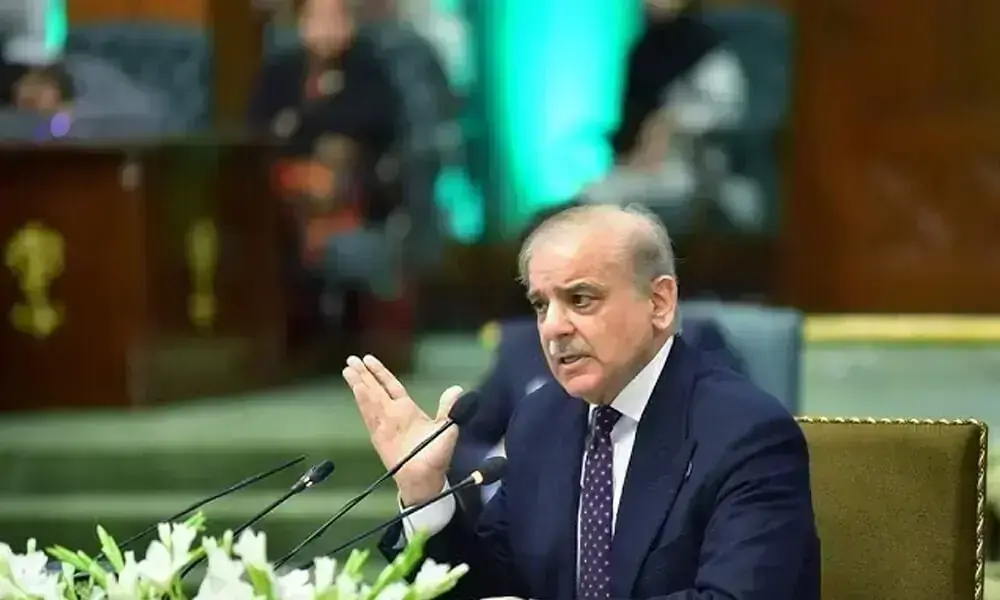
ISLAMABAD: Prime Minister Shehbaz Sharif on Wednesday said the ongoing conflict in the Middle East had affected Pakistan’s economic growth, with the country’s oil bill soaring to USD800 million per week. The prime minister, while chairing a federal cabinet meeting, said that Pakistan was on a growth trajectory after achieving macroeconomic stability, but regional tensions, particularly the US and Iran war, had disrupted progress made over the past two years. “The current global market situation presents a major challenge, but thanks to collective foresight and joint efforts, we have made significant attempts to manage it more effectively, ” he said. READ MORE: PM Shehbaz sharpens focus on oil consumption trend The prime minister praised Minister of Petroleum Ali Pervez Malik and his team for preventing fuel shortages and long queues amid rising global oil prices. He said that before the war, Pakistan’s weekly oil bill had been approximately USD300 million, but it had now surged to USD800 million. “We are continuing our efforts to save, and in recent days, we have seen positive progress, with our consumption significantly reduced compared to last week. ” About the country’s external finances, he said that the country’s federal reserves had “retained their levels” despite debt repayments, including a $3. 45 billion transfer to the United Arab Emirates. He thanked Saudi Arabia for a recent $3 billion deposit and for agreeing to extend its existing $5 billion credit facility by another three years. He particularly expressed gratitude to Saudi Arabia’s King Salman bin Abdulaziz and Crown Prince Mohammed bin Salman for their role in stabilising Pakistan’s foreign exchange reserves. Sharif highlighted Pakistan’s diplomatic efforts, which facilitated direct talks between Washington and Tehran in Islamabad earlier this month. “The talks between Iran and the US that took place on the night of 11 April lasted nearly 21 hours. It was a long marathon session. Pakistan made sincere and concerted efforts to bring peace to the region, ” he said. He also commended the role of military and political leaders, including Deputy Prime Minister and Foreign Minister Ishaq Dar, Chief of Defence Forces (CDF) and Field Marshal Syed Asim Munir, Interior Minister Mohsin Naqvi, and others who supported the peace initiatives. As a result, a ceasefire in the region was extended and remains in effect, he added. Iran’s Foreign Minister Abbas Araghchi visited Pakistan for the second round of talks, which the prime minister described as “important meetings. ” Sharif said Araghchi had assured him that all discussions in Oman were conducted in good faith and that a positive response from Iran’s leadership was expected soon. In domestic policy, the cabinet approved several major initiatives aimed at economic self-reliance, agricultural productivity, and skills development. Among them was the first National Agriculture Biotechnology Policy, designed to enhance food security, increase farm productivity, and promote research and innovation in the sector. The cabinet also approved the National Seed Policy 2025, intended to empower farmers and raise agricultural output by 15-20%, and the National Skills Development Policy, which aims to align workforce capacity with modern industrial and trade needs. Special provisions for internationally recognised training and certification for Pakistanis seeking work abroad were included, with joint implementation planned between federal, provincial, and private sector stakeholders. In public health, the National Policy for Domestic Vaccine Production was approved, along with the creation of a special committee under the Drug Regulatory Authority of Pakistan (DRAP) to ensure quality control and fair pricing. The policy seeks to reduce dependence on vaccine imports, conserve foreign exchange, and make the country self-reliant in vaccine production. On education, the cabinet endorsed the engagement of teachers previously serving on a daily wage basis in grades 1 to 15 under the Federal Directorate of Education’s (FDE) Visiting Faculty Regulations 2025, aligning with a recent Supreme Court ruling. During the meeting, the National Electric Power Regulatory Authority’s (NEPRA) Annual Report 2025 and the State of Industry Report 2025 were also presented, though no detailed figures were released. A statement from the Prime Minister’s Office said the prime minister expressed satisfaction with measures taken to manage rising petroleum prices and maintain public convenience amid global market pressures. The cabinet also approved various sectoral policies on its agenda. “The prime minister [Sharif] emphasised that subsidies and consumer protections must be carefully maintained, with consultations continuing for the next month to ensure public welfare, ” the statement said. Sharif expressed optimism that the Middle East conflict would conclude soon, allowing for lasting regional peace. “Pakistan’s efforts for peace continue, and there has been no reduction in them, ” he added. Copyright Business Recorder, 2026



GrowthPakistan brings you the latest news to keep an eye on Pakistan’s startup ecosystem. Business keeps you growing when you stay aware of your competitors' moves. GrowthPakistan offers Business, Tech, Global Tech, Global, Auto, and Startup News straight from industries all around the globe. This platform will help you identify upcoming opportunities not only in Pakistan but worldwide.
Email : growthpakistan@gmail.com
Whatsapp : +92320-9497079
© growthpakistan