


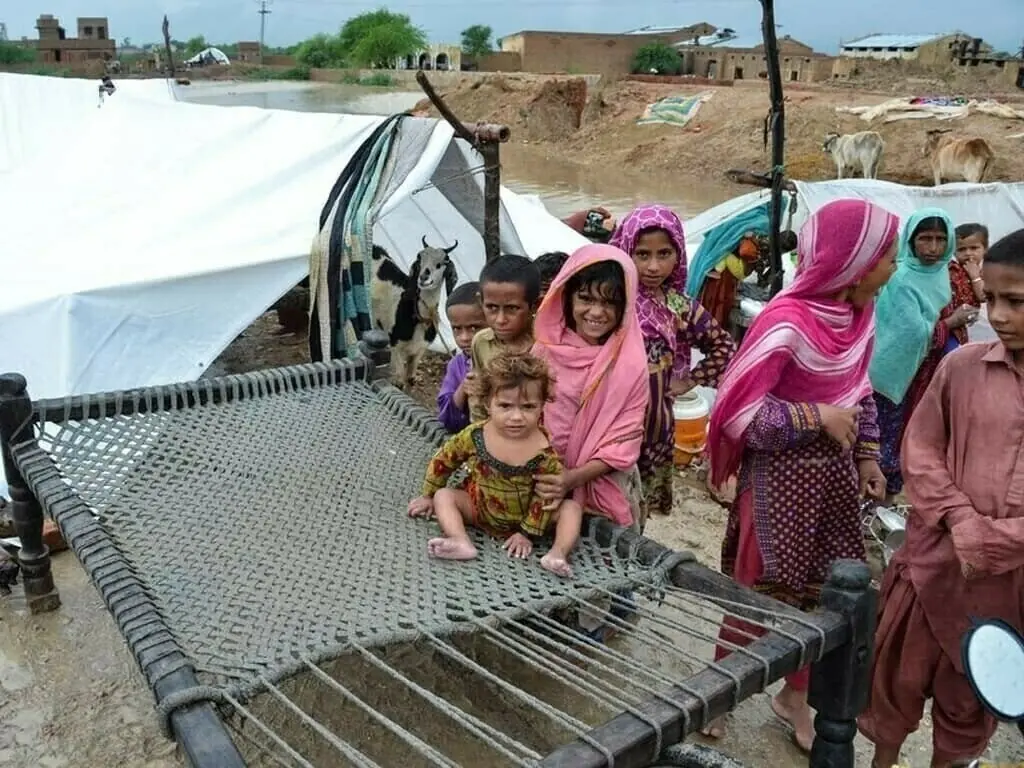
Pakistan’s poverty crisis is deeper than the government is willing to admit, and the gap between official claims and what people are actually living through has rarely looked this wide. The Social Policy and Development Centre’s latest research, based on household-level data from the Household Integrated Economic Survey 2024-25, paints a far darker picture of the economy than the state’s own poverty numbers suggest. Official estimates say 28. 9 percent of Pakistanis are living below the poverty line. SPDC’s independent estimate puts that number at 43. 5 percent. That is not a minor statistical disagreement. It is a difference that translates into tens of millions of people. According to SPDC, around 105 million people were poor in FY25, up from 78 million in FY19. In other words, 27 million more people fell below the poverty line in just six years. That increase alone is larger than the population of many countries. Yet the official narrative, built around a poverty line of Rs8, 484 per adult equivalent per month, still suggests the situation is far less severe. SPDC’s approach tells a different story. Using a calorific method tied to what low-income households actually consume, it estimates poverty lines of Rs13, 476 for urban households and Rs10, 283 for rural households. According to SPDC, the official Cost of Basic Needs method does not rebuild the poverty line from fresh household data. Instead, it updates an older benchmark using CPI. As the SPDC report explains, the CPI reflects the spending habits of relatively better-off households more than those of the poor. It includes items low-income families often do not buy, while missing essential costs such as informal healthcare and access to clean water. In poorer or more remote areas, where prices can swing sharply, national CPI figures become even less reliable. The result is a poverty line that drifts further away from everyday reality, creating the appearance of progress where there may be none. This problem is not just about statistics; it also affects policy. Official poverty estimates, leaving aside FY25, show poverty falling steadily since FY02, even in years when economic growth was weak. That does not make much sense especially when the country goes through repeated economic shocks, slow growth, inflation, and visible hardships. The report’s breakdown of who is being hit is also worrying. Urban poverty rose by 10 percentage points between FY19 and FY25, which is twice the increase seen in rural areas, where poverty rose by 5ppts. This challenges the old idea that cities are always places of better opportunity. In recent years, urban households have been hit especially hard. Inflation, unemployment, and falling real wages have put serious pressure on city workers, pushing many families that were just managing into poverty. Inequality has also increased. The Gini coefficient rose by about 5 percentage points showing that the crisis has not affected everyone equally. Those who were already vulnerable have suffered the most, while the gap between the rich and the poor has grown wider. This did not happen on its own. Pakistan went through a near-debt-default crisis in early FY24, along with political instability, fiscal pressure, global monetary tightening, and high inflation after the pandemic. These are the main reasons more families have fallen into poverty, and they need to be acknowledged honestly. If the state understates poverty, it cannot respond to it properly. That is why SPDC’s findings matter. When that picture is unclear, policy fails before help can reach those who need it.



GrowthPakistan brings you the latest news to keep an eye on Pakistan’s startup ecosystem. Business keeps you growing when you stay aware of your competitors' moves. GrowthPakistan offers Business, Tech, Global Tech, Global, Auto, and Startup News straight from industries all around the globe. This platform will help you identify upcoming opportunities not only in Pakistan but worldwide.
Email : growthpakistan@gmail.com
Whatsapp : +92320-9497079
© growthpakistan