


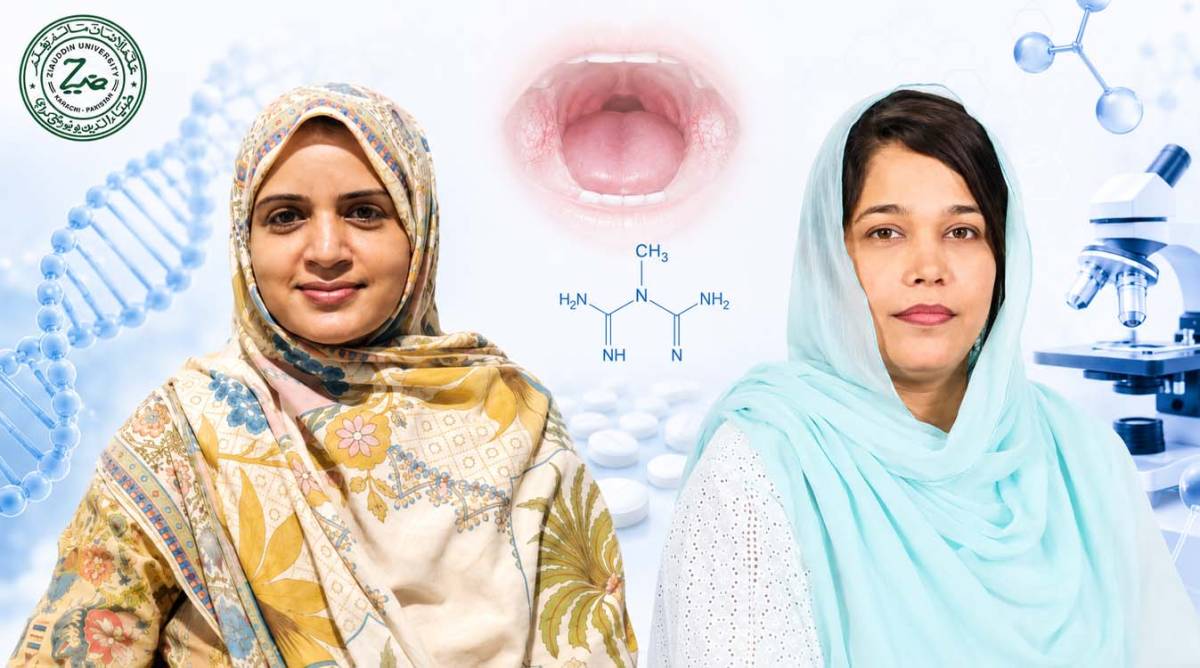
KARACHI: Researchers from Ziauddin University have identified metformin, one of the world’s most widely prescribed diabetes medications, as a promising future therapeutic candidate for Oral Submucous Fibrosis (OSF) after publishing a comprehensive systematic review in one of the world’s leading pharmacology journals. The review, titled “Systematic Review of Antifibrotic Effects of Metformin: Insights from Preclinical and Clinical Studies and Potential Relevance to Oral Submucous Fibrosis,” has been published in Pharmacological Research, a Clarivate Q1 journal with an Impact Factor of 12. 2. The publication represents a significant academic achievement for Pakistani dental researchers while contributing to the growing international field of drug repurposing for chronic diseases. The study was led by Prof. Dr. Afifa Razi, Professor and Head of the Department of Oral Medicine and Diagnosis at Ziauddin College of Dentistry, in collaboration with Dr. Shumaila Usman, Associate Professor at the College of Molecular Medicine, Ziauddin University, along with an interdisciplinary team of researchers. Why Oral Submucous Fibrosis matters Oral Submucous Fibrosis is a chronic, progressive and potentially malignant disorder that is strongly associated with areca nut chewing, including products such as gutka, supari and paan. The disease causes gradual fibrosis and stiffening of the oral tissues, leading to burning sensations, restricted mouth opening, difficulty eating and speaking, and a significantly increased risk of developing oral cancer. The disorder remains a major public health concern across South Asia, particularly in Pakistan and India, where areca nut consumption continues to be widespread. Despite its serious consequences, current treatment options remain largely symptomatic and are generally unable to reverse the underlying fibrotic process, creating an urgent need for more effective therapeutic strategies. Why researchers turned to metformin Metformin has been used safely for decades as a first-line treatment for type 2 diabetes. In recent years, however, researchers around the world have increasingly investigated whether the drug could also be repurposed to treat diseases beyond diabetes because of its anti-inflammatory, antioxidant and antifibrotic properties. The Ziauddin University team sought to evaluate the strength of this growing body of evidence and determine whether metformin could have future relevance in treating Oral Submucous Fibrosis. What the review found Rather than conducting a new clinical trial, the researchers performed a systematic review, one of the highest levels of scientific evidence, by critically evaluating all available published research on the subject. The review synthesized findings from 29 eligible studies, including laboratory experiments, animal studies, combined experimental investigations, randomized clinical trials and observational studies. Across these studies, metformin consistently demonstrated the ability to reduce fibrosis through multiple biological mechanisms. According to the review, the drug showed potential by: • Activating AMP-activated protein kinase (AMPK) pathways. • Inhibiting transforming growth factor-beta (TGF-β)/Smad signalling, a major driver of fibrosis. • Suppressing inflammatory cytokines. • Reducing oxidative stress. • Regulating extracellular matrix deposition, which contributes to excessive scar tissue formation. These mechanisms are directly involved in the progression of Oral Submucous Fibrosis, making metformin a scientifically plausible candidate for future therapeutic development. An encouraging finding—but not yet a treatment The researchers stress that the review does not establish metformin as a proven treatment for Oral Submucous Fibrosis. Instead, the available evidence indicates that the drug shows sufficient promise to justify larger, high-quality clinical trials specifically involving patients with Oral Submucous Fibrosis. The authors conclude that metformin deserves further investigation before it can be recommended for routine clinical use in dental practice. Their findings provide an evidence-based scientific foundation for future translational research aimed at determining whether the drug can safely and effectively improve outcomes for patients living with OSF. A milestone for Pakistani dental research Beyond its potential clinical implications, the publication marks an important milestone for Pakistan’s dental research community. Appearing in one of the world’s highest-impact pharmacology journals, the review demonstrates the growing contribution of Pakistani researchers to internationally recognized oral health research addressing diseases that disproportionately affect populations across South Asia. The publication also strengthens Pakistan’s presence in the rapidly expanding field of drug repurposing, an area of biomedical research focused on identifying new therapeutic uses for existing medicines, often reducing both development time and research costs compared with creating entirely new drugs. Why this research matters The study arrives at a time when researchers worldwide are increasingly seeking innovative approaches to managing chronic fibrotic diseases. For dentists, oral medicine specialists, researchers and dental students, the review provides valuable insight into one of the most promising emerging areas of Oral Submucous Fibrosis research. If future human clinical trials confirm the benefits suggested by current evidence, metformin could eventually become part of a new generation of evidence-based treatment strategies for a disease that currently has limited therapeutic options. Until then, the publication serves as an important scientific step forward—highlighting a promising direction for future research rather than announcing a new standard of care. Stay informed, stay alert! pk/09-Jul-2026/pakistani-researchers-identify-metformin-promising-future-therapy-oral-submucous-fibrosis” target=”_blank” rel=”nofollow noopener noreferrer”>Read full story on Dental News



GrowthPakistan brings you the latest news to keep an eye on Pakistan’s startup ecosystem. Business keeps you growing when you stay aware of your competitors' moves. GrowthPakistan offers Business, Tech, Global Tech, Global, Auto, and Startup News straight from industries all around the globe. This platform will help you identify upcoming opportunities not only in Pakistan but worldwide.
Email : growthpakistan@gmail.com
Whatsapp : +92320-9497079
© growthpakistan