


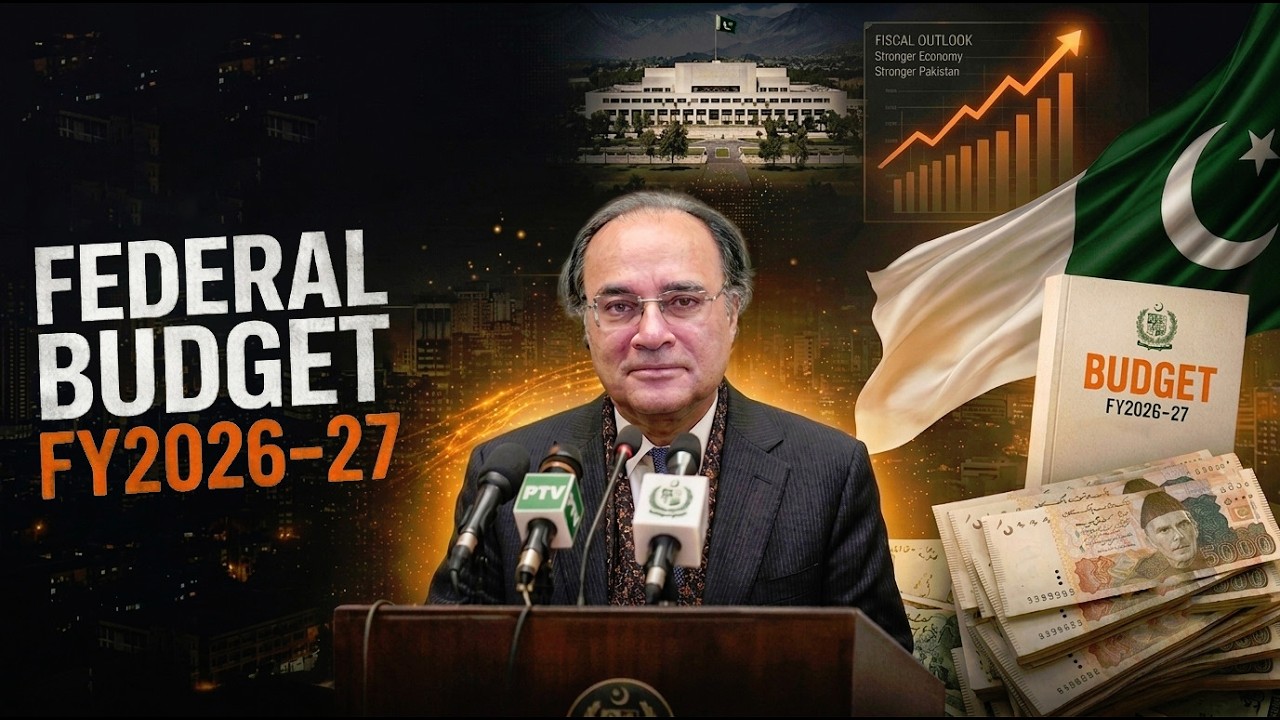
Finance Minister Muhammad Aurangzeb unveiled Pakistan’s federal budget for fiscal year 2026-27 on Friday, with the government seeking to achieve a GDP growth target of 4% and inflation at 8. 2%. The incumbent government’s third federal budget carries a total outlay of around Rs18. 77 trillion ($67. 5 billion), reflecting a moderate increase from Rs17. 6 trillion in the previous year’s budget, as policymakers attempt to maintain macroeconomic stability while navigating a challenging external environment marred by the Middle East crisis. As per the budget documents, Rs8, 054 billion has been earmarked for interest payments in FY27. According to budget estimates, the government targets GDP growth of 4% in FY27, compared to an estimated 3. 7% in the outgoing fiscal year. Inflation is projected to remain at 8. 2% in FY27, as compared to 7% in the outgoing fiscal year, while the budget deficit is projected to be 3. 6% of the GDP, and achieve a primary surplus of 2% of the GDP. In his opening statement, the finance minister lauded the role of Pakistan’s armed forces, saying that the defence sector has emerged as a source of earning valuable foreign exchange. He said that the strategic defence agreement between Pakistan and Saudi Arabia is a moment of pride. “Pakistan will always steadfastly stand alongside KSA, ” said Aurangzeb. Aurangzeb said that using telecom digital wallets, the government is easing public investment in government schemes. “In a week or two, we are inaugurating a project in this regard, ” he said. The government had earlier indicated that the announcement would be made on June 10 after revising the schedule from its initial plan. The budget comes at a time when Pakistan remains under a multi-billion-dollar IMF programme, requiring the government to sustain fiscal discipline, broaden the tax base, reduce untargeted subsidies, and improve revenue collection. At the same time, escalating tensions between the United States and Iran continue to add uncertainty to global energy markets, raising concerns over oil prices and import costs for Pakistan, a major energy-importing nation. The government says it is closely monitoring developments in the Middle East amid fears that any prolonged disruption in regional trade routes could adversely impact Pakistan’s external account and inflation outlook. Pakistan’s financial markets also anticipated a friendlier, growth-oriented budget, talks suggest, with the KSE-100 ending the session up by nearly 2, 700 points. Additionally, with the economy now having stabilised according to government officials, many also believe Islamabad will look towards faster GDP growth in the coming fiscal year. On Thursday, the government unveiled the Pakistan Economic Survey (PES) for FY2025-26, according to which GDP growth was recorded at 3. 7% in the outgoing fiscal year. The growth was higher than the previous year’s figure of 3. 18% but well short of its target of 4. 2% announced in last year’s budget. “The improvement owes to effective macroeconomic management, better fiscal account, growth in the large-scale manufacturing (LSM) sector, resilience of the agriculture sector to floods of 2025, exchange rate stability and reforms under the IMF Extended Fund Facility (EFF) Programme, ” the survey stated. More to follow



GrowthPakistan brings you the latest news to keep an eye on Pakistan’s startup ecosystem. Business keeps you growing when you stay aware of your competitors' moves. GrowthPakistan offers Business, Tech, Global Tech, Global, Auto, and Startup News straight from industries all around the globe. This platform will help you identify upcoming opportunities not only in Pakistan but worldwide.
Email : growthpakistan@gmail.com
Whatsapp : +92320-9497079
© growthpakistan