

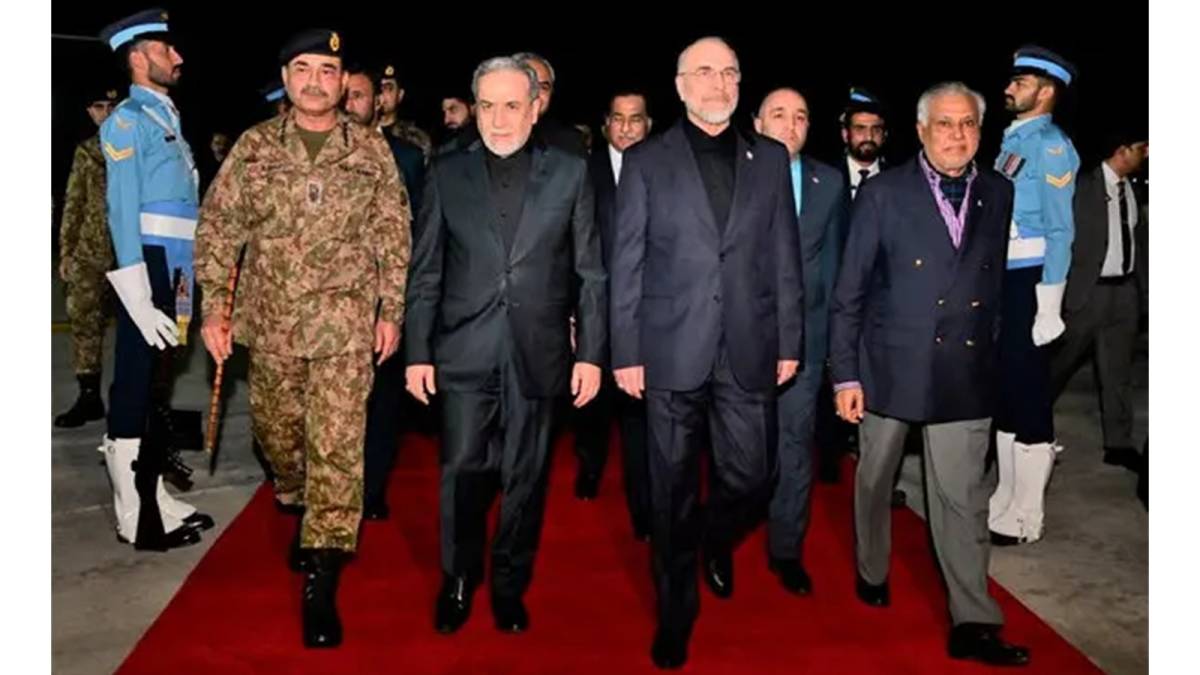
Pakistan’s moment in the sun has arrived. We are not talking about its solar revolution. That’s a noteworthy development that has caught many by surprise. It’s being discussed extensively in the energy media and on social media. Instead, what we are talking about here is something much bigger: Pakistan’s arrival on the global stage, as it facilitates negotiations between Iran and the US hoping to end the war that began on February 28. For way too long, Pakistan was in the headlines for all the wrong reasons. This is a very welcome change. We hope the negotiations succeed, not only in ending the war, but in bringing a lasting peace to the region and to the world. That’s a hope, not a forecast. It’s one of many scenarios that can be envisaged, some less sanguine than others. Regardless of the outcome of the negotiations, for the moment in the sun to last, Pakistan must resolve the myriad issues that it faces at home. These issues have bedevilled the country for decades; they will not go away just because Pakistan now sits on the world stage. What are these issues? On the international front, Pakistan needs to resolve its lingering disputes with Afghanistan and India. Right now, while it is negotiating peace between the US and Iran, it is fighting a hot war with Afghanistan and a cold war with India. Domestically, the list is much longer. It encompasses low economic growth, rising international debt, widespread poverty, pervasive illiteracy and disease, chronic fiscal and trade deficits, a deteriorating infrastructure and rampant lawlessness. The last-mentioned issue is particularly acute in Karachi, the largest city with a population of 20 million which sits strategically next to the Arabian Sea. Regardless of the outcome of the negotiations, for the moment in the sun to last, Pakistan must resolve the myriad issues that it faces at home Pakistan’s economic performance was critiqued in detail in a report by the Atlantic Council. Ahmad had a chance to interview the author, Aasim M. Husain, who has previously worked at the IMF. One of the questions Ahmad posed to him was why Pakistan fell behind Bangladesh, the former East Pakistan, which was always languishing economically compared to West Pakistan (today’s Pakistan). Pakistan also fell behind India. Here is what he said: “India’s deep structural reforms in the early 1990s indeed unleashed a marked acceleration of economic growth. The dismantling of severe import restrictions and the debilitating “license raj” was critical. A factor that is often overlooked is that, like Bangladesh, India was able to achieve slower population growth. That helped boost domestic saving—and consequently investment—from around 15% of GDP on average in the 1980s to nearly 30% over the last decade. Again, no surprise then that India’s economic performance was much stronger than Pakistan’s, which was able to muster much lower savings and investment. .. rates of 10% and 12%. ” Pakistan’s Phoenix Moment: Mediation Amid A Fractured Geopolitical Order Faster population is not the key to economic growth, as argued in a 2022 report by Goldman Sachs, which projected that Pakistan might emerge as the world’s sixth largest economy by 2075. Rapid population growth is an impediment. To quote Dr. Husain, if “Pakistan’s population growth had grown over the past quarter century at a pace comparable to neighbouring countries, saving and investment [rates] would have been much higher, and the economy today would have been 30-45% larger! ” As of April 2026, Pakistan is navigating a fragile economic recovery, despite the IMF’s 37-month, $7 billion IMF Extended Fund Facility. As of April 2026, the IMF is projecting a real GDP growth rate of 3. 6%, less than half of what it is projecting the rate of inflation. It states that the economy remains vulnerable, relying heavily on external financing, which comes with having to manage high debt servicing costs. As of early 2026, Pakistan’s total external debt and liabilities stand at approximately $138 billion. This represents about 33. 4% of GDP, covering public, private, and banking sector obligations. The debt burden is high, with annual repayments estimated at $20-25 billion. These are long-term structural issues which will not disappear overnight. Addressing them will require a change in the national security paradigm. When millions are living in poverty and homelessness and illiteracy and disease are widespread, along with lawlessness, it’s important to factor in the opportunity cost of defence spending when deciding how much to spend on defence. That’s true even for the US, which until last year was spending more on defence than the next ten nations combined, of which eight were allies. Now, the US is proposing a defence budget of $1, 500 billion, up from $900 billion, without any consideration of the opportunity cost of such massive expenditures. Pakistan’s Strategic Moment: From Geography To Managing Disruption Thankfully, Pakistan’s moment in the sun provides it with a rare opportunity to enlist the world’s support in transforming its economy. It should make the point that a stable and prosperous Pakistan can contribute to the globe’s wellbeing. South Asia has frequently been ignored and neglected by the great powers during the Cold War and after, especially when the costs of involvement and war outweighed the benefits. India and Pakistan were both loosely anti-communist and anti-colonial developing democracies, and their rivalry did not fit conveniently into the ideological confrontations that motivated the domestic and international politics of the great powers. Neither the Soviet Union or China could “convert” the countries of the region to their ideology, and both had constitutional governments nominally like those in the West and were far more successfully stable compared with other decolonised nations. What sets Pakistan aside from most other states is the effectiveness of its multilateral diplomacy, having the institutional capacity to simultaneously balance good relations with China, the European Union, the US, Saudi Arabia, Iran, and Indonesia. Islamabad avoids being compelled to pick sides or surrender its internal decision-making autonomy. Close relations with Beijing, a legislature in which one out of five members may have dual citizenship Canada, the UK or the US, and a qualified free trade agreement with the European Union have enabled it to secure unprecedented IMF financing. Pakistan’s overriding interest is its socio-economic development, agricultural autonomy and industrialisation in a century of climate change. While global warming is expected to increase the brief monsoon rains emanating from the Indian Ocean, it will also accelerate the melting of the Himalayan glaciers that feed the Indus and the Punjab and Sindh. Energy shortages, exacerbated by the current crisis in the Straits of Hormuz between the US and Iran, and by some degree of government mismanagement, market failure, and the anticipated effects of financial weakness, are likely to slow economic growth. Pakistan’s Moment: Why Trump Should Seal the Historic Iran Deal In Islamabad If Pakistan can play a productive role in resolving the Iran Crisis, it may be able to create a Strait of Hormuz Stabilisation Committee. Once such a committee is created, Pakistan will sit with countries such as China, Russia, Saudi Arabia, the US and members of the European Union, and its health and stability will become a more visible concern for the major powers. In this new role, it would be able to seek financial assistance to stabilise its economy in the near term and to diversify it in the long term, by securing market access in the key consuming economies. It will finally have a chance to pursue economic development through export promotion, rather than import substitution. Such an organisation will also increase the security of Pakistan’s oil imports, contribute to Islamabad’s status within the Gulf as a counterbalance to external and subversive threats, and act as a counterweight to India’s expanding interests into the Persian Gulf.
Pakistan Is Having Its Moment In the Sun – What Can it Do to Make it Last?

RELATED ARTICLES


