


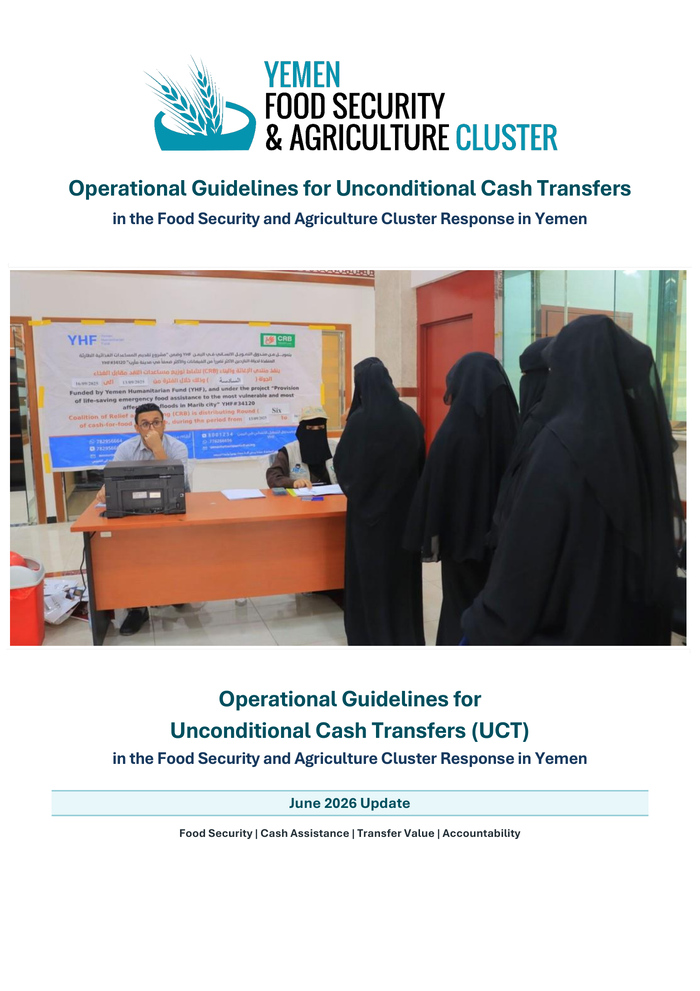
Country: Yemen Source: Food Security Cluster Please refer to the attached file. 1. BACKGROUND Yemen continues to face a protracted humanitarian crisis characterized by widespread food insecurity, economic deterioration, displacement, climate-related shocks, and constrained access to essential services. Years of conflict, economic instability, disruptions to livelihoods, and recurrent shocks have significantly reduced household purchasing power and increased vulnerability across both rural and urban areas. The country remains heavily dependent on imported food commodities, exposing households to fluctuations in global commodity prices, exchange rate movements, transportation costs, and supply chain disruptions. Economic fragmentation, declining income opportunities, recurrent displacement, climate-related hazards, and reduced access to basic services continue to undermine household resilience and access to food. Despite these challenges, markets remain functional across large parts of Yemen and continue to play a critical role in enabling household access to food and other essential needs. Given the continued functionality of markets across much of Yemen, cash-based assistance remains a critical modality for enabling vulnerable households to meet their food needs while supporting local market systems. Where markets are accessible, adequately supplied, and supported by functioning financial service providers, cash-based assistance offers an effective and flexible modality for delivering humanitarian support while preserving beneficiary choice and dignity. Within this context, Humanitarian Food Assistance (HFA) remains a core component of the humanitarian response. HFA seeks to protect food consumption, prevent further deterioration in food security and nutrition outcomes, and reduce reliance on negative coping strategies. Unconditional Cash Transfers (UCT) constitute an important modality within the HFA response architecture and should be considered where market, operational, protection, and financial conditions support their effective implementation.



GrowthPakistan brings you the latest news to keep an eye on Pakistan’s startup ecosystem. Business keeps you growing when you stay aware of your competitors' moves. GrowthPakistan offers Business, Tech, Global Tech, Global, Auto, and Startup News straight from industries all around the globe. This platform will help you identify upcoming opportunities not only in Pakistan but worldwide.
Email : growthpakistan@gmail.com
Whatsapp : +92320-9497079
© growthpakistan