


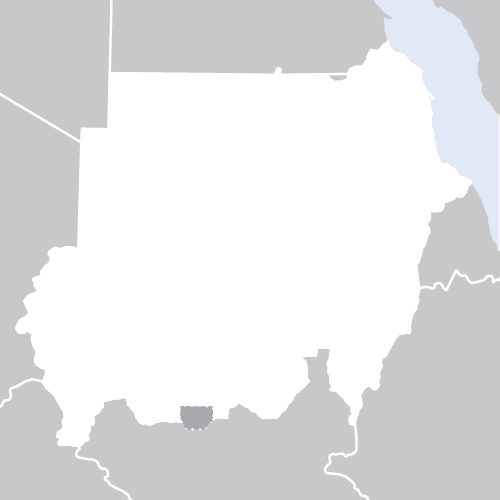
Country: Sudan Source: Médecins Sans Frontières The bombings of Old Fangak and Lankien by South Sudanese government forces cannot go unanswered. On 3 May 2025, MSF hospital in Old Fangak, Jonglei State, was deliberately bombed by government forces, despite being clearly marked with MSF flags, and GPS coordinates shared with authorities. The attack began at around 4: 30am, when two helicopter gunships first fired a missile on the pharmacy, burning it to the ground, before continuing firing on the town for the next 30 minutes. At approximately 7am, a drone bombed the Old Fangak market. At least seven people were killed, and 27 injured, including four MSF staff and two patients. 18 patients were receiving care during the time of attack. Since late December 2025, at least 26 health facilities in Jonglei have reportedly been damaged or looted, alongside the seizure of humanitarian compounds and vehicles. This attack occurred in an increasingly volatile context, with rising tensions between government forces and opposition groups since late April 2025. Neighboring New Fangak fell under the government forces control, while the rest of Fangak County remained under opposition groups’ control, creating a new frontline in Jonglei State. Based on the available information, the only military force with the capacity to carry out such aerial attacks were under control of the Government of South Sudan. This attack, followed by severe flooding of Old Fangak in August 2025, triggered large-scale displacement. Many people fled to Paguir, a village that almost overnight, became one of the most populated areas in the county, as well as to surrounding locations such as Toch. Following the attack, MSF relocated its activities to Paguir, which now serves as the main base, and Toch as the “rear base”, and began providing basic outpatient and inpatient care to both host and displaced populations under extremely constrained conditions. Consultations and admissions often took place outdoors due to limited infrastructure. MSF adapted its operations to this new reality by focusing on Toch Primary Healthcare Centre, expanding community-based care, and supporting peripheral facilities to reach vulnerable displaced people and host communities trapped on overcrowded islands. Old Fangak Hospital is no longer operational. Despite continuous engagement with authorities over the past year to seek clarity on the Old Fangak incident and prevent its recurrence, no explanations have been provided, and attacks on healthcare have continued with impunity. Since the start of 2025, MSF medical staff and facilities were hit by 12 attacks. These include looting of Ulang hospital in April 2025, the government-linked bombing of MSF’s hospital in Lankien on 3 February 2026, as well as the looting of Pieri primary healthcare centre the same day. In early March, the looting of the Akobo facility, while not attributed to government forces, also forced the suspension of services. Together, these incidents have left hundreds of thousands of people without access to care. Civilians are paying the highest cost. Communities in opposition-held areas of Jonglei are being displaced by attacks and government evacuation orders, forced to flee again and again without any safe place to go. Families are exhausted, living in constant fear, and left without protection or access to healthcare. Displacement is rising across Jonglei, Upper Nile, Lakes, and Unity states, where 276, 500 thousand people had to leave their homes, and more than half of health facilities remain non-functional. These repeated incidents made a significant operational and financial impact on MSF, one of the main healthcare providers in the country, with a stable budget of almost 120 million EUR per year. While the material losses are significant, the real cost is in terms of its impact on communities who are now left without access to essential healthcare. In contrast to attacks on our facilities, the Government of South Sudan has agreed with MSF the “Host Country Agreement” (HCA) which reaffirms and recognizes the status of the organization in the country, in which we work for 43 years. This shows the ambivalence and cynicism of the government’s relationship towards MSF. Key Points: MSF has been present in South Sudan for over 40 years, currently working in seven of the 10 states and 2 administrative areas. Attacks on medical facilities, healthcare workers, and civilians are unacceptable and must end. MSF calls on the South Sudanese authorities to provide immediate, transparent explanations for the bombing of Old Fangak hospital, ensure accountability, and take concrete measures to protect medical facilities, staff and patients. MSF continues to call for the protection of medical facilities and humanitarian workers, and remains committed to engaging with all parties to prevent further attacks and safeguard humanitarian access. Since 2025, MSF in South Sudan has suffered twelve attacks, forcing the closure of four hospitals and the suspension of medical activities in Upper Nile, Jonglei, and Central Equatoria. These attacks can be perceived as targeted, given the established pattern. MSF demands a thorough, independent and impartial investigation into the attacks and clear guarantees from the South Sudanese authorities that such attacks will not happen again. Civilians in South Sudan – especially in opposition-held areas – are suffering most from the forced closure of MSF activities in Old Fangak, Lankien, Pieri, and Akobo. People are forced to flee repeatedly and are left in dire conditions without protection, healthcare, or a safe place to go, while being exposed to preventable diseases. MSF was serving at least half a million people in these areas. MSF calls on the South Sudanese authorities to ensure immediate humanitarian access, and calls upon both government and opposition forces to protect civilians.



GrowthPakistan brings you the latest news to keep an eye on Pakistan’s startup ecosystem. Business keeps you growing when you stay aware of your competitors' moves. GrowthPakistan offers Business, Tech, Global Tech, Global, Auto, and Startup News straight from industries all around the globe. This platform will help you identify upcoming opportunities not only in Pakistan but worldwide.
Email : growthpakistan@gmail.com
Whatsapp : +92320-9497079
© growthpakistan