


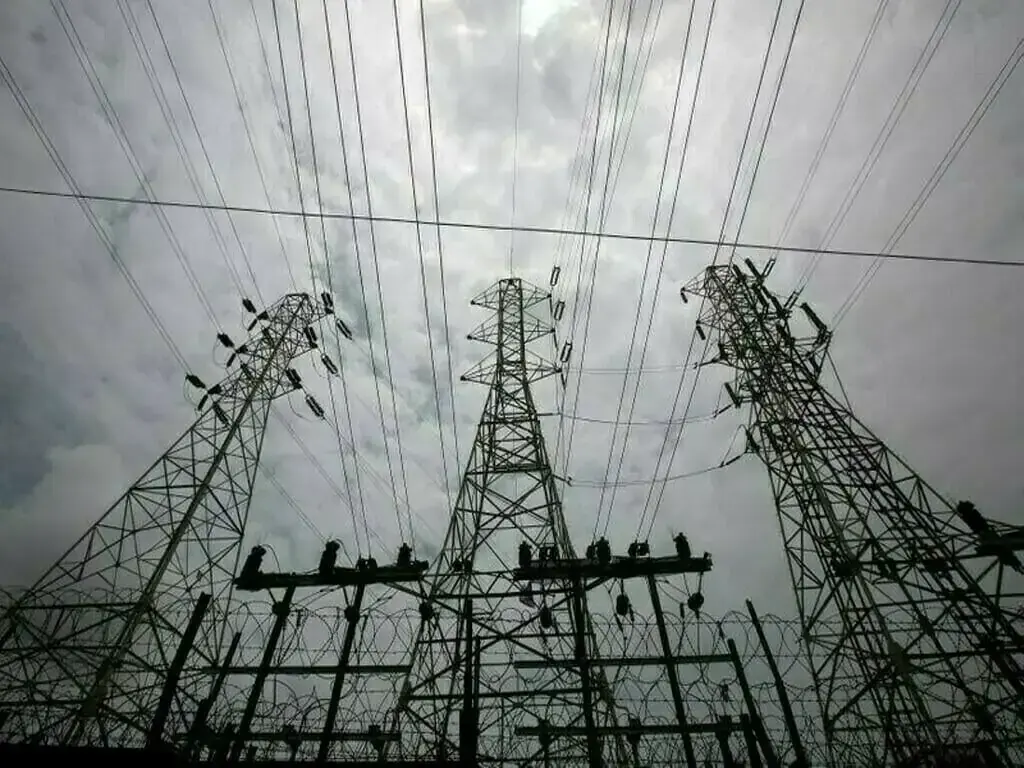
ISLAMABAD: The National Grid Company (NGC) has submitted an addendum to the ten-year Transmission System Expansion Plan (TSEP 2024–34) to the National Electric Power Regulatory Authority (Nepra), projecting a total financing requirement of USD10. 646 billion and highlighting a growing discrepancy between demand projections of power distribution companies (Discos) and the System Operator (SO). According to the document, the divergence stems from a steep decline in network-connected electricity consumption by Discos due to prevailing economic conditions, coupled with a rapid increase in net-metering and rooftop solar photovoltaic (PV) installations. READ ALSO: Power generation: Recovery builds, constraints bind The addendum has been prepared in accordance with Planning Code PC-4 of the Grid Code, which mandates the System Operator, in coordination with Transmission Network Operators (TNOs), to develop an Integrated System Plan (ISP) annually. The ISP comprises the Indicative Generation Capacity Expansion Plan (IGCEP) and the Transmission System Expansion Plan (TSEP). Under the framework, the SO prepares IGCEP and shares it with NGC and other TNOs to facilitate the preparation of TSEP. NGC then develops a centralised transmission expansion plan in coordination with other TNOs and submits it to the SO, which reviews and forwards it to Nepra for approval along with the IGCEP. The initial ISP 2024–34 was submitted to Nepra on April 30, 2024. However, the regulator issued directions for additional scenarios and broader consultations among power sector stakeholders. Consequently, the addendum has been prepared based on the revised IGCEP 2025–35. A comparison between IGCEP 2025–35 and the previous IGCEP 2024–34 reveals significant changes, including delays in the commercial operation dates (CODs) of major hydropower projects such as the 2, 160 MW Dasu Hydropower Project, 800 MW Mohmand Hydropower Project, and 4, 500 MW Diamer Bhasha Hydropower Project. Additionally, 3, 109 MW of renewable energy (RE) projects have been included based on market-based induction. As a result, timelines for associated transmission and evacuation infrastructure have been adjusted accordingly. Despite consistency in country-level and spatial load forecasts between TSEP 2024–34 and IGCEP 2025–35, Discos have reported a sharp decline in grid-connected consumption. NGC attributed this to economic slowdown and the rapid expansion of net-metering and rooftop solar. However, the long-term planner considers this decline to be temporary and not sufficient to alter long-term transmission expansion decisions at this stage. It emphasised that the trend will be closely monitored, and adjustments may be made in future plans if the decline persists. The revised analysis also highlights a substantial increase in projected power exports from the national grid to K-Electric, which are now expected to reach 3, 456 MW by 2035 compared to the earlier estimate of 2, 050 MW. However, this increased export has not yet been incorporated into the addendum, pending detailed cost comparison studies and system reinforcement assessments by both K-Electric and NGC. The addendum focuses on revising only those scenarios where generation project timelines have changed. Sensitivity analyses have been conducted for three peak demand scenarios: June 2027, June 2029, and July/August 2034. In the June 2027 scenario, revisions reflect delays in the Dasu and Mohmand hydropower projects. Earlier projections included three units of Dasu (360 MW each) and all four units of Mohmand (200 MW each). The revised scenario considers only one unit of Dasu (360 MW), with no contribution from Mohmand. Similarly, the June 2029 scenario has been revised due to delays in the Diamer Bhasha project. While earlier assumptions included five units (375 MW each), the updated scenario excludes any contribution from the project. For the July/August 2034 peak scenario—aligned with the updated planning horizon of 2034–35—all 12 units of Diamer Bhasha (375 MW each) have been considered. The scenario also incorporates around 1, 400 MW of wind power optimized under IGCEP. Of this, 800 MW and 500 MW wind projects are assumed within existing networks of QESCO and Jhimpir, requiring no additional reinforcement. Copyright Business Recorder, 2026



GrowthPakistan brings you the latest news to keep an eye on Pakistan’s startup ecosystem. Business keeps you growing when you stay aware of your competitors' moves. GrowthPakistan offers Business, Tech, Global Tech, Global, Auto, and Startup News straight from industries all around the globe. This platform will help you identify upcoming opportunities not only in Pakistan but worldwide.
Email : growthpakistan@gmail.com
Whatsapp : +92320-9497079
© growthpakistan