


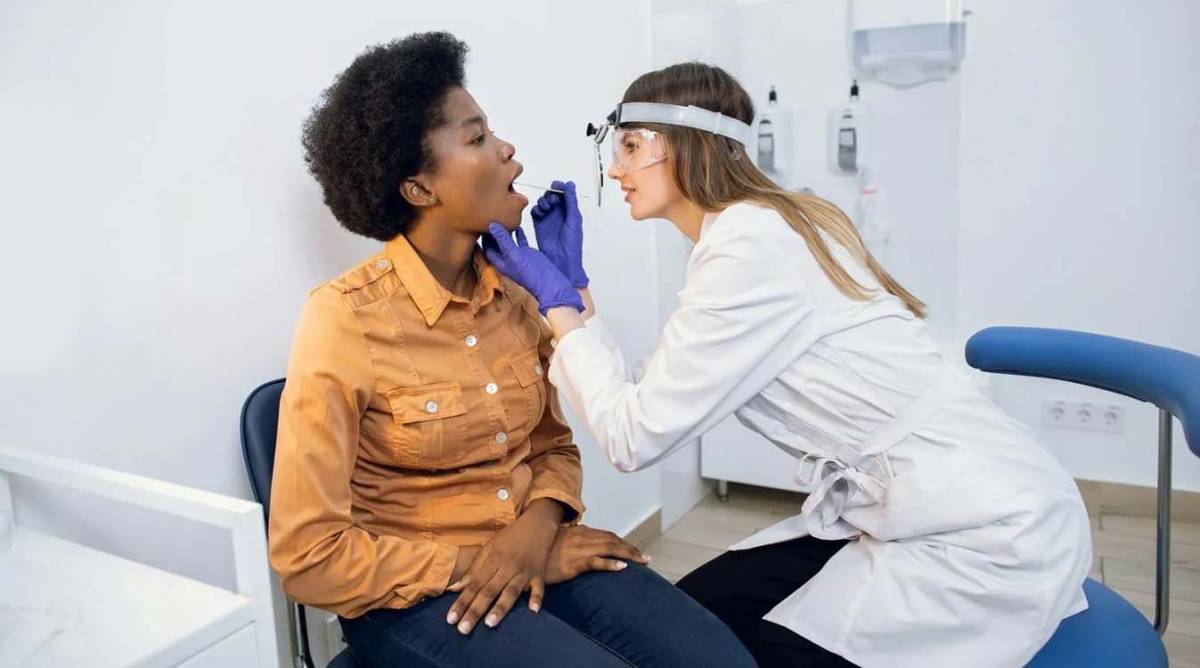
LONDON: A newly developed brush biopsy test capable of detecting mouth cancer in under one hour could transform the way oral cancer is diagnosed, potentially replacing the vast majority of invasive biopsy procedures currently performed on patients with suspicious oral lesions. Researchers at Queen Mary University of London (QMUL) say the non-invasive test demonstrated 95. 5% overall accuracy in distinguishing oral cancer from common potentially malignant disorders, offering a faster, safer and more patient-friendly alternative to conventional tissue biopsies. The breakthrough comes at a critical time as oral cancer cases continue to rise worldwide, with experts warning that delayed diagnosis remains one of the biggest barriers to improving survival rates. Why this development matters For decades, patients with suspicious white patches, red lesions, non-healing ulcers or other potentially cancerous changes inside the mouth have often required a scalpel biopsy to confirm whether cancer is present. While considered the gold standard for diagnosis, scalpel biopsies are invasive procedures that can cause discomfort, bleeding, infection and, in some cases, damage to underlying tissue structures. According to the QMUL research team, most patients undergoing these procedures ultimately do not have cancer. That reality has prompted scientists to search for a more efficient and less invasive diagnostic pathway—one that can quickly identify which patients require urgent specialist intervention and which do not. The finding that surprised researchers The new brush biopsy was validated using more than 1, 000 clinical samples, making it one of the largest studies of its kind in oral cancer diagnostics. Researchers found that the test was able to accurately differentiate oral cancer from potentially malignant oral disorders with 95. 5% overall accuracy. Lead investigator Prof. Muy-Teck Teh, Professor of Molecular Oral Oncology at Queen Mary University of London, said the performance of the test exceeded expectations. He noted that oral cancer survival is closely linked to how early the disease is diagnosed, yet many patients currently undergo invasive procedures despite the likelihood that their lesions may ultimately prove benign. The researchers reported that the brush-based approach performed comparably to more invasive diagnostic techniques while offering significant advantages in patient comfort and accessibility. How the brush biopsy works Unlike a conventional scalpel biopsy, the new technique involves collecting cells from a suspicious oral lesion using a specialized brush. The sample is then analyzed using molecular diagnostic methods capable of identifying cancer-related biological signatures. Because no surgical incision is required, the procedure is: • Non-invasive• Rapid• Repeatable• Relatively inexpensive• Suitable for regular monitoring Researchers believe these characteristics could make the test particularly valuable for patients with persistent oral lesions that require long-term surveillance. A potential shift in oral cancer screening One of the most significant implications of the research may be its role in monitoring patients considered at elevated risk of developing oral cancer. Patients with conditions such as leukoplakia, erythroplakia and other oral potentially malignant disorders often require repeated assessments over many years. The ability to perform a simple brush test during routine follow-up appointments could allow clinicians to detect malignant transformation earlier than is currently possible. Experts say earlier diagnosis is critical because treatment outcomes for oral cancer decline significantly once the disease spreads beyond its initial stages. Could this reduce unnecessary biopsies? The study also highlights a growing challenge faced by oral medicine and oral surgery services worldwide. Recent audits cited by the researchers found that referrals for suspected mouth cancer have increased dramatically over the past decade, while actual cancer detection rates have fallen. Data reviewed by the team showed: • A 450% increase in mouth cancer referrals over 10 years. • A 50% reduction in cancer detection rates among referred patients. • Between 92. 5% and 99. 5% of referred patients did not have cancer. • Between 96% and 98% remained cancer-free five years later. These figures suggest that large numbers of patients currently undergo invasive investigations despite having a very low likelihood of malignancy. Researchers believe the brush biopsy could help healthcare systems triage patients more effectively while reducing pressure on specialist services. What happens next? Although the results are highly encouraging, the test is not yet available for routine clinical use. The QMUL team is currently seeking a commercial partner to help develop and scale the technology for wider healthcare adoption. If development proceeds as planned, researchers estimate the test could enter clinical practice within approximately two years. That timeline means dentists, oral medicine specialists and oral surgeons may soon have access to a rapid chairside tool capable of identifying high-risk lesions without immediately resorting to surgical biopsy. Why dentists should pay attention For dental professionals, this development could represent one of the most important advances in oral cancer diagnostics in recent years. A reliable, non-invasive test capable of delivering results within an hour has the potential to improve patient experience, support earlier referrals and strengthen oral cancer surveillance programs. With oral cancer incidence continuing to rise globally, innovations that simplify diagnosis while maintaining high accuracy are likely to become increasingly important. If future clinical implementation confirms the study findings, the brush biopsy could become a major step forward in the fight against one of the world’s fastest-growing causes of cancer-related death. Stay informed, stay alert! pk/11-Jul-2026/new-brush-biopsy-detects-mouth-cancer-in-under-one-hour” target=”_blank” rel=”nofollow noopener noreferrer”>Read full story on Dental News



GrowthPakistan brings you the latest news to keep an eye on Pakistan’s startup ecosystem. Business keeps you growing when you stay aware of your competitors' moves. GrowthPakistan offers Business, Tech, Global Tech, Global, Auto, and Startup News straight from industries all around the globe. This platform will help you identify upcoming opportunities not only in Pakistan but worldwide.
Email : growthpakistan@gmail.com
Whatsapp : +92320-9497079
© growthpakistan