


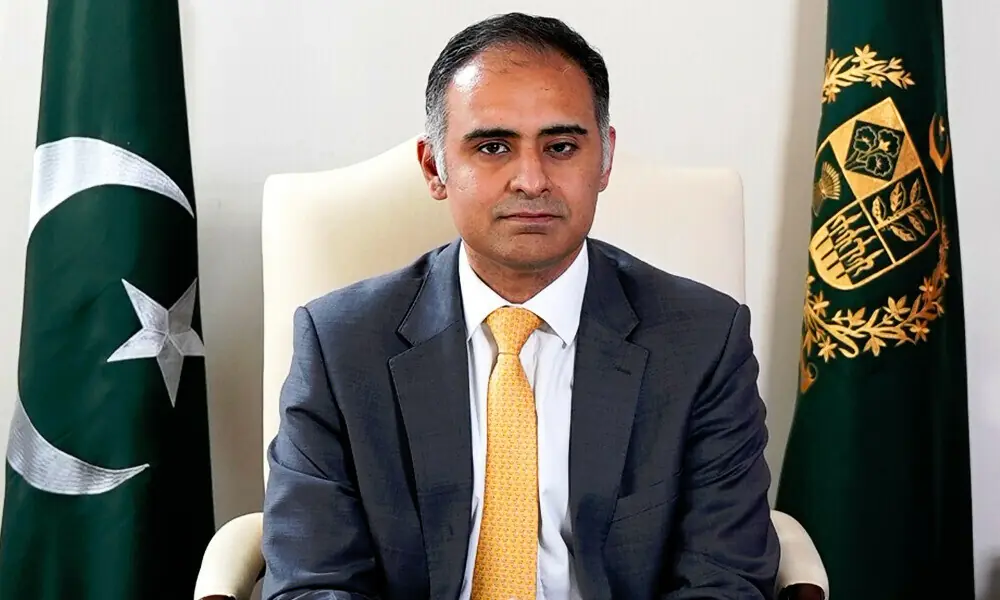
KARACHI: Minister of State for Finance and Revenue, Bilal Azhar Kayani said on Saturday that stable foreign exchange reserves had enabled Pakistan to navigate the economic fallout from the Middle East conflict, which had affected not only Pakistan but economies across the world. Addressing traders and industrialists at the Federation of Pakistan Chambers of Commerce and Industry (FPCCI), Kayani said the government intends to introduce several budget amendments aimed at producing tangible positive outcomes, and pledged to work alongside stakeholders in achieving those goals. He acknowledged that the business community faces a range of challenges, including corporate tax, and said the government plans to resolve issues with the Federal Board of Revenue (FBR) in addition to presenting the next fiscal year’s budget. Under the National Tax Policy, he said, regulatory and additional customs duties will be phased out by 2030. He added that inflation has been declining for the past two years. Kayani said work is underway on a new PRAL system to ease the tax filing process for taxpayers, and that the government aims to reduce direct contact between the FBR and the business community. He described Roshan Digital Accounts (RDA) as an excellent instrument for overseas Pakistanis, noting that the accounts allow full repatriation of profits. He said the Prime Minister has directed that RDA be actively marketed and that return opportunities through the scheme be expanded. He added that a textile company in Pakistan has also opened a Roshan Digital Account. The minister urged the business community to formally apprise the government of difficulties related to the super tax. He said the government is moving toward uniformity in the General Sales Tax (GST) and that customs tariffs will be reduced gradually. The upcoming budget, he said, will focus on improving environment to reduce the cost of business. Earlier, FPCCI Senior Vice President Asif Sakhi said energy remains the single biggest problem facing Pakistani industry, with high energy tariffs pushing business costs to unsustainable levels. He said doing business in Pakistan has become extremely difficult and called for the introduction of a single-window operation to eliminate bureaucratic hurdles. Sakhi said tax rates of up to 60 percent are deterring investment in Pakistan, and argued that rates must be reduced in order to widen the tax net. He noted that import and export problems at the customs level persist and called for a faceless assessment system to be introduced not only in customs but also in income tax. He urged the government to consult stakeholders before finalizing the budget so that post-passage amendments are not required. He said that short-term economic policies and SROs are causing serious concern for businesses, and demanded that a long-term economic policy of at least 10 years be formulated for the business community. Copyright Business Recorder, 2026



GrowthPakistan brings you the latest news to keep an eye on Pakistan’s startup ecosystem. Business keeps you growing when you stay aware of your competitors' moves. GrowthPakistan offers Business, Tech, Global Tech, Global, Auto, and Startup News straight from industries all around the globe. This platform will help you identify upcoming opportunities not only in Pakistan but worldwide.
Email : growthpakistan@gmail.com
Whatsapp : +92320-9497079
© growthpakistan