


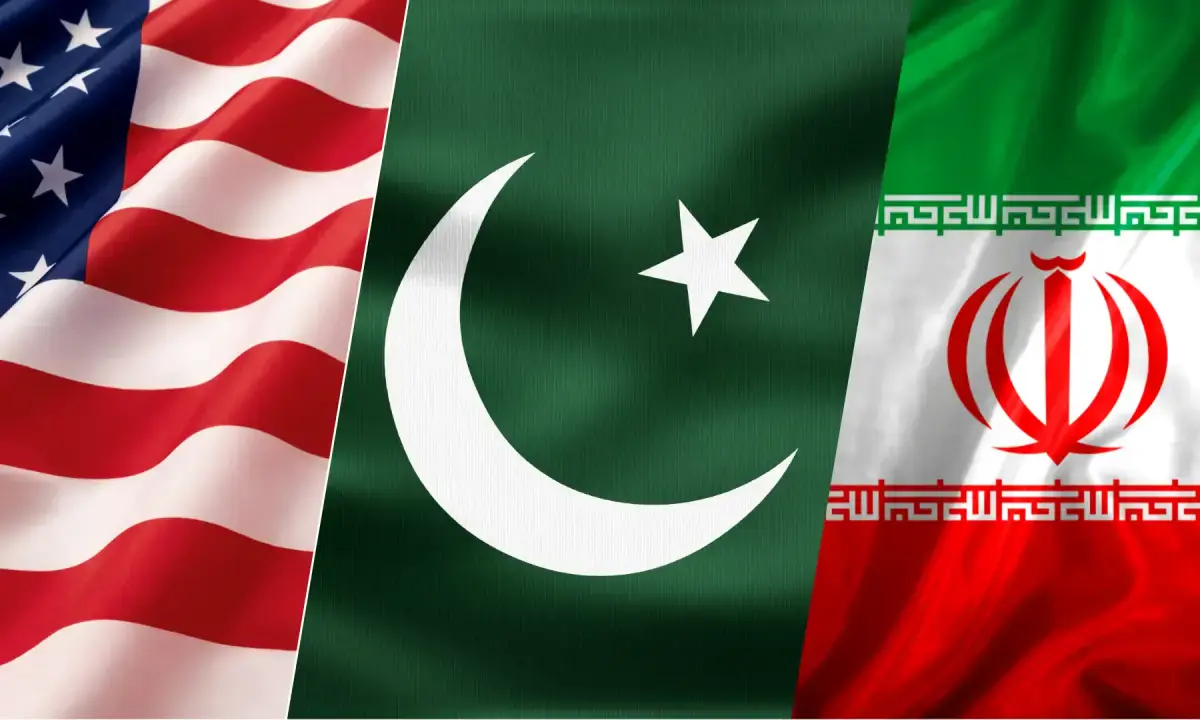
OVER most of the past year, Pakistan’s role in US-Iran diplomacy remained quiet, familiar and carefully limited; functioning as a channel passing messages and keeping lines of open when direct contact between two global adversaries was politically difficult. For the larger part, Islamabad was not setting the agenda, only facilitating communication. That changed at the end of February, when the outbreak of all-out war altered ground realities. What started as discreet facilitation quickly levelled up into something more ambitious, with Pakistan hosting delegations and publicly positioning itself as a bridge between Washington and Tehran. On March 24, Prime Minister Shehbaz Sharif said Pakistan would “facilitate” dialogue, a formulation that Deputy Prime Minister and Foreign Minister Ishaq Dar echoed a week later at the end of a quadrilateral meeting, when he said Pakistan would “host and facilitate meaningful talks”. From the UN chief to the Kremlin, Islamabad’s efforts to mediate between the US and Iran have won it universal acclaim. Although experts agree Pakistan is best-positioned for this role, lasting outcomes are not reached overnight and require structured engagement After the first round in Islamabad earlier this month, that description was altered once again, when Dar said on April 12 that he, along with Chief of Defence Forces Field Marshal Asim Munir, had “helped mediate several rounds of intense and constructive negotiations”. The change in language was not incidental, rather, it signalled a willingness to place national credibility behind a process whose outcome remains uncertain, at least for the time being. Why Islamabad? Part of the explanation for this lies in geography. Pakistan sits next to Iran and within strategic reach of the Gulf, while maintaining longstanding security ties with the US. But geography alone does not create a mediator. The shift, in fact, reflects a search for enhanced relevance on the external front, with Islamabad seizing the opportunity to act as a major diplomatic player, rather than a security concern. This is especially prescient given the current global context; where influence is increasingly seen as being tied to crisis management, a la the Board of Peace. Additionally, the move to mediation is also about containing the spill-over of conflict into Pakistan’s own sphere, whether through economic disruption, regional instability or security pressures. There is also a sense among diplomatic practitioners that Pakistan’s past experience gives it the impetus to attempt such a role. “We played [in the past] an important role in the release of US hostages from Iran, ” former foreign secretary Jalil Abbas Jilani recalls. Pakistan “at the highest level played an active and positive role in bringing about a ceasefire (during the 2026 war) and bringing the two conflicting parties to the negotiating table”, he adds, arguing that the present effort had already averted wider economic losses. He also notes that Pakistan has looked after ‘Iranian interests’ in Washington for decades — the Pakistan embassy houses Tehran’s consular presence in the American capital — which, in his view, places it in a better position than many others. That reading is shared by others. Ambassador Ali Sarwar Naqvi recalls that “Pakistan mediated between Iran and Iraq during Saddam’s time in the 1980s. It didn’t stop the war but the effort was made. ” The former diplomat, who is also executive director of the Centre for International Strategic Studies (CISS) think tank, also cited Pakistan’s role in facilitating contacts between Iran and Saudi Arabia in the context of Yemen, not too long ago. “This history qualified Pakistan to be a mediator. ” The emphasis, however, is on effort rather than outcome. Others underscore how effective mediation depends less on history and more on credibility in the here and now. Former envoy to UN, US and UK, Maleeha Lodhi, observes that “a decisive factor is the mediator’s neutrality and credibility so that the two parties can have trust in the mediating country”. That requirement becomes more demanding in an asymmetric conflict, where one side holds significantly greater leverage. ‘Historic baggage’ Experience suggests that mediation works under certain conditions: in the existence of a mutually painful stalemate, a mediator possessing both legitimacy and some degree of leverage, and the process being tightly managed. Where any of these elements are weak, the process tends to drift, and positions of the parties involved in the conflict harden. The experience of Camp David illustrates this. The US did not simply bring Egypt and Israel together, rather it provided inducements and guarantees that made compromise politically defensible. It must be remembered that agreements have to be sold at home, not just accepted across the table; without that political cover, leaders have little room to manoeuvre. The same constraint applies to the current US-Iran conflict, where Washington is seeking tangible progress on maritime access and nuclear limits, while Tehran needs relief from pressure and recognition of its security concerns. Therefore, any framework for dialogue that does not address both sets of requirements will not do. Process management is equally important. The Dayton Accords of 1995 — which ended the Bosnian War — showed how controlling the environment in terms of limiting external influence and forcing sustained engagement can shape outcomes, while at the same time allowing the mediator to reduce space for backtracking. But that model is harder to replicate today, when negotiators are able to remain in constant contact with their capitals through far more sophisticated communications channels. During the Islamabad talks, there were real-time consultations by the US delegation, which potentially caused positions to shift. The Iranians would have probably loved to do the same, but they were constrained by concerns over the security of their leadership back home. Striking a balance Pakistan’s decision to host the talks reflects an awareness that the venue matters. A controlled setting can reduce public posturing and allow space for exploring options, but the limits are also evident. While Islamabad could host the talks and probably keep the media at bay, it could not fully insulate them from outside influence. This is where the question of leverage becomes central. Pakistan has access to both sides, which few countries do. But access is not the same as influence. The US retains global options and coercive tools, while Iran is operating under sanctions and sustained pressure. In such conditions, the risk is that mediation begins to reflect the priorities of the stronger side, and that very perception can in itself erode trust. One should not forget that in January 1966, Soviet Premier Alexei Kosygin hosted the Tashkent talks that ended the 1965 India-Pakistan war, acting as a neutral broker despite Moscow’s clear tilt toward India. That agreement focused on withdrawal to pre-war positions and a mutual ceasefire, reflecting a priority on regional stability rather than a preference for one side over the other. Ambassador Masood Khan argues that Pakistan is not constrained by history, saying: “Thankfully, Pakistan does not carry any baggage from its previous mediatory roles”. He described the current effort as “a new chapter in the history of diplomacy”, noting that Islamabad had built regional and international support for its role. He also pointed to the framework of Article 33 of the UN Charter as the appropriate basis for mediation. Structure is key Yet even with wider support, the structure of the process remains critical. The Oslo experience is a reminder that momentum without a framework is fragile and negotiations that defer core disputes without enforcement mechanisms tend to unravel over time. The US-Iran dispute is not limited to a ceasefire and involves sanctions, nuclear limits, maritime access and regional security arrangements. Therefore, without sequencing, verification and guarantees, any pause in fighting risks being temporary. Pakistan’s own diplomatic record reflects these limits. It has often played a role in opening channels, rather than shaping final outcomes. Its contribution to the US-China thaw in 1971 was facilitative, while in the Geneva process on Afghanistan, it was a stakeholder. In Doha, it influenced access rather than the terms of agreement. Interestingly, most of the foreign policy experts Dawn spoke to mentioned these examples as instances of mediation, even though they were not, in the strictest sense of the term. These precedents, nevertheless, help unravel what is at stake in the current effort. Pakistan is experienced in enabling dialogue, but its prowess when it comes in sustaining a structured negotiation over time may be found wanting. Despite this, Islamabad has won acclaim for its efforts — everyone from the UN chief to the Kremlin and Beijing, as well as regional heads of state and even the leaders of the two warring sides have only praised Pakistan’s role. Whether the current effort succeeds will depend on how the process is managed. Careful messaging, balanced engagement, and a framework that would allow both sides equal grounds to defend a compromise at home is essential to lasting deal. Without these, it is feared that even sustained dialogue may not produce durable outcomes. Published in Dawn, April 25th, 2026



GrowthPakistan brings you the latest news to keep an eye on Pakistan’s startup ecosystem. Business keeps you growing when you stay aware of your competitors' moves. GrowthPakistan offers Business, Tech, Global Tech, Global, Auto, and Startup News straight from industries all around the globe. This platform will help you identify upcoming opportunities not only in Pakistan but worldwide.
Email : growthpakistan@gmail.com
Whatsapp : +92320-9497079
© growthpakistan