


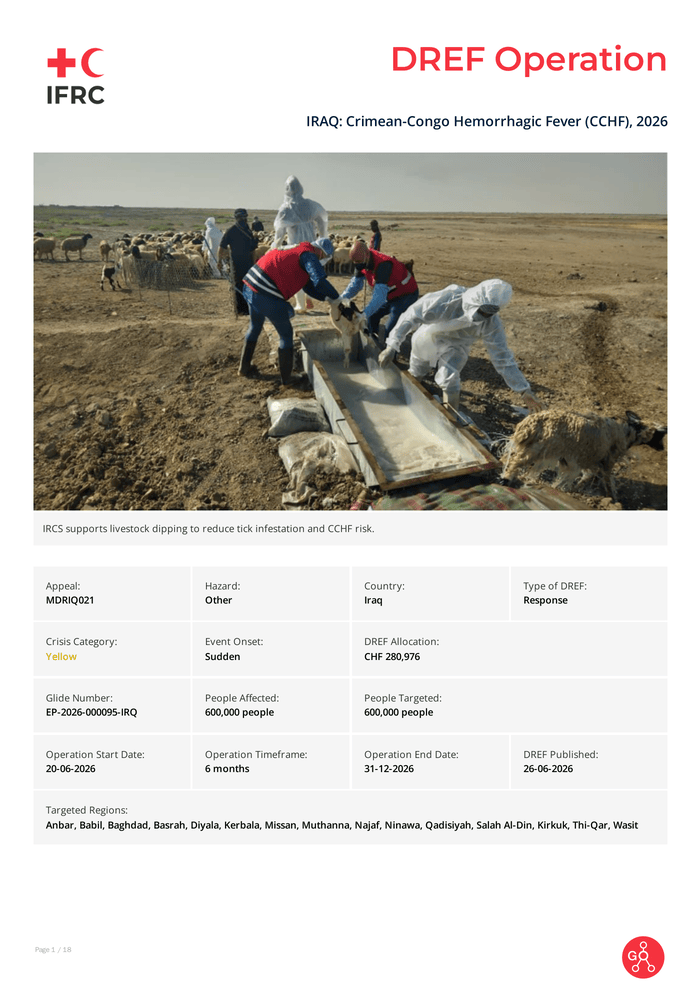
Country: Iraq Source: International Federation of Red Cross and Red Crescent Societies Please refer to the attached file. Description of the Event Date of event 24-05-2026 What happened, where and when? Iraq is experiencing a seasonal outbreak of Crimean-Congo Hemorrhagic Fever (CCHF), a severe zoonotic disease that is endemic in the country and primarily transmitted through bites of infected Hyalomma ticks or through direct contact with the blood and tissues of infected animals. The current outbreak has intensified during the 2026 transmission season, driven by increased livestock movements, seasonal agricultural activities, and heightened human-animal interaction in rural and peri-urban areas. According to official reports issued by the Ministry of Health and Veterinary Authorities, including an updated epidemiological bulletin released on 24 May 2026, the number of confirmed cases continued to rise across multiple governorates, signalling sustained transmission during the peak risk period. As of 15 June 2026, Iraq has reported 171 confirmed cases and 11 associated deaths, resulting in a case fatality rate (CFR) of 6. 4 per cent. Cases have been recorded in 15 governorates, demonstrating the broad geographic spread of the disease and the continued public health significance of the outbreak. Cumulative surveillance data for 2026 indicate that a total of 353 confirmed cases, including 11 deaths, have been reported nationwide from January to mid-June, underscoring the scale of the seasonal outbreak and the persistent risk of further transmission. The highest burden of infection remains concentrated in southern and central Iraq, with Thi Qar governorate reporting 82 cases and 6 deaths, accounting for nearly half of all confirmed infections nationwide. Additional cases have been reported in Muthanna, Baghdad, Missan, Wasit, Babil, Diyala, Basrah, Ninawa, Salah Al-Din, Kirkuk, Kerbala, Najaf, Qadisiyah, and Anbar. Surveillance data indicate a significant acceleration in transmission during recent weeks, with a substantial increase in reported infections during May and a further 66 cases recorded by mid-June. This trend suggests that active transmission continues and that the outbreak has not yet reached its seasonal peak. The current epidemiological pattern is consistent with previous years, when CCHF incidence typically increases during late spring and early summer due to favourable environmental conditions for tick activity, intensified livestock trading, and increased exposure to animals and animal products. The evolving epidemiological situation is further compounded by the approaching Ashura commemorations, one of the largest annual religious events in Iraq, expected to attract millions of pilgrims to Kerbala and other major religious centres across the country. Increased population movement, the establishment of temporary food preparation facilities, heightened demand for livestock products, and the potential rise in informal slaughtering practices may increase exposure to infected animals and contaminated materials. These factors could elevate transmission risks in both affected and neighbouring governorates while placing additional pressure on public health and veterinary services during a period of already heightened disease activity. Given the continued rise in cases and the anticipated influx of pilgrims, strengthened preparedness, risk communication, community engagement, surveillance, and preventive measures are essential to reduce transmission and protect vulnerable populations



GrowthPakistan brings you the latest news to keep an eye on Pakistan’s startup ecosystem. Business keeps you growing when you stay aware of your competitors' moves. GrowthPakistan offers Business, Tech, Global Tech, Global, Auto, and Startup News straight from industries all around the globe. This platform will help you identify upcoming opportunities not only in Pakistan but worldwide.
Email : growthpakistan@gmail.com
Whatsapp : +92320-9497079
© growthpakistan