


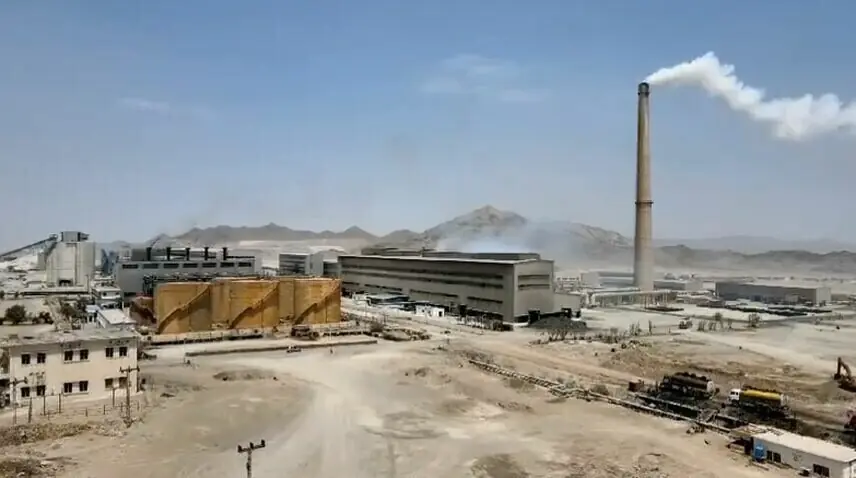
ISLAMABAD: Pakistan on Wednesday told European investors that its vast mineral potential remains largely underexplored and cannot be treated as bankable without proper verification, as the government prepares to unveil a National Mineral Data Centre aimed at digitising geological data to identify available mineral blocks and attract responsible investment into critical raw materials. The message came during the mining breakout session titled “Responsible Resource Partnerships for Europe & Pakistan” held on the second day of the High-Level EU-Pakistan Business Forum in Islamabad, where policymakers, financiers, and private sector representatives converged to assess how the country can move from resource potential to production and exports. Officials acknowledged that while Pakistan is often described as mineral-rich — with references to multi-trillion dollar reserves — such estimates remain largely unverified without detailed exploration and feasibility validation. READ MORE: Pakistan invites Swedish firms to expand mining footprint beyond Reko Diq in upcoming PMIF Dr Nawaz Ahmed Virk, Director General (Minerals) at the Ministry of Energy (Petroleum Division), said exaggerated figures could not translate into investment unless backed by bankable data and commercially viable assessments. He said Pakistan has, however, made significant progress in improving its geological baseline. Accelerated geological mapping of nearly the entire country at a 1: 50, 000 scale is nearing completion, while thematic mapping targeting critical minerals, including rare earth elements, is underway. These efforts, he added, will feed into a centralised digital platform — the National Mineral Data Centre — which will integrate data from the Geological Survey of Pakistan and provincial authorities. The platform will provide investors with visibility into mineral blocks under exploration, licensing status, and open acreage, and is expected to be formally launched at the Pakistan Mineral Investment Forum scheduled for November. The session highlighted that Pakistan possesses a wide range of minerals critical to the global energy transition, including copper, lithium, cobalt, tungsten, chromites, and rare earth-linked deposits, positioning the country as a potential supplier at a time when the European Union is actively diversifying its critical raw material supply chains. Marco Arena, representing the European Investment Bank, said the institution is re-engaging with Pakistan after a period of limited activity, with ongoing and planned investments in water, housing, energy, and infrastructure sectors. He indicated that mining and critical materials could emerge as a future area of cooperation, but stressed that the success of mining projects depends less on geological uncertainty and more on how countries manage regulatory, environmental, and social risks. Projects that address these risks in practice, he said, tend to deliver more stable returns and stronger long-term investment outcomes. Dr Samuel Rist, Resident Representative of the United Nations Development Programme, pointed to a structural challenge, noting that many of Pakistan’s mineral-rich regions overlap with its poorest and most vulnerable districts, particularly in Balochistan and Khyber Pakhtunkhwa. He said this makes community stabilisation, transparency, and environmental, social, and governance safeguards central to any sustainable mining strategy. Private sector participants, including Saira Awan Malik, President of TCS, and representatives from logistics and mining-linked firms, stressed that Pakistan’s mining narrative remains overly concentrated on large-scale projects such as Reko Diq, while the majority of mining activity in the country is carried out at an artisanal or small-scale level. They argued that without integrating smaller operators into formal supply chains through access to exploration tools, financing, and certification mechanisms, the sector’s full potential cannot be realised. A key bottleneck identified across the discussion was the absence of processing capacity. Participants said Pakistan largely exports raw or semi-processed materials, missing value addition opportunities. While some projects, such as Saindak and lead-zinc operations, have limited processing capabilities, large-scale refining and downstream industrial integration remain underdeveloped. Legal expert Kamran Ahmad of White & Case said Pakistan’s mining framework has undergone gradual reform, moving away from outdated laws dating back to 1923 and 1949. He said a modern mining cadastral system, clearer licensing regimes, adjudication mechanisms, and model agreements have been introduced to improve regulatory clarity and investor confidence, although provincial variations in mineral governance still pose coordination challenges. European companies were identified as potential partners in bridging key gaps, particularly in mine automation, electrification, digital mining, ESG compliance, and lifecycle management of mining assets. However, speakers warned that delayed entry into Pakistan’s market could shift competition towards cost-based procurement, where European firms may face challenges competing with lower-cost suppliers from other regions. The discussion concluded that Pakistan’s mineral sector could emerge as a new pillar of export-led growth alongside traditional sectors such as textiles, but only if exploration, financing, processing, legal frameworks, and community safeguards evolve simultaneously. Officials said the current policy direction is aimed at positioning Pakistan not just as a resource holder, but as a responsible and competitive player in global critical mineral supply chains. Copyright Business Recorder, 2026



GrowthPakistan brings you the latest news to keep an eye on Pakistan’s startup ecosystem. Business keeps you growing when you stay aware of your competitors' moves. GrowthPakistan offers Business, Tech, Global Tech, Global, Auto, and Startup News straight from industries all around the globe. This platform will help you identify upcoming opportunities not only in Pakistan but worldwide.
Email : growthpakistan@gmail.com
Whatsapp : +92320-9497079
© growthpakistan