


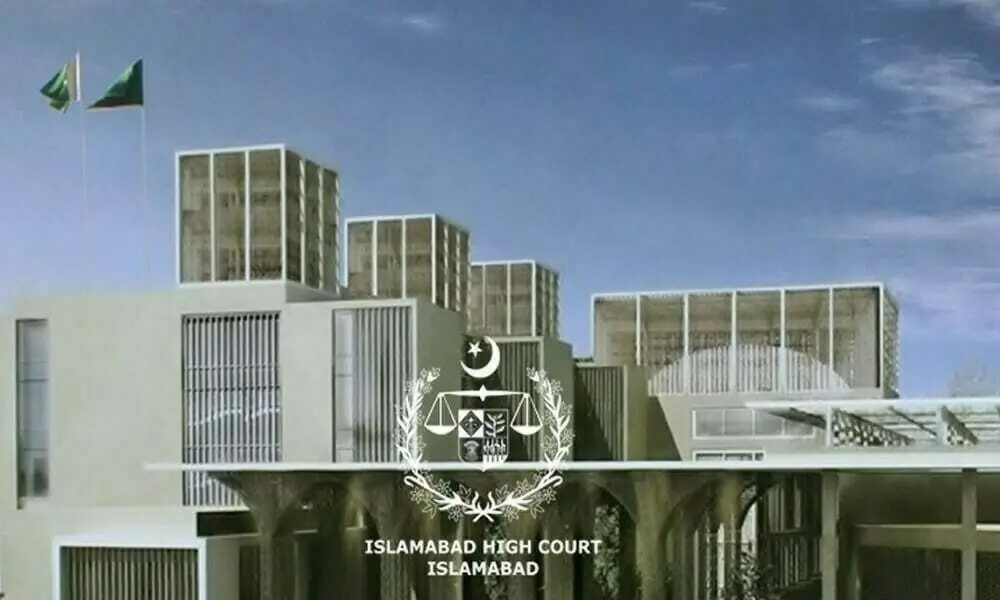
ISLAMABAD: The Islamabad High Court (IHC) has dismissed constitutional petitions filed by Zarai Taraqiati Bank Limited (ZTBL) against the Alternate Dispute Resolution (ADR) mechanism, holding that the matters stood abated by operation of Clause 12 of Section 134A of the Income Tax Ordinance, 2001, as introduced through the amendment dated January 26, 2026. A Division Bench, comprising Justice Arbab Muhammad Tahir and Justice Khadim Hussain Soomro, on Saturday announced its reserved verdict. Advocate Shahid Jameel Khan represented ZTBL, while Hafiz Ahsaan Ahmad Khokhar, Advocate Supreme Court, appeared on behalf of the Federal Board of Revenue (FBR) and the Large Tax Office (LTO), Islamabad. ZTBL had invoked the constitutional jurisdiction of the IHC under Article 199 of the Constitution, challenging ADR proceedings concluded under Section 134A. It sought judicial review along with interim protection against coercive recovery and enforcement measures. Shahid Jameel argued that the ADR mechanism and its determination were vitiated by procedural irregularities, jurisdictional defects, and violations of due process, rendering the outcome open to constitutional scrutiny. He contended that notwithstanding the ADR framework, the High Court retained jurisdiction under Article 199 in cases involving illegality and infringement of fundamental rights. He also sought interim relief to restrain coercive recovery pending final adjudication. Opposing the petitions, Hafiz Ahsaan raised detailed objections to maintainability, arguing that the foundation of the petitions had been extinguished both by statutory abatement and lack of jurisdiction. Also read: IHC tax bench’s order: All SOE references be routed thru ADRC He submitted that Clause 12 of Section 134A, introduced through the January 26, 2026 amendment, expressly provides that proceedings involving companies wholly or partially owned —directly or indirectly — by the federal government shall stand abated by operation of law. He contended that ZTBL, being a federally owned entity, squarely falls within this framework, and therefore all ADR proceedings and related challenges automatically ceased to exist in law. He emphasized that abatement is self-executing, automatic, and mandatory, requiring no judicial intervention. Once triggered, it extinguishes the very existence of the lis, leaving no enforceable cause of action to invoke jurisdiction under Article 199. Hafiz Ahsaan further submitted that ZTBL had already challenged the same ADR determination before the Supreme Court of Pakistan, where the appeal is currently pending. He argued that once the apex court is seized of the matter under Article 185 of the Constitution, the High Court is barred from exercising parallel jurisdiction over the same subject matter. He maintained that the constitutional scheme does not permit concurrent proceedings before two superior courts on identical issues, as this would lead to jurisdictional conflict and procedural inconsistency. In such circumstances, he argued, the appropriate course for the petitioner is to pursue all remedies before the Supreme Court. He further contended that, having already invoked the appellate jurisdiction of the Supreme Court, ZTBL could not simultaneously seek relief under Article 199 before the High Court, as this would violate principles of judicial discipline and forum propriety, rendering the petitions non-maintainable. He also argued that ZTBL, as a state-owned entity, cannot pursue multiple parallel remedies across different constitutional fora, particularly when the legislature has already prescribed abatement as a conclusive legal consequence. Additionally, he pointed out that the interim relief earlier granted by the High Court had been recalled on March 17, 2026, leaving no subsisting protective order in the field. He argued that any further interim relief must now be sought from the Supreme Court, where the matter is pending. After hearing the arguments, the Division Bench held that once the legislature mandates abatement, pending proceedings automatically cease by operation of law, leaving no lis for adjudication on merits. The Court observed that abatement under Clause 12 of Section 134A is a direct statutory consequence, operating independently of judicial determination. The Court further held that constitutional jurisdiction under Article 199 cannot be invoked to revive or continue proceedings that have already been extinguished by statute. Accordingly, the petitions were rendered ineffective by operation of law and were dismissed as non-maintainable. Copyright Business Recorder, 2026



GrowthPakistan brings you the latest news to keep an eye on Pakistan’s startup ecosystem. Business keeps you growing when you stay aware of your competitors' moves. GrowthPakistan offers Business, Tech, Global Tech, Global, Auto, and Startup News straight from industries all around the globe. This platform will help you identify upcoming opportunities not only in Pakistan but worldwide.
Email : growthpakistan@gmail.com
Whatsapp : +92320-9497079
© growthpakistan