


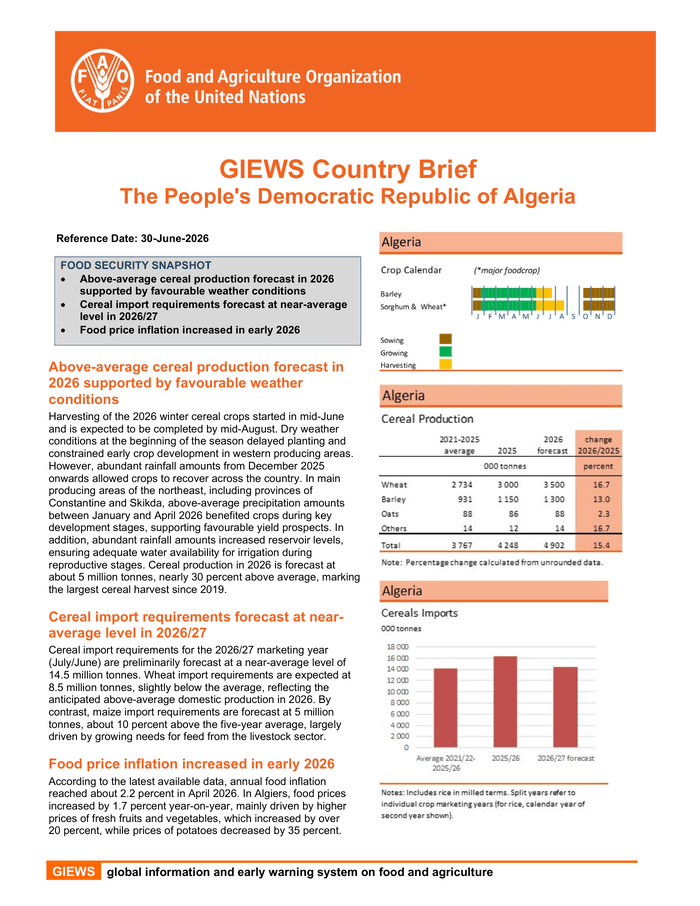
Country: Algeria Source: Food and Agriculture Organization of the United Nations Please refer to the attached file. FOOD SECURITY SNAPSHOT Above-average cereal production forecast in 2026 supported by favourable weather conditions Cereal import requirements forecast at near-average level in 2026/27 Food price inflation increased in early 2026 Above-average cereal production forecast in 2026 supported by favourable weather conditions Harvesting of the 2026 winter cereal crops started in mid-June and is expected to be completed by mid-August. Dry weather conditions at the beginning of the season delayed planting and constrained early crop development in western producing areas. However, abundant rainfall amounts from December 2025 onwards allowed crops to recover across the country. In main producing areas of the northeast, including provinces of Constantine and Skikda, above-average precipitation amounts between January and April 2026 benefited crops during key development stages, supporting favourable yield prospects. In addition, abundant rainfall amounts increased reservoir levels, ensuring adequate water availability for irrigation during reproductive stages. Cereal production in 2026 is forecast at about 5 million tonnes, nearly 30 percent above average, marking the largest cereal harvest since 2019. Cereal import requirements forecast at near-average level in 2026/27 Cereal import requirements for the 2026/27 marketing year (July/June) are preliminarily forecast at a near-average level of 14. 5 million tonnes. Wheat import requirements are expected at 8. 5 million tonnes, slightly below the average, reflecting the anticipated above-average domestic production in 2026. By contrast, maize import requirements are forecast at 5 million tonnes, about 10 percent above the five-year average, largely driven by growing needs for feed from the livestock sector. Food price inflation increased in early 2026 According to the latest available data, annual food inflation reached about 2. 2 percent in April 2026. In Algiers, food prices increased by 1. 7 percent year-on-year, mainly driven by higher prices of fresh fruits and vegetables, which increased by over 20 percent, while prices of potatoes decreased by 35 percent.



GrowthPakistan brings you the latest news to keep an eye on Pakistan’s startup ecosystem. Business keeps you growing when you stay aware of your competitors' moves. GrowthPakistan offers Business, Tech, Global Tech, Global, Auto, and Startup News straight from industries all around the globe. This platform will help you identify upcoming opportunities not only in Pakistan but worldwide.
Email : growthpakistan@gmail.com
Whatsapp : +92320-9497079
© growthpakistan