


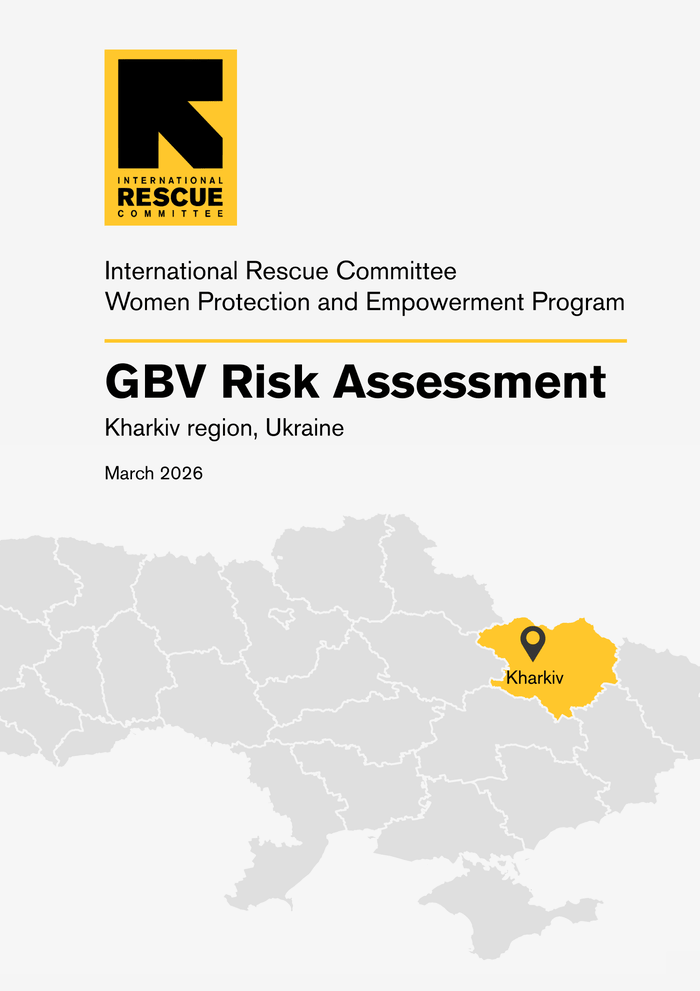
Country: Ukraine Source: International Rescue Committee Please refer to the attached file. In March 2026, the International Rescue Committee (IRC) conducted a Gender-Based Violence (GBV) Risk Analysis in Kharkiv region to better understand risks faced by women and girls and to inform targeted, evidence-based programming. The purpose of the analysis is to identify key GBV risk factors, affected population groups, barriers to accessing services, and gaps in existing response systems within the current humanitarian context. The analysis is based on data collected from key informants, including representatives of social services, local authorities, law enforcement, healthcare providers, and non-governmental organizations. It reflects the experiences and perspectives of internally displaced persons, conflict-affected populations, and other vulnerable and marginalized groups. Findings Overview In Kharkiv oblast, GBV risks are significantly influenced by ongoing hostilities, evacuation processes, and repeated displacement. Intimate partner violence and domestic violence remain the most prevalent forms, while risks of sexual exploitation and coercion increase during transit and in collective or temporary accommodation settings; Overcrowding, lack of privacy, and heightened stress contribute to increased exposure to violence within households. Groups at heightened risk include internally displaced and evacuated women, adolescent girls, women in frontline and rural areas, and women whose partners are servicemembers. Loss of housing and livelihoods, economic hardship, and disrupted social networks increase dependency on others and reduce coping capacity. Adolescent girls are particularly exposed to risks related to limited safe spaces and increased online activity, including technology-facilitated GBV such as harassment, grooming, and digital control; Despite the presence of GBV response services, access remains limited. Fear of stigma, concerns around confidentiality, and low trust in authorities discourage disclosure and help-seeking. Service provision is further constrained by limited human resources, uneven geographic coverage, and insufficient shelter capacity, particularly in high-risk and hard-to-reach areas, resulting in gaps in timely and survivor-centered support. Explore more insights and recommendations in the full GBV risk assessment for Kharkiv region, Ukraine.



GrowthPakistan brings you the latest news to keep an eye on Pakistan’s startup ecosystem. Business keeps you growing when you stay aware of your competitors' moves. GrowthPakistan offers Business, Tech, Global Tech, Global, Auto, and Startup News straight from industries all around the globe. This platform will help you identify upcoming opportunities not only in Pakistan but worldwide.
Email : growthpakistan@gmail.com
Whatsapp : +92320-9497079
© growthpakistan