

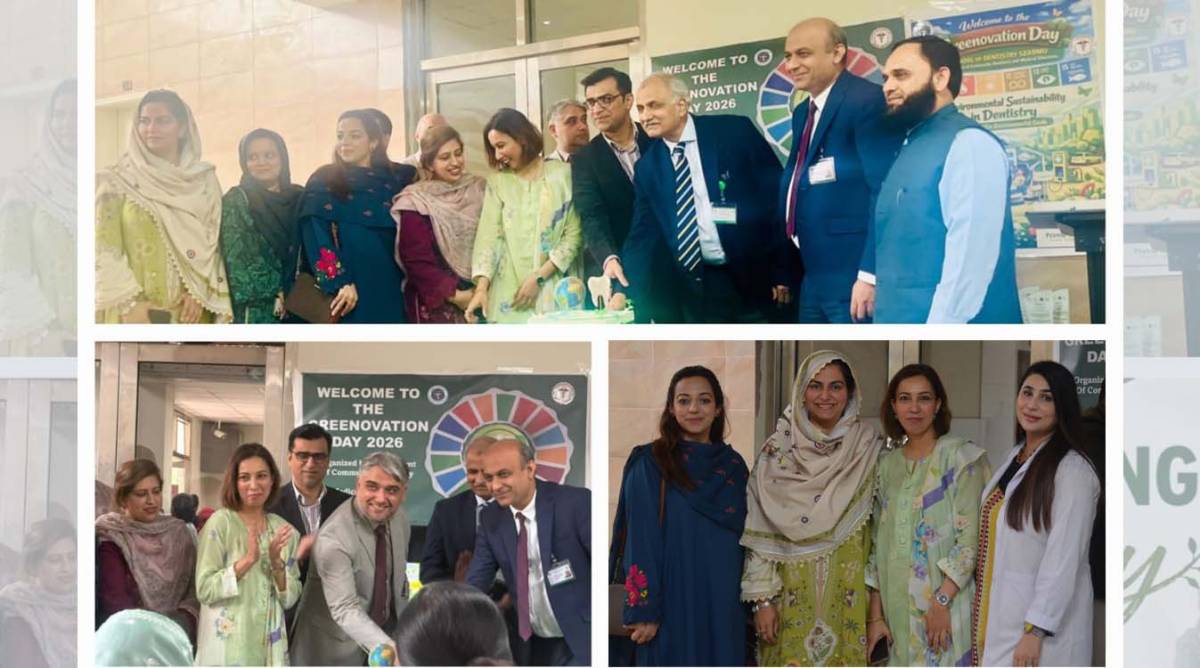
ISLAMABAD: In modern healthcare, dentistry is undergoing a quiet but powerful transformation. The rise of green dentistry is reshaping how future clinicians are trained, shifting focus from purely treatment-driven practice to systems that reduce environmental harm, optimize resource use, and rethink clinical waste at every step. From eco-friendly clinic design and digital workflows to responsible sterilization systems and waste segregation, sustainable dentistry is no longer a conceptual ideal—it is becoming a necessary professional competency for the next generation of dental practitioners. It is within this global shift that the School of Dentistry at Shaheed Zulfiqar Ali Bhutto Medical University (SZABMU), Islamabad, is positioning itself as an early adopter of a forward-looking educational philosophy. The recently concluded Greenovation Day was not merely a student showcase—it represented the culmination of a structured academic initiative designed to embed environmental responsibility directly into undergraduate dental training. Related story: Dr. Nighat Zia earns Asia’s first PhD in Green Dentistry Developed through the Department of Community Dentistry in collaboration with the Department of Medical Education, the initiative was conceptualized as a living model of sustainability in healthcare education. Under the vision of Dr. Nighat Zia, and with strong academic leadership from Dr. Farooq Ahmed Chaudhary and coordination support by Dr. Ayesha Fazal, the program moved beyond traditional classroom learning into applied, experience-based education that connects clinical dentistry with environmental impact. Related story: SZABMU’s School of Dentistry conducts 1, 600 student check-ups to promoting oral health in schools What made this initiative particularly significant was its shift from theory to practice. Third-year dental students were not passive learners—they became designers, communicators, and problem-solvers. Through interactive green activity stalls, they translated sustainability concepts into tangible educational experiences. From conceptual models of eco-efficient dental clinics to demonstrations of waste segregation systems, students actively engaged in reimagining how dental care environments can be made more responsible and resource-conscious. Related story: One-day live maxillofacial surgery workshop held at SZABMU Islamabad The learning experience extended beyond presentation. Interactive engagement tools such as awareness games, participatory activities, and symbolic environmental actions transformed the event into an immersive educational environment. This approach reflects a broader pedagogical shift in medical education: learning is no longer confined to lectures, but extended into experiential, problem-based, and socially relevant contexts. The efforts of the students were recognized with certificates of participation, and a shield was awarded for the best green activity stall, celebrating excellence in innovation and impact. The presence of university leadership, including Vice Chancellor Prof. Dr. Tanveer Khaliq and Principal Dr. Bilal Ahmed, underscored institutional recognition of sustainability as an academic priority rather than a supplementary theme. Their participation highlighted a growing alignment between administrative vision and curriculum innovation, positioning SZABMU as an institution actively responding to global healthcare trends. Importantly, Greenovation Day functioned as the closing milestone of a larger sustainability project, signaling that this was not an isolated event but part of a structured educational progression. By embedding sustainability principles into dental training, SZABMU is effectively preparing future clinicians who can think beyond treatment protocols and consider environmental responsibility as part of clinical decision-making. The broader implication of this initiative is significant: dentistry in Pakistan is gradually evolving toward a model where environmental impact is integrated into professional competence. SZABMU’s approach demonstrates how academic institutions can lead this transition—not through abstract policy statements, but through curriculum-level transformation that directly shapes student behavior, thinking, and clinical imagination. Stay informed, stay alert pk/16-Apr-2026/green-dentistry-szabmu-greenovation-day-sustainable-dental-education” target=”_blank” rel=”nofollow noopener noreferrer”>Read full story on Dental News
Future of dentistry may be green—and it’s already being built at SZABMU

RELATED ARTICLES


