


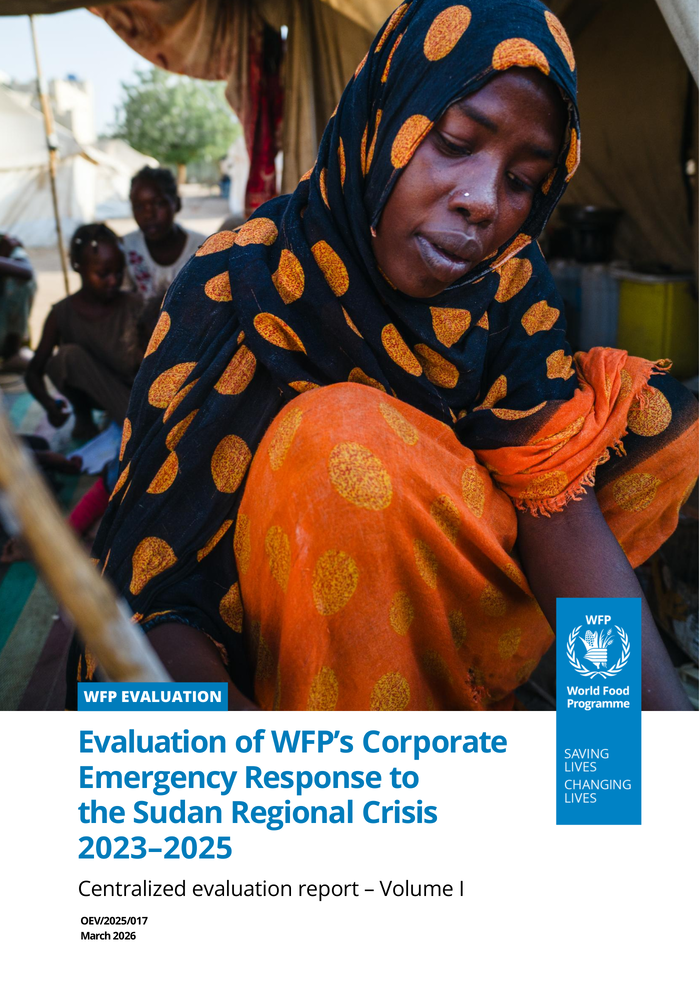
Countries: Sudan, Central African Republic, Egypt, Ethiopia, Libya, South Sudan, Uganda Source: World Food Programme Please refer to the attached files. The evaluation of WFP’s corporate emergency response to the Sudan regional crisis covers WFP’s strategy and operations related to the crisis between April 2023 and August 2025 in the Sudan, the Central African Republic, Chad, Egypt, Ethiopia, Libya, South Sudan and Uganda. What worked, what didn’t and why The evaluation found that WFP rapidly prioritized assistance for newly displaced populations, but access constraints initially limited support to those in hard-to-reach areas. WFP delivered vital large-scale assistance despite severe constraints, but with mixed food security and nutrition outcomes. Early efficiency was hampered by preparedness gaps and risk aversion but improved gradually over time. The evaluation noted that highly politicized aid environment in Sudan, and insufficient WFP corporate leadership, hampered adherence to humanitarian principles in Sudan. WFP played a key role in enabling the inter-agency response to the regional crisis, but the scale-up of the emergency response lacked coherence as a unified regional response and did not consistently receive the corporate attention it deserved. An overall scale-back of operations in Sudan is not yet appropriate but there is scope for a transition from emergency assistance to resilience activities in some areas. What should WFP do? The evaluation presents five recommendations, which address WFP’s response to the Sudan regional crisis and include corporate-level actions to improve other future responses. WFP should: Enhance its understanding of the effects of the Sudan crisis and its ability to prepare for and further respond to the ongoing emergency as well as other large-scale emergencies; Strengthen the way in which it manages the inherent dilemmas involved in implementing a principled humanitarian response in circumstances like those in the Sudan; Ensure that protection, conflict sensitivity, population groups experiencing greater access barriers and accountability to affected people are central to the design, implementation, monitoring and oversight of activities; Reform approaches and systems to enable more meaningful localization of its assistance in the Sudan and neighbouring countries; and Adapt programming and planning for scale-down and a shift towards durable solutions and resilience initiatives.



GrowthPakistan brings you the latest news to keep an eye on Pakistan’s startup ecosystem. Business keeps you growing when you stay aware of your competitors' moves. GrowthPakistan offers Business, Tech, Global Tech, Global, Auto, and Startup News straight from industries all around the globe. This platform will help you identify upcoming opportunities not only in Pakistan but worldwide.
Email : growthpakistan@gmail.com
Whatsapp : +92320-9497079
© growthpakistan