


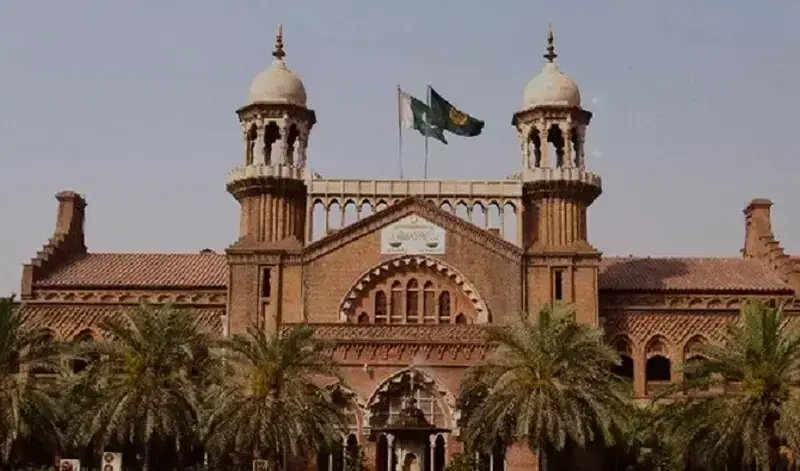
LAHORE: The Lahore High Court (LHC) has ruled that in disputes involving alleged love marriages and claims of abduction or forced marriage, courts must examine the entire chain of surrounding circumstances instead of relying solely on documentary evidence such as a nikahnama (marriage certificate). In a judgement authored by Justice Anwaar Hussain, the LHC dismissed a petition filed by Muhammad Jamil challenging an appellate court decree in favour of a woman who had sought a decree of jactitation of marriage ( takzeeb-i-nikah ), maintaining that she had been abducted and forced into marriage against her will. The judge framed the principal legal question as: “What is the correct approach for a court while appreciating evidence in cases where an alleged love marriage is relied upon by one party and allegations of abduction, coercion or forced marriage are raised by the other? ” According to the judgement, the woman filed a suit for jactitation of marriage, alleging that she had been abducted and compelled to contract marriage without her free consent. Notes free consent, surrounding circumstances key to deciding marriage cases The petitioner, however, contended that the parties had developed a consensual relationship, voluntarily eloped and entered into a love marriage. He also instituted a suit for restitution of conjugal rights, and both cases were consolidated for trial. The trial court dismissed the woman’s suit in 2023 after holding that the marriage had been proved through the production of a nikahnama. It also noted that the parties belonged to the same bradari (caste) and treated the dispute as one concerning the dissolution of marriage. However, the appellate court overturned that decision in 2025, ruling that the alleged marriage had not been proved to be the result of the woman’s free and voluntary consent. Upholding the appellate court’s verdict, Justice Hussain observed that although documents such as a registered nikahnama or even a harassment petition might initially lend credibility to a claim of marriage, they could not be regarded as conclusive where the very foundation of the marriage was challenged on the ground of lack of free consent. “The question whether consent was genuine, voluntary and free from any coercion must be examined in the light of the entire attending circumstances before and after the solemnisation of the purported nikah, ” the judgement said. The judge noted that while the petitioner claimed the parties had developed a consensual relationship before marriage, the record contained no convincing evidence explaining how the relationship had begun. He observed that the parties belonged to different localities situated more than 100km apart and that merely belonging to the same bradari carried no legal significance. The judgement held that where the parties were complete strangers, courts were obliged to examine how the alleged relationship originated and ultimately developed into a decision to marry against the wishes of their families. Justice Hussain clarified that the law did not require parties to prove such a relationship through call records, social media conversations, photographs or other electronic communications. However, he added that the complete absence of any material explaining the genesis of the relationship remained a relevant circumstance in assessing the plea of a consensual love marriage. The judge observed that the woman’s conduct after the alleged marriage was also a relevant factor. Although she had earlier filed a harassment petition, he said such a petition could not, by itself, be treated as conclusive proof of a valid marriage. Justice Hussain further held that where a woman consistently maintained that no valid marriage had ever come into existence, a suit for jactitation of marriage could not ordinarily be converted into one seeking dissolution of marriage. Finding no jurisdictional defect, illegality or perversity in the appellate court’s judgement, the LHC dismissed the petition and upheld the decree in the respondent woman’s favour. Published in Dawn, July 4th, 2026



GrowthPakistan brings you the latest news to keep an eye on Pakistan’s startup ecosystem. Business keeps you growing when you stay aware of your competitors' moves. GrowthPakistan offers Business, Tech, Global Tech, Global, Auto, and Startup News straight from industries all around the globe. This platform will help you identify upcoming opportunities not only in Pakistan but worldwide.
Email : growthpakistan@gmail.com
Whatsapp : +92320-9497079
© growthpakistan