

Country: Pakistan Source: International Water Management Institute Please refer to the attached file. 1. Context Pakistan stands at a critical juncture where water scarcity, climate change, rapid population growth, urbanization, and development pressures are converging with increasing intensity. As one of the world’s most climate-vulnerable countries, its food security, economic growth, ecosystem health, and social stability are deeply intertwined with how sustainably and equitably its water resources are managed. These challenges are further amplified by transboundary river systems, a complex multi-level water governance structure across federal and provincial institutions, and persistent data and capacity gaps. Since its establishment in Pakistan in 1986, the International Water Management Institute (IWMI) has supported federal and provincial governments, development partners, and communities in addressing these interconnected water challenges. The Pakistan Country Strategic Roadmap (CSR) 2024–2030 builds on nearly four decades of engagement, positioning IWMI’s research-for-development (R4D) mandate to respond to evolving geopolitical, socioeconomic, and systemic pressures shaping Pakistan’s water future. 1. 1 Water management in Pakistan Pakistan relies almost entirely on the Indus River Basin, a transboundary system shared with Afghanistan, China, and India, sustaining the country’s agriculture, energy production, and domestic water supply. Nearly half of the basin lies within Pakistan, where river flows are strongly influenced by Himalayan snow and glacier melt, as well as increasingly erratic monsoon rainfall. Climate change is altering these hydrological regimes, increasing uncertainty in water availability and intensifying floods, droughts, and heat extremes. Water management is further complicated by the strong interlink between surface water and groundwater. Unsustainable groundwater abstraction has become a defining feature of the water economy, driven by unreliable surface supplies, energy subsidies, and weak regulations. At the same time, limited water storage capacity and aging irrigation infrastructure constrain the country’s ability to buffer climate variability. Institutionally, water governance spans multiple federal and provincial agencies, with fragmented mandates across water, agriculture, energy, environment, and climate portfolios. While national policies on water and climate change have been adopted in recent years, implementation remains uneven, coordination is weak, and decision-making is often constrained by limited, inconsistent, or inaccessible data. 1. 2 Development challenges Agriculture remains the backbone of the country’s economy, employing over one-third of the workforce and accounting for nearly a quarter of GDP. However, agricultural water productivity is low, with substantial conveyance and on-farm losses, widespread reliance on conventional irrigation practices, and increasing land degradation due to salinity and waterlogging. Climate change has exacerbated these challenges, placing additional pressure on already scarce surface and groundwater resources and threatening rural livelihoods and food security. The country is experiencing one of the fastest rates of urbanization in South Asia. Growing urban populations are placing increasing stress on already dwindling water supply, sanitation, and wastewater management systems. Drinking water contamination from untreated sewage, industrial effluents, and agricultural runoff is widespread, contributing to high burdens of waterborne diseases. Extremely low wastewater treatment rates (<1%), poor solidwaste management, and lack of capacity further undermine urban water security and resilience. Country Strategic Roadmap Pakistan | 2024–2030 Pakistan’s energy sector is closely linked to water availability. Hydropower generation depends on seasonal river flows, while groundwater-based irrigation relies heavily on electricity. Climate-induced hydrological variability, combined with fossil-fuel dependence, exposes the energy sector to increasing risks. Despite growing recognition of the water– energy–food nexus, integrated planning across these sectors is limited. Persistent governance challenges, including fragmented institutions, weak enforcement, limited transparency, and inadequate monitoring, constrain effective responses to water and climate risks. These challenges disproportionately affect women, youth, and marginalized groups, who play critical roles as water users. In a country with a large youth population and deep gender disparities, inclusive water governance is essential for social stability, conflict prevention, and sustainable development. 1. 3 Trends and emerging opportunities Despite these challenges, important opportunities are emerging. Policy momentum around climate action, water security, and renewable energy is increasing, with growing recognition of integrated, evidence-based decision-making processes. Advances in remote sensing, digital monitoring systems, hydrological modelling, and data platforms are creating new possibilities for water accounting, early warning, and adaptive management at scale. Pakistan’s engagement in global and regional initiatives, including mission-driven partnerships under the Transformative Futures for Water Security (TFWS) initiative, reflects appetite for collaborative and cross-sector solutions. The TFWS dialogues have highlighted strong national demand for science-based interventions to build climate-resilient agriculture, improve freshwater availability, overcome data gaps, strengthen governance, and manage transboundary water risks. There is also growing recognition of the role of nature-based solutions, circular water economy approaches, wastewater reuse, and climate-smart agriculture in enhancing resilience while reducing environmental footprints. Harnessing the country’s demographic dividend through targeted investments in youth skills, innovation, and leadership in the water sector presents further opportunities for long-term transformation.
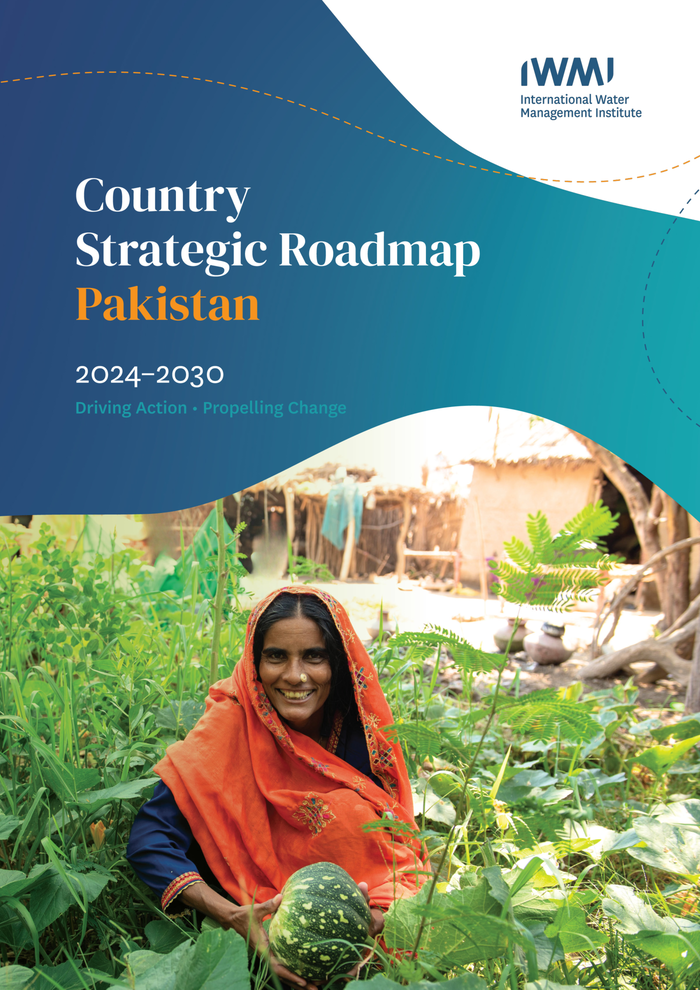
Country Strategic Roadmap: Pakistan 2024–2030 (Driving Action – Propelling Change)

RELATED ARTICLES


