

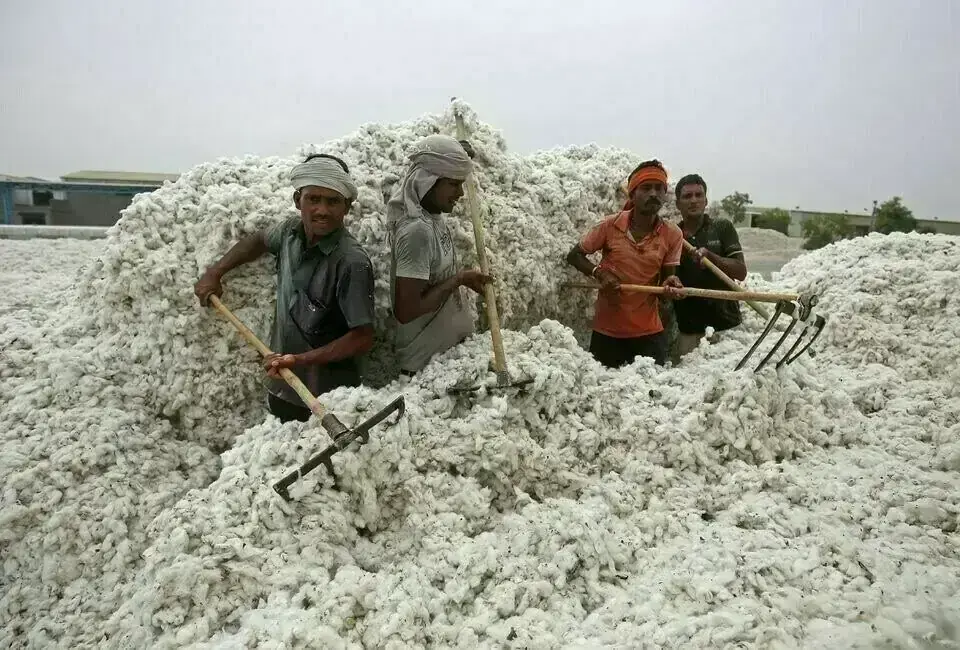
EDITORIAL: The credibility gap in Pakistan’s agricultural planning has widened yet again. A recent warning from the Pakistan Cotton Ginners’ Association (PCGA) underscores a familiar pattern: ambitious targets set by the Federal Committee on Agriculture (FCA) that bear little resemblance to ground realities. Last week, the FCA set a cotton production goal of 9. 6 million bales for 2026-27, even as the outgoing year closed at a meagre 5. 6 million against a target of 10. 2 million. This was not an isolated miss but part of a long-standing trend. Over the past several seasons, including 2024-25, 2023-24 and 2022-23, output has repeatedly fallen to historic lows, exposing the disconnect between policy pronouncements and actual farm outcomes. And, as the PCGA has noted, such habitual overestimation and “unrealistic” targets distort decision-making across the value chain. When projections are crafted without credible data – often lacking satellite-backed assessments or meaningful stakeholder consultation as is standard practice globally – they create uncertainty in the calculations of cotton importers, textile exporters and other market players attempting to gauge supply gaps and pricing strategies. More fundamentally, there is no coherent pathway to justify the leap being envisioned. A near four-million-bale increase over the previous year cannot materialise in a vacuum, especially when structural constraints remain firmly in place: stagnant yields driven by poor-quality seed, low levels of farm mechanisation, and weak policy support to confront both these deficiencies and the mounting pressures of climate change. The sector’s dependence on largely manual cotton-picking in particular – a consequence of limited mechanisation – continues to undermine efficiency and compromises yield and fibre quality through higher contamination. Moreover, recent efforts to reduce dependence on substandard Bt seed through permitting cottonseed imports after decades risk arriving too late to make an impact, with procedural delays pushing their arrival to the tail end of the sowing season. Crucially, the imported cottonseed is currently restricted to tightly controlled, multi-year trials before commercial approval for its import can be granted, which means that farmers are unlikely to see any tangible benefit in the immediate term. Most significantly, it is the pernicious impact of the water-intensive sugarcane crop continuing to encroach upon traditional cotton belts that has had such a disastrous impact on cotton yields. Incentivised by short-term returns but at odds with the nation’s long-term economic priorities, sugarcane has steadily displaced cotton across key growing regions, diverting land and scarce water resources away from a crop central to the textile value chain and the export economy. Plans to establish new sugar mills in southern Punjab, in particular, threaten to deepen this imbalance, even as the country already sits on a surplus of around 1. 5 million tonnes of sugar. The PCGA has already written to the prime minister, the army chief and the Supreme Court chief justice, urging a halt to proposed new mills near Rahim Yar Khan – once a cotton stronghold producing as much as 1. 8 million bales annually but now steadily losing that status – as well as along the Punjab-Sindh border. The question whether or not these appeals will translate into action has no easy answer, given the oversized influence of the sugar industry within the power corridors. Yet timely intervention is critical if Pakistan is to safeguard a crop that holds undeniable strategic and economic value. The past two decades have been a story of steady decline and missed opportunities for the cotton crop. From peak production of 14-15 million bales annually to barely topping five million bales today, the decline reflects years of policy inertia and neglect that borders on institutional failure. Without enforceable crop zoning that protects cotton’s traditional cultivation areas and a credible revival framework, target-setting risks degenerating into an exercise in wishful thinking rather than informed economic stewardship. Copyright Business Recorder, 2026
Cotton targets fail reality test

RELATED ARTICLES


