

KARACHI: As the world marks the 54th World Environment Day under the theme “Inspired by Nature. For Climate. For Our Future, ” Pakistan finds itself on the frontline of a climate crisis and continues to bear certain heaviest consequences. Despite contributing less than one percent of global greenhouse gas emissions, Pakistan remains among the countries most vulnerable to climate change, facing increasingly frequent and severe weather events that threaten lives, livelihoods, infrastructure and economic stability. The United Nations Environment Programme (UNEP), in this year’s World Environment Day campaign, warns that the Earth is sending clear signals through rising temperatures, biodiversity loss, pollution and extreme weather. For Pakistan, those signals have become impossible to ignore. Climate experts say the devastating monsoon floods of 2022 offered a stark illustration of the country’s vulnerability. Scientific studies linked climate change to the unprecedented rainfall that submerged vast areas of the country, affecting more than 33 million people, killing over 1, 700 and causing widespread destruction of homes, roads, schools and health facilities. The World Bank and the Asian Development Bank estimated the disaster inflicted economic losses exceeding 30 billion dollars, setting back development gains and exposing the enormous financial risks posed by climate-related disasters. Since then, Pakistan has continued to face escalating environmental pressures. Heatwaves have become longer and more intense, glaciers in the northern mountain ranges are melting at accelerated rates, and monsoon weather patterns have grown increasingly unpredictable. Air pollution remains another major challenge. Urban centres, particularly large cities, regularly experience dangerous levels of smog and particulate matter. The World Health Organisation identifies air pollution as one of the leading environmental health risks globally, contributing to thousands of premature deaths in Pakistan every year. At the same time, Pakistan is attempting to accelerate its transition toward cleaner energy. The country has set an ambitious target of generating 60 percent of its electricity from renewable energy sources by 2030. In 2024, Pakistan emerged as the world’s third-largest importer of solar panels, reflecting growing demand for renewable energy solutions across households, businesses and industries. UNEP’s 2026 campaign calls on governments, communities and businesses alike to view every decision as a climate signal capable of influencing the future trajectory of environmental sustainability. Among Pakistan’s corporate sector, Oil and Gas Development Company Limited (OGDC), the country’s largest exploration and production company, has sought to position itself within the broader transition toward responsible and sustainable energy development. At the COP29 climate summit in Baku in November 2024, OGDC launched its first Environmental, Social and Governance (ESG) Report, outlining its environmental performance, social initiatives and governance practices in alignment with the United Nations Sustainable Development Goals (SDGs). The company had earlier introduced a Greenhouse Gas Emission Policy in 2023 aimed at supporting Pakistan’s shift toward a lower-carbon economy. During COP28 in Dubai, OGDC joined Pakistan Petroleum Limited (PPL) and Government Holdings Private Limited (GHPL) in signing the Decarbonisation Charter, committing Pakistan’s leading energy producers to align their operations with international climate objectives. Company officials say OGDC is also assessing advanced emissions-reduction technologies, including carbon capture and storage solutions, as part of its long-term strategy to lower its environmental footprint. Beyond its industrial operations, OGDC has launched several environmental and community-focused initiatives designed to promote ecological restoration and climate resilience. One of the company’s flagship projects involves the development of Miyawaki forests — dense, native forests that grow significantly faster than conventional plantations and are recognised for their ability to absorb carbon and restore degraded ecosystems. In February 2025, OGDC partnered with the University of Sindh in Jamshoro to establish a Miyawaki forest covering 36, 000 square feet at the university’s Hyder Bux Pavilion, planting 10, 000 saplings during the project’s first phase. The company has also initiated an olive plantation programme in Lakki Marwat aimed at improving environmental sustainability while creating economic opportunities for local communities. The initiative seeks to enhance soil stability, reduce erosion and provide additional income sources for farmers. In Islamabad, OGDC is collaborating with the Capital Development Authority (CDA) on urban landscaping and tree plantation efforts intended to expand green spaces and mitigate the effects of rising temperatures, pollution and biodiversity loss. The company has additionally invested in renewable energy and water access projects in underserved regions. In Lakki Marwat, 30 homes have been equipped with solar power systems, providing electricity to off-grid households. Solar-powered water pumping facilities have been installed at six communal sites in Balochistan’s Kharan and Noshki districts, helping address chronic water shortages. In the Pirkoh area of Dera Bugti, a 130 KVA solar energy system has been installed for a community water project, ensuring more reliable access to water for local residents. Copyright Business Recorder, 2026
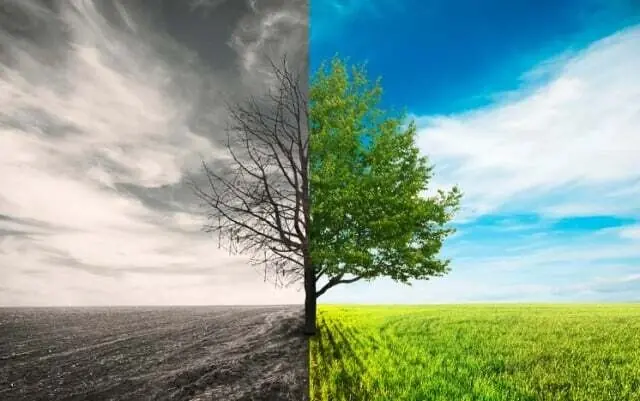
Climate change: Pakistan continues to bear certain heaviest consequences

RELATED ARTICLES


