


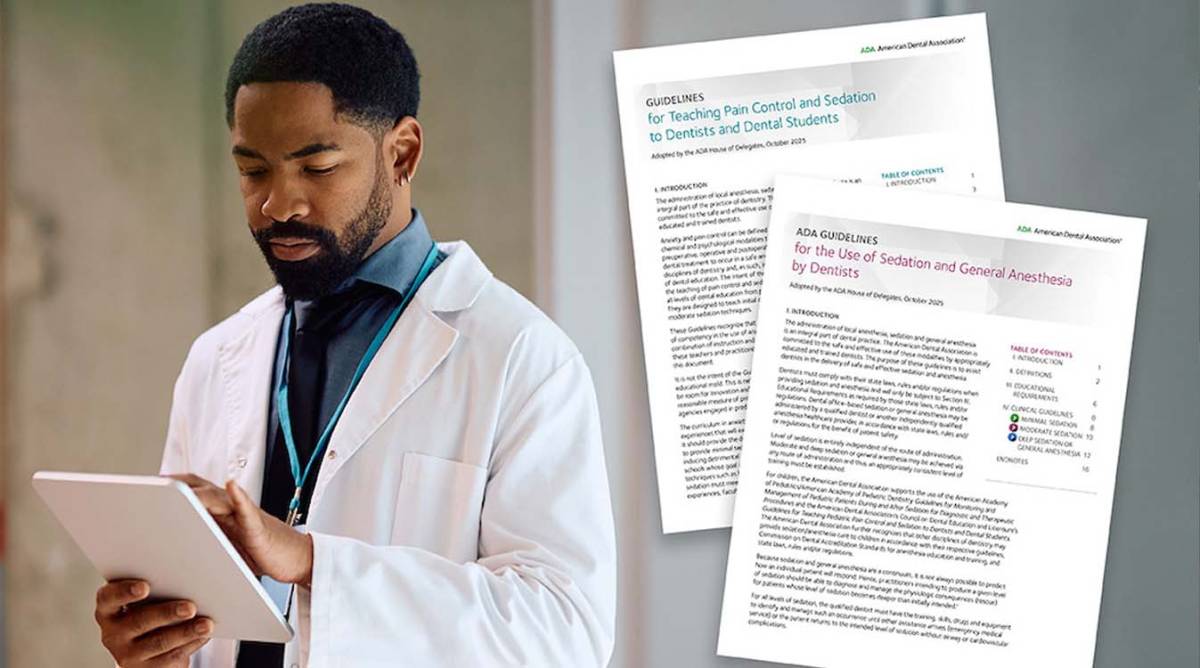
CHICAGO: In a move that could significantly reshape how sedation and anesthesia are practiced and taught in dentistry, the American Dental Association (ADA) has released its first comprehensive update in nearly a decade—tightening safety standards, refining clinical protocols, and modernizing dental education requirements across the board. The updated guidelines are the result of collaboration between experts from eight major dental and medical organizations, and were formally adopted by the ADA House of Delegates in October 2025. The revisions are designed to improve patient safety, standardize care, and ensure dentists are better prepared for sedation-related procedures in real-world clinical settings. At the heart of these changes is a clear message: sedation dentistry must be safer, more consistent, and better supported by training and evidence-based protocols. Stronger safety standards for sedation practice The updated ADA Guidelines for the Use of Sedation and General Anesthesia by Dentists introduce several important clinical refinements. Key updates include: • Revised American Society of Anesthesiologists (ASA) physical status classifications• Updated fasting recommendations before sedation• More precise documentation requirements for weight-based drug dosing• Inclusion of body mass index (BMI) in baseline vital signs• Recommendation for supplemental oxygen across moderate sedation to general anesthesia cases• Clearer guidance on acceptable drug delivery systems• Stronger emphasis on emergency preparedness protocols and regular simulation drills These updates aim to reduce risk during dental procedures where sedation or anesthesia is involved, particularly in complex or high-risk patients. Related story: Saliva test for oral cancer detection under global review as ADA seeks public input New expectations in dental education and training The ADA also updated its Guidelines for Teaching Pain Control and Sedation to Dentists and Dental Students, aligning them with current Commission on Dental Accreditation (CODA) standards. These changes outline: • Core educational requirements for minimal and moderate sedation• Standardized competency expectations for dental students• Stronger emphasis on clinical readiness before independent practice The focus is not only on knowledge, but on ensuring dentists can safely apply sedation techniques under real-world conditions. Collaboration across leading dental and medical bodies This landmark revision was developed with input from leading professional organizations, including: • Academy of General Dentistry• American Academy of Pediatric Dentistry• American Academy of Periodontology• American Association of Oral and Maxillofacial Surgeons• American Dental Society of Anesthesiology• American Society of Anesthesiologists• American Society of Dentist Anesthesiologists According to Paul A. Shadid, DDS, chair of the ADA Council on Dental Education and Licensure, the update reflects a unified commitment to patient safety. He emphasized that the goal was to bring clarity, strengthen safety expectations, and align dental anesthesia practices with modern national standards. Focus on pediatric sedation guidelines under development The ADA has also initiated work on dedicated pediatric sedation guidelines following direction from its 2025 House of Delegates. Until these are finalized, clinicians are advised to follow: • American Academy of Pediatrics (AAP) and American Academy of Pediatric Dentistry (AAPD) sedation monitoring guidelines• Existing ADA teaching guidelines for pediatric pain control and sedation• Relevant CODA standards and state-level regulations This ensures continued safety in pediatric dental care during the transition period. Why these updates matter now Dental sedation is widely used across procedures ranging from minor interventions to complex oral surgeries. With increasing patient volume and rising clinical complexity, the need for standardized safety frameworks has become more urgent than ever. According to Brian J. Howe, DMD, chair of the ADA Anesthesiology Committee, the consensus-driven update represents a major step forward for both patients and practitioners, reinforcing a shared commitment to safer dental care. Access to full guidelines The updated ADA sedation and anesthesia guidelines, along with supporting resources for dental professionals, are available at: https: //www. ada. org/sedation Stay informed, stay ahead pk/25-Apr-2026/ada-updates-sedation-anesthesia-guidelines-dentistry-safety” target=”_blank” rel=”nofollow noopener noreferrer”>Read full story on Dental News



GrowthPakistan brings you the latest news to keep an eye on Pakistan’s startup ecosystem. Business keeps you growing when you stay aware of your competitors' moves. GrowthPakistan offers Business, Tech, Global Tech, Global, Auto, and Startup News straight from industries all around the globe. This platform will help you identify upcoming opportunities not only in Pakistan but worldwide.
Email : growthpakistan@gmail.com
Whatsapp : +92320-9497079
© growthpakistan