


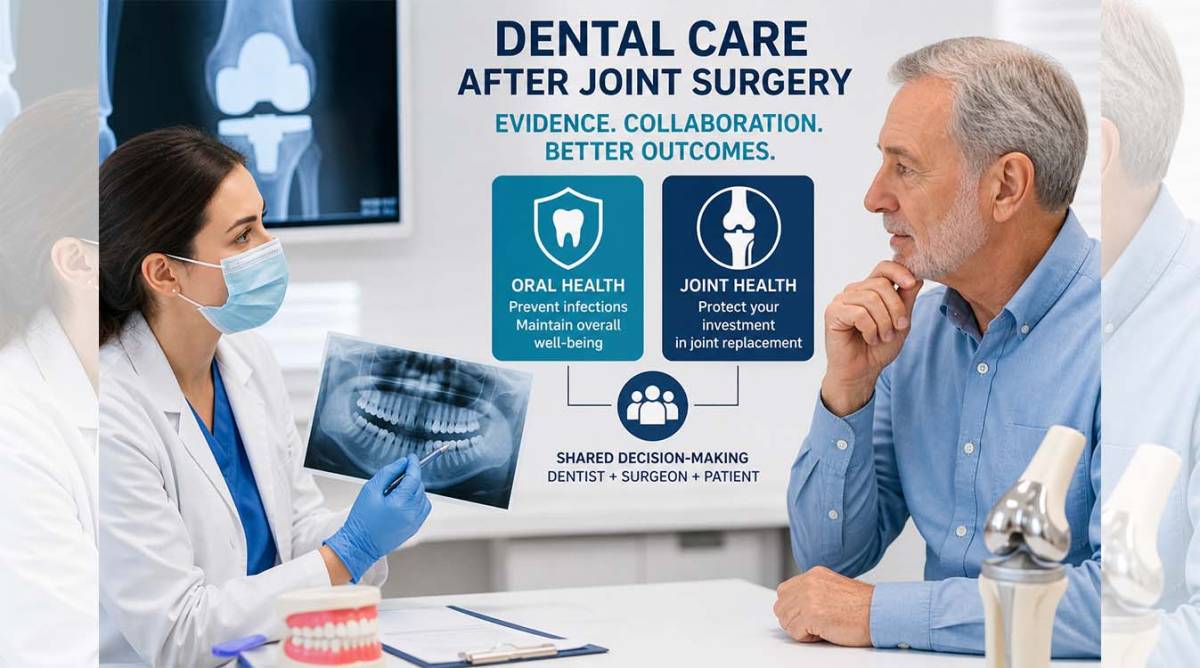
Should dental treatment be delayed after a joint replacement—or could that decision itself put patients at risk? In a significant development that could reshape clinical decision-making worldwide, the American Dental Association (ADA) has issued a new position statement addressing how dentists should manage patients with prosthetic joint replacements—challenging parts of a widely discussed orthopedic guideline. Published in the Journal of the American Dental Association (JADA), the statement from the ADA Council on Scientific Affairs (CSA) sends a clear message: while there is alignment on antibiotic use, decisions about delaying dental care should not be automatic. Where dentistry and orthopedics agree—and where they don’tThe debate centers around a 2024 clinical practice guideline developed by the American Academy of Orthopaedic Surgeons and the American Association of Hip and Knee Surgeons. On one key issue, there is strong consensus. “The position statement reinforces the ADA’s long-held position that antibiotic prophylaxis is generally contraindicated in immunocompetent patients, ” said Kevin Schwartz, D. M. D. , member of the Council on Scientific Affairs. For immunocompromised patients, however, the guidance is clear: antibiotic decisions should be made by the orthopedic surgeon, tailored to the patient’s medical condition. The controversy: should dental treatment be delayed? Where the ADA draws a line is on the recommendation to delay “nonurgent” invasive dental procedures for three months after joint replacement surgery. According to the council, this is not backed by strong evidence. “The suggested three-month delay for nonurgent dental work is a clinical opinion, not an evidence-informed recommendation, ” said Jennifer Holtzman, D. D. S. , chair of the council. Instead, the ADA is advocating for a more nuanced approach—one that prioritizes individualized care over blanket rules. A shift toward shared decision-making The ADA’s position emphasizes collaboration between: • Dentists• Orthopedic surgeons• Patients This model aims to balance two critical priorities: • Protecting joint stability• Maintaining optimal oral health Delaying dental care without strong evidence, experts suggest, could lead to unintended consequences—such as worsening oral infections or delayed diagnosis of serious conditions. The timing of this statement is significant. With a growing global population of patients receiving hip and knee replacements, the intersection between dental care and orthopedic outcomes is becoming increasingly important. “The new ADA CSA position statement will be a powerful resource. .. bringing clarity to both the dental provider and orthopedic surgeon, ” Dr. Schwartz noted, highlighting its role in guiding treatment timing and risk assessment. A new chapter in clinical guidance The statement, released online ahead of the June issue of JADA, also marks the launch of a new feature—Association Reports. Going forward, the ADA Council on Scientific Affairs is expected to publish three to four position statements annually, addressing evolving clinical challenges across dentistry. The bigger picture: evidence over routine At its core, this is more than a guideline update—it reflects a broader shift in modern healthcare. Rigid, one-size-fits-all recommendations are increasingly being replaced by evidence-based, patient-centered decision-making. For dentists and specialists alike, the message is clear: Clinical judgment, collaboration, and evidence must guide care—not routine delays. As the number of prosthetic joint patients continues to rise, how these decisions are made could have lasting implications for both oral and overall health. Stay informed, stay ahead pk/05-May-2026/ada-dental-guidelines-joint-replacement-delay-debate” target=”_blank” rel=”nofollow noopener noreferrer”>Read full story on Dental News



GrowthPakistan brings you the latest news to keep an eye on Pakistan’s startup ecosystem. Business keeps you growing when you stay aware of your competitors' moves. GrowthPakistan offers Business, Tech, Global Tech, Global, Auto, and Startup News straight from industries all around the globe. This platform will help you identify upcoming opportunities not only in Pakistan but worldwide.
Email : growthpakistan@gmail.com
Whatsapp : +92320-9497079
© growthpakistan