


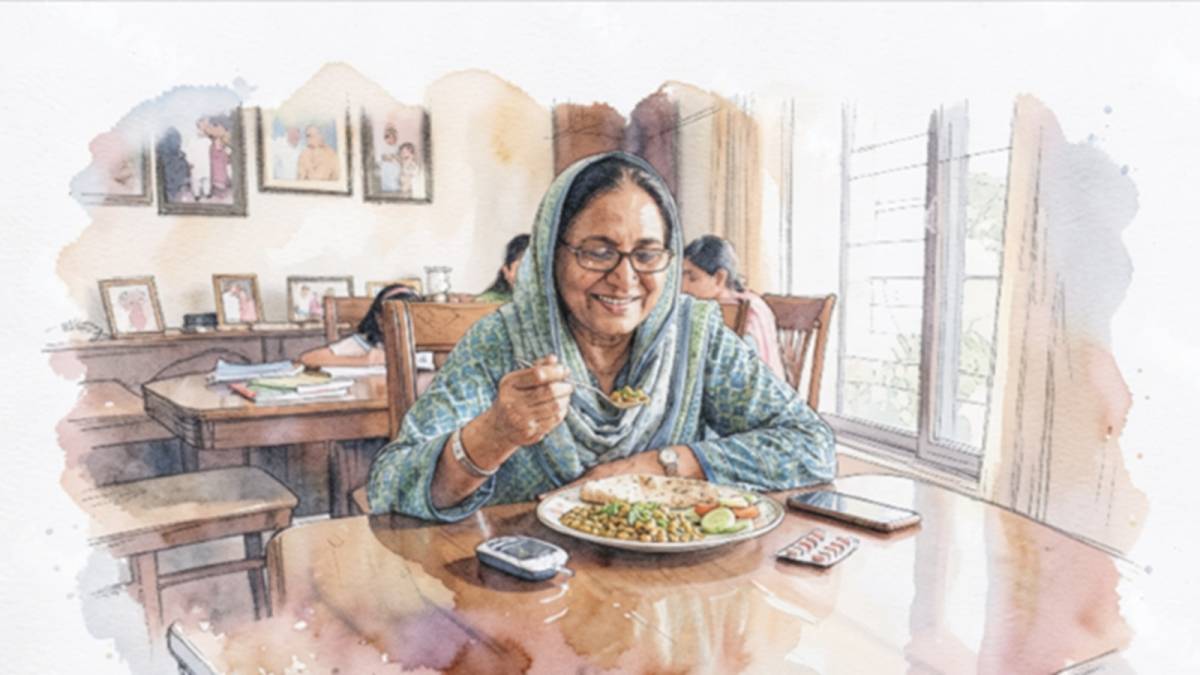
I have lived with diabetes for over 30 years. As a consequence, I have learned that the real issue is rarely one food item. It is not simply eggs, coffee, roti, rice, ghee or fruit. The real issue is the total daily pattern of eating, movement, weight, sleep and testing. For Pakistan, this is no longer a private health concern. It is a national problem, visible in households, clinics, hospitals and workplaces across the country. Pakistan is facing one of the most serious diabetes burdens in the world. The International Diabetes Federation estimates that in 2024 Pakistan had 34. 5 million adults aged 20–79 living with diabetes, with adult prevalence at 31. 4%. Pakistan is listed as having the highest adult diabetes prevalence and the fourth-highest number of adults with diabetes globally. By 2050, the number is projected to rise to 70. 2 million if current trends continue. This is not only an urban lifestyle disease. The Second National Diabetes Survey of Pakistan 2016–17 found overall adult diabetes prevalence at 26. 3%, with 28. 3% in urban areas and 25. 3% in rural areas. It also found that 7. 1% of adults were newly diagnosed during the survey, meaning many people were already diabetic without knowing it. Pre-diabetes stood at 14. 4%, showing that millions more were already moving towards the disease. There is also a historical and biological dimension to the crisis. South Asians often develop diabetes and central fat accumulation at lower body weights than many other populations. One plausible explanation is that generations exposed to food scarcity, repeated famines and chronic undernutrition developed metabolic traits suited to survival in scarcity but harmful in today’s environment of cheap sugar, refined starch and sedentary work. Colonial rule aggravated this vulnerability by deepening deprivation and producing some of the worst famines in the region’s history. This does not remove personal responsibility, but it does mean that Pakistan’s diabetes crisis is rooted not only in modern lifestyle choices, but also in a long history of hunger, poverty and distorted food systems. How Bugti Folk Music Is Reclaiming Cultural Space Globally Pakistan’s diabetes crisis will not be solved by food scares, miracle diets or imported supplements – it requires a practical shift in daily behaviour Indicator Pakistan Estimate Adults aged 20–79 with diabetes, 2024 34. 5 million Adult diabetes prevalence, 2024 31. 4% Projected adults with diabetes by 2050 70. 2 million Undiagnosed adults with diabetes, 2024 9. 3 million Diabetes-related health expenditure, 2024 USD 2. 74 billion Economic Toll The economic cost is immense, yet it receives nowhere near the policy attention it deserves. Diabetes is not only a health problem; it reduces productivity, increases household medical spending, raises pressure on hospitals, and contributes to costly complications such as heart disease, kidney failure, blindness, amputations and stroke. The International Diabetes Federation estimates Pakistan’s diabetes-related health expenditure at about USD 2. 74 billion in 2024, rising towards nearly USD 5 billion by 2050. Even this understates the true burden because it does not fully capture lost income, family caregiving, premature deaths and the wider economic damage caused by poorly controlled disease. Government attention remains inadequate. Pakistan spends too much effort managing complications after they occur and too little on prevention, early screening, nutrition education, primary care and public health regulation. The cost of medication is another neglected part of the crisis. For individuals and families, diabetes treatment can be financially draining, especially where insulin is required and must be purchased regularly. The expense is not limited to insulin alone; it includes glucose monitoring, consultations, laboratory tests, treatment of complications and lost working time. At the household level, this can become prohibitive. At the national level, it represents a continuing drain on health spending, productivity and foreign exchange. A disease that affects tens of millions cannot be treated as a private medical inconvenience. Transforming Our Relationship with Food As a fundamental reform for economic development, the food we eat needs to change. Pakistan cannot build a healthier and more productive workforce while normalising diets built around sugar, refined starch, fried food and ultra-processed snacks. Nutrition should be treated as economic policy, not only as personal advice. Prevention through better food habits, better labelling, school nutrition standards, public awareness and primary care screening is far cheaper than paying for complications after decades of neglect. Forgotten Architect of Pehlwani: Reclaiming The Legend Of Lahore’s Ustad Noor-ud-Din Pehlwan This should change how Pakistani consumers think about food. The question is not whether an egg is good or bad, or whether coffee is safe. For most people, these are secondary issues. The bigger problem is the daily combination of sweet tea, biscuits, rusks, paratha, large portions of roti or rice, sugary drinks, packaged juices, fried snacks, bakery items, low vegetable intake and little physical activity. Here are some of the key dietary shifts needed: Reducing Liquid Sugar: The first priority should be reducing liquid sugar. Soft drinks, packaged juices, energy drinks, sweetened lassi and heavily sugared tea add calories quickly and create sharp glucose loads. They are easy to consume, easy to underestimate and difficult for the body to absorb safely when taken regularly. Controlling Refined Carbohydrates: The second priority is controlling refined carbohydrates rather than demonising them. Roti and rice are normal parts of Pakistani diets. They do not need to be banned. But portion size matters, and so does pairing. A plate built around roti or rice alone is very different from a plate that includes dal, chana, lobia, vegetables, yoghurt, eggs, chicken, fish or salad. The purpose is not starvation. The purpose is a slower and more balanced rise in blood sugar. Rethinking Packaged Snacks: The third priority is to stop treating packaged snacks as harmless. Biscuits, rusks, cakes, chips, nimko and instant noodles are often made from refined flour, sugar, salt and poor-quality fats. Their routine use has quietly become part of Pakistan’s dietary problem. Occasional consumption is not the issue. Daily dependence is. Cutting Back on Fried Foods: The fourth priority is reducing fried food and unhealthy fats. Parathas, samosas, pakoras, banaspati, bakery shortening and repeatedly used frying oil should not be treated as everyday staples. Healthy eating does not require imported foods or extreme diets. It requires a steady shift towards simpler, fresher and less processed meals. Movement, Screening and the Path Forward Is Paulo Coelho’s New Book A Guide To Love Or An Overly Optimistic Fairy Tale? Gentle, regular exercise is equally important. It does not have to mean punishing gym routines or dramatic transformations. In my own case, I have been able to avoid many of the pitfalls of diabetes by doing something simple and consistent: swimming at least five times a week, for around 40 minutes at a time. Regular movement helps the body use glucose better, supports weight control, improves circulation and reduces the sense that diabetes management is only about restriction. The key is consistency, not intensity. Pakistan does not need expensive imported health foods to improve diets. The practical answer is local and affordable: dal, chana, lobia, seasonal vegetables, saag, bhindi, cabbage, carrots, cucumbers, tomatoes, fruit, plain dahi, unsweetened lassi, eggs, fish where affordable, peanuts, sesame, flaxseed, whole wheat roti, barley and home-cooked sabzi. Screening must also become routine. Diabetes can damage the heart, kidneys, eyes and nerves long before symptoms become obvious. People with family history, excess weight, high blood pressure, tiredness, frequent urination, excessive thirst, blurred vision or recurrent infections should be tested. Earlier diagnosis gives people a better chance to manage the disease before complications set in. Pakistan’s diabetes crisis will not be solved by food scares, miracle diets or imported supplements. It requires a practical shift in daily behaviour: less sugar, fewer refined and packaged foods, smaller starch portions, more fibre, more protein, more vegetables, regular movement and earlier testing.



GrowthPakistan brings you the latest news to keep an eye on Pakistan’s startup ecosystem. Business keeps you growing when you stay aware of your competitors' moves. GrowthPakistan offers Business, Tech, Global Tech, Global, Auto, and Startup News straight from industries all around the globe. This platform will help you identify upcoming opportunities not only in Pakistan but worldwide.
Email : growthpakistan@gmail.com
Whatsapp : +92320-9497079
© growthpakistan