


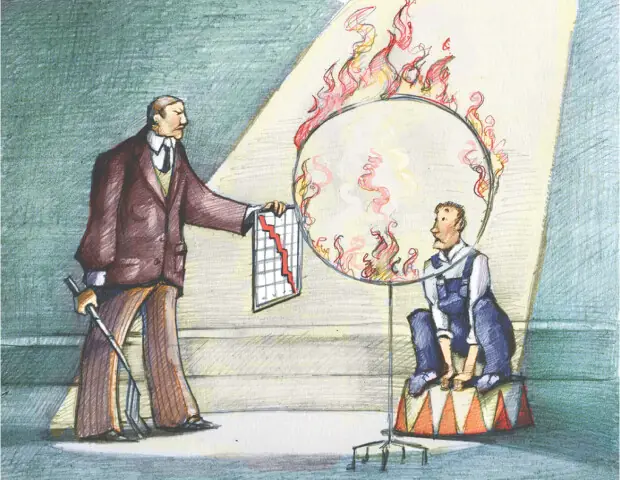
When a memorandum of understanding (MoU) intended to bring the Iran war to a formal close within sixty days was announced on June 14, the world, particularly Asian economies dependent on Gulf oil, breathed relief. The Strait of Hormuz, which had been largely shut to shipping since late February, seemed to be slowly reopening, and oil prices retreated from their crisis peaks. The damage the conflict had inflicted on Asian economies — on growth, household budgets, and government finances — appeared to be contained as the ceasefire, no matter how fragile, between the US and Iran spawned hopes of a lasting peace in the region, which supplies around 90 per cent of energy to the Asian economies. But, barely a month into the ceasefire, fresh hostilities broke out between the US and Iran. Though Pakistan and other mediators have kept pushing both to return to the MoU — a 14-point framework under which Washington and Tehran agreed to halt hostilities and reopen Hormuz to shipping while working through the harder questions of sanctions, Iran’s nuclear programme, and regional security over a 60-day window —, they haven’t been able to stop the war as yet. Since its resumption last month, the war is no longer contained to two countries. It has pulled in other countries from the region, as well as armed militias. The map of this war keeps getting bigger, with more actors being added. The conflict has already spilt over to the Red Sea, where Yemen’s Iran-backed Houthis are targeting Saudiflagged ships, and to the Caspian Sea, where Ukraine hit vessels carrying Iranianlinked military cargo. Riyadh has also stitched together a Multinational Maritime Defence Alliance, a 14-nation coalition announced on July 30, led by Saudi Arabia, alongside Turkey, Pakistan, and Egypt, to safeguard critical regional waterways. That expansion is the real danger now. Global institutions have already stopped treating the Iran war as a regional story. The International Monetary Fund has cut its global growth forecast, pointing to geopolitical uncertainty, tighter financial conditions and inflation risk. The World Bank puts growth below pre-pandemic norms; the Organisation for Economic Cooperation and Development flags the same softness in both advanced and emerging economies. Global institutions have already stopped treating the Iran war as a regional story The International Energy Agency, for its part, has warned that oil-market volatility tied to the war is complicating energy security and investment planning worldwide. None of these institutions is describing a contained Middle East problem; they are describing a drag on the global economy. The transmission channel is energy, and it is a fast one. The region runs a large share of the world’s energy trade — a fifth or more of all seaborne oil passes through the Strait of Hormuz alone, with Bab el-Mandeb carrying a further slice of global shipping. Any disruption to Gulf oil and gas supply pushes crude prices up, and that shows up quickly in transport costs, manufacturing costs and electricity bills everywhere. It doesn’t stop there. Higher energy costs feed into fertiliser and food production too. The World Bank has repeatedly pointed out that commodity spikes land hardest on developing economies, which is exactly the group least equipped to absorb them. Pakistan is a useful illustration of how that plays out in practice. The economy has largely escaped any unreversible impact so far. GDP growth came in at 3. 7pc for FY26, the fastest pace in four years yet short of the 4pc target due to a slowdown in the fourth quarter. Finance Minister Muhammad Aurangzeb blamed the Middle East conflict for disrupting a trajectory that had otherwise been on track despite the 2025 floods and tariff uncertainty at the start of the fiscal year. A good year, undercut by a war hundreds of miles away. The State Bank’s monetary policy tells the same story from a different angle. It held its policy rate at 10. 5pc through the early months of the conflict, then raised it by a full percentage point to 11. 5pc in April as oil-driven inflation pushed past the central bank’s target range. Inflation has since eased down to 11. 1pc in June from 11. 7pc in May. The SBP has now held the rate steady for two consecutive meetings, most recently on July 27. The bank has been candid in acknowledging that another shock out of the Middle East could undo the progress quickly, given how heavily Pakistan still depends on imported energy. The external side has indeed improved. A current account deficit of just $139 million last fiscal year, and reserves sitting around $20bn, buy Pakistan more room than it had in 2022-23. It is not, however, a shield against a sustained oil-price shock. A prolonged closure of Hormuz and other chokepoints in the region would widen the trade deficit, pressure the currency and eat into the reserves that took years of discipline to rebuild. Both households and businesses are struggling with higher fuel prices, which raise transport and electricity bills, as well as the price of almost everything else. It also leaves the government with the same bad choice it always faces in an energy shock: pass the cost on to consumers and worsen inflation, or subsidise it and widen the fiscal deficit. Gulf producers depend on it to move their oil to market, and Asia’s economies depend on Gulf energy reaching them uninterrupted at affordable prices. The escalation in war has hit both hard, and a prolonged disruption would hit the world’s biggest manufacturing centres and its fastest-growing markets just as hard. The world economy has little room to absorb a shock of this kind. That gives Washington and Tehran a responsibility that extends past their own confrontation. Their decisions now ripple into inflation, interest rates, food prices and industrial output across continents. Countries already carrying heavy debt and weak currencies feel this hardest. That said, nothing about the current trajectory points towards peace returning to the region immediately. Every week brings a new country into the fighting and a new reason for someone to strike back. Reversing that momentum gets harder with each attack. But the alternative is a war that keeps growing, keeps costing lives, and keeps draining economies, Pakistan’s included, that had nothing to do with how it started. Published in Dawn, The Business and Finance Weekly, August 3rd, 2026



GrowthPakistan brings you the latest news to keep an eye on Pakistan’s startup ecosystem. Business keeps you growing when you stay aware of your competitors' moves. GrowthPakistan offers Business, Tech, Global Tech, Global, Auto, and Startup News straight from industries all around the globe. This platform will help you identify upcoming opportunities not only in Pakistan but worldwide.
Email : growthpakistan@gmail.com
Whatsapp : +92320-9497079
© growthpakistan