


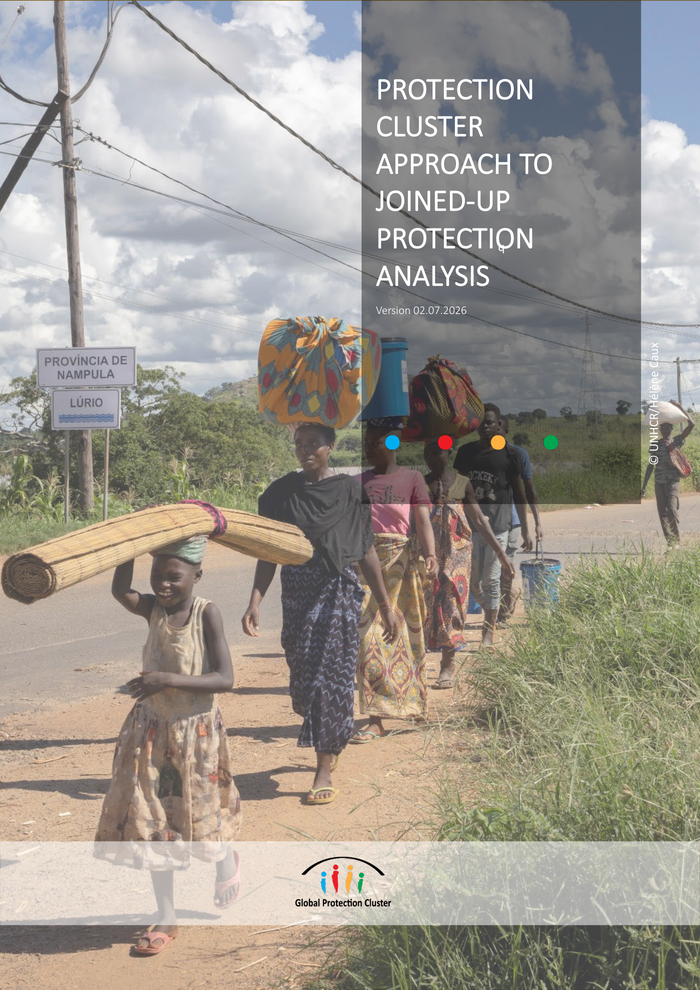
Country: World Sources: Protection Cluster, UN High Commissioner for Refugees Please refer to the attached file. The Protection Cluster coordinates joined-up protection analysis of the crisis and risks environment as foundational to its core functions. To better inform protection service delivery, protection analysis is the starting point for designing multi-stakeholder operational response strategies that are context-specific, localized, and prioritized. The response strategy’s design hinges on a contextual analysis of the severity of risks, considering the capacities and constraints of stakeholders, including access and existing response coverage, to ensure interventions are tailored and effectiveness maximized. In the face of escalating humanitarian and protection crises worldwide, identifying drivers and factors exposing individuals and communities to harm is critical to the Protection Cluster response. Protection risks encompass a spectrum of threats and vulnerabilities faced by populations, including exposure to violence, abuse, exploitation, discrimination, and deprivation of basic rights. It is essential to recognize the multifaceted nature of these risks and their profound impact on individuals and communities, often exacerbating pre-existing vulnerabilities and inequalities. Prioritizing protection risks is a fundamental prerequisite for Protection Clusters to provide wellcoordinated humanitarian and protection response and uphold human rights, dignity, integrity, and safety in crisisaffected contexts. Based on this analysis, the Protection Cluster response brings together core programming modalities to address priority protection risks. It involves assessing, preventing, and responding to immediate harm and abuse, restoring people’s dignity and living conditions, and fostering an environment conducive to the full respect of individual rights, considering the operating environment, capacities, and context. In humanitarian crises, the overarching aim is to reduce or halt harm and abuse, where clusters play a pivotal role in defining early action and rapid response. It is critical that protection response strategies ensure a robust focus on responsive and remedial measures for high-severity risks, including through direct assistance and service delivery, as opposed to solely environment-building efforts. To this end, Protection Clusters coordinate continuous protection analysis to assess the severity of 15 protection risks to define with respective partners the best strategy, approach, and method to identify who is most in need of protection services. This approach supports the isolation of additional drivers and effects of protection risks that need environmental building or other types of action beyond the provision of protection services.



GrowthPakistan brings you the latest news to keep an eye on Pakistan’s startup ecosystem. Business keeps you growing when you stay aware of your competitors' moves. GrowthPakistan offers Business, Tech, Global Tech, Global, Auto, and Startup News straight from industries all around the globe. This platform will help you identify upcoming opportunities not only in Pakistan but worldwide.
Email : growthpakistan@gmail.com
Whatsapp : +92320-9497079
© growthpakistan