


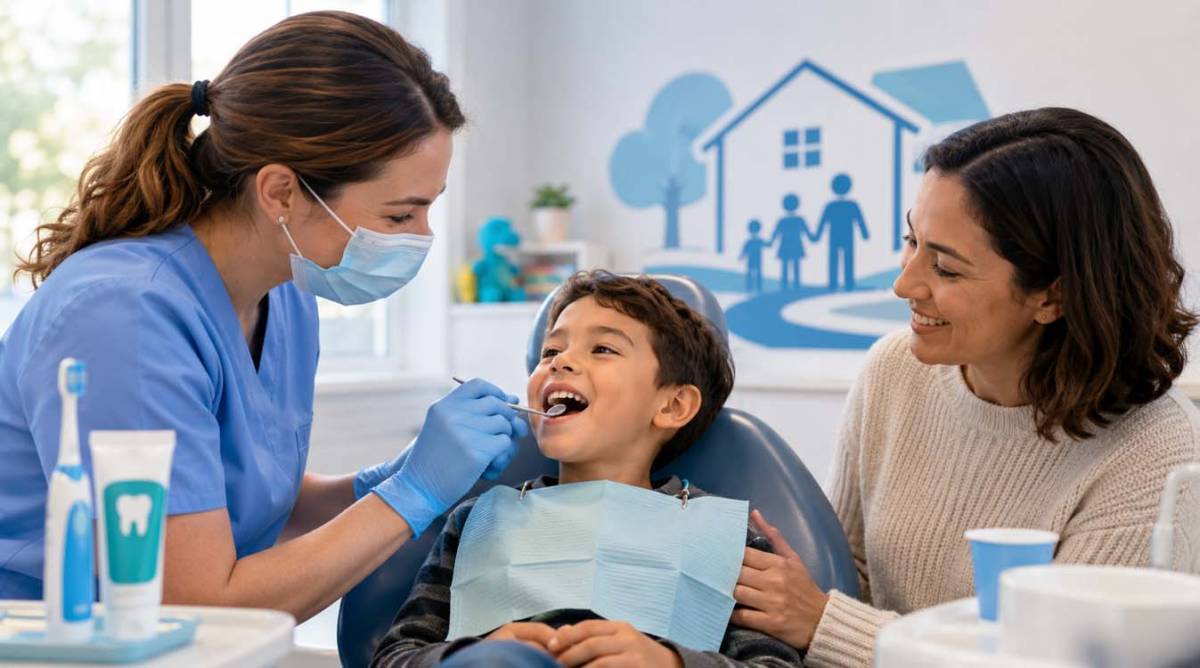
LONDON: NHS England has released its first comprehensive national standards for children’s oral health, introducing a new framework designed to deliver dental care closer to home, strengthen prevention and improve access to age-appropriate services for children and young people. The updated guidance replaces NHS England’s 2018 clinical standard for paediatric dentistry and establishes a structured, level-based model for the delivery of oral healthcare across primary dental practices, community dental services, hospital dental services and tertiary paediatric centres. A central principle of the new standards is that children should receive care in the least complex and most accessible setting appropriate for their needs. The guidance encourages greater integration between dental services and wider healthcare and community systems, including health visitors, school nurses, general practitioners, paediatric services, social care providers, safeguarding teams and families. The standards also recommend using virtual pathways and collaborative care models to support treatment delivery closer to home and reduce unnecessary referrals to specialist services. Prevention at the centre of children’s dental care The framework places a strong emphasis on prevention and minimally invasive dentistry. It states that every interaction between a child and a dental professional should include preventive advice on oral hygiene, toothbrushing practices, fluoride use, healthy diet, sugar intake and, where relevant, tobacco and alcohol use. The standards encourage evidence-based approaches that prioritise tissue preservation, early intervention and child-centred care, with the aim of reducing the need for operative dental treatment and preventing avoidable oral diseases. Dental teams are also advised to undertake comprehensive caries and periodontal risk assessments and develop personalised care plans based on each child’s oral health needs. Child- and family-centred approach The guidance emphasises that children’s best interests should remain central to all decision-making processes and that young patients should be involved in discussions according to their age, maturity and understanding. It also calls for communication that is inclusive, developmentally appropriate and accessible to parents and carers, including families with additional needs, communication difficulties or language barriers. The standards further highlight the safeguarding responsibilities of dental professionals, including recognising, documenting and responding appropriately to concerns relating to neglect, abuse or vulnerability. New levels of care for children The framework introduces a stepped model of care designed to ensure that children receive treatment from appropriately trained professionals based on the complexity of their conditions. The levels range from general dental practice services for low-complexity cases to consultant-led and tertiary services for highly complex conditions, including craniofacial abnormalities, severe developmental anomalies and cases requiring advanced multidisciplinary management. Experts welcome guidance but raise workforce concernsThe standards have been described by paediatric dentistry leaders as a significant milestone in children’s oral healthcare. Dr. Oosh Devalia, President of the British Society of Paediatric Dentistry (BSPD), said the document provides, for the first time, a single national framework supporting dental professionals across all levels of paediatric care while setting benchmarks for quality, safety and equity. However, some experts have cautioned that implementing the standards may prove challenging without sufficient workforce capacity. Professor Martyn Cobourne, Dean of the Faculty of Dental Surgery at the Royal College of Surgeons of England, noted that tooth decay remains the leading cause of hospital admissions among children aged five to nine years in the UK and stressed that improving access to care will require sustained investment in the NHS dental workforce and service reforms. NHS England said commissioners, providers and managed clinical networks can use the standards to review and update local service pathways. Where services do not yet meet the new requirements, implementation is expected to occur gradually through agreed timelines. The standards will undergo review every five years or earlier if healthcare policies change. The new framework reflects growing international recognition that children’s oral health outcomes can be significantly improved through preventive care, integrated community services and timely access to appropriate treatment, approaches that are increasingly relevant to health systems worldwide. Stay informed, stay alert! pk/30-Jun-2026/new-childrens-oral-health-standards-aim-to-bring-dental-care-closer-to-home” target=”_blank” rel=”nofollow noopener noreferrer”>Read full story on Dental News



GrowthPakistan brings you the latest news to keep an eye on Pakistan’s startup ecosystem. Business keeps you growing when you stay aware of your competitors' moves. GrowthPakistan offers Business, Tech, Global Tech, Global, Auto, and Startup News straight from industries all around the globe. This platform will help you identify upcoming opportunities not only in Pakistan but worldwide.
Email : growthpakistan@gmail.com
Whatsapp : +92320-9497079
© growthpakistan