


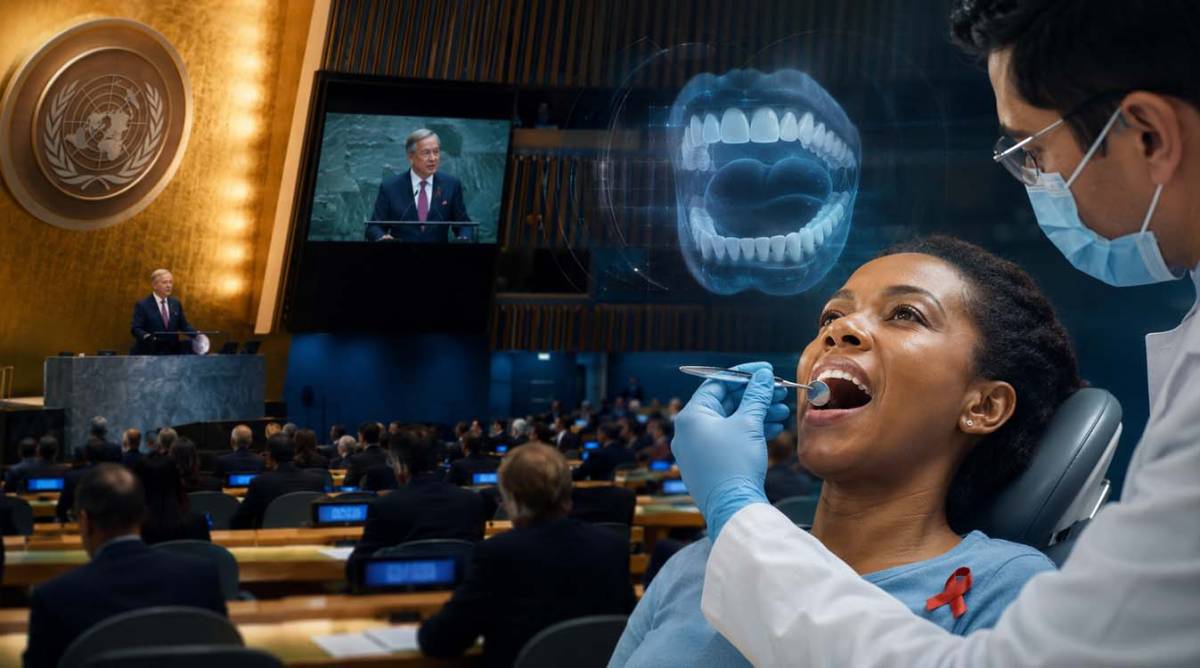
NEW YORK: Global leaders, policymakers, health experts, civil society organizations, and community representatives have gathered at the United Nations Headquarters for the 2026 High-Level Meeting (HLM) on HIV/AIDS, a two-day summit aimed at reviewing progress and renewing commitments to end AIDS as a public health threat by 2030. As the meeting began, the FDI World Dental Federation (FDI) called on governments and stakeholders to ensure that oral health is not left behind in the global HIV response, highlighting the often-overlooked role of dental professionals in improving outcomes for people living with HIV. Oral health must be part of the HIV response In a statement issued as the summit commenced, FDI emphasized that oral diseases are among the most common and visible manifestations of HIV infection and often serve as early indicators that can help identify undiagnosed cases. The federation noted that oral healthcare remains one of the most unmet needs among people living with HIV and warned that HIV-positive individuals face an increased risk of persistent human papillomavirus (HPV) infections and HPV-related cancers, including oropharyngeal cancers. According to FDI, integrating oral health into HIV services can expand access to care, reduce stigma, and strengthen community-based healthcare systems. Building on the Bali Declaration The federation’s appeal draws on principles outlined in the Bali Declaration on Oral Health in HIV/AIDS, adopted during the 8th World Workshop on Oral Health in HIV/AIDS (WW8) held in Bali, Indonesia, in September 2019. The workshop, jointly convened by the Indonesian Dental Association and the International Association for Dental Research, brought together 640 delegates from 36 countries, including dentists, physicians, oral medicine specialists, and public health experts. Delegates concluded that improving awareness among healthcare professionals and the public could significantly strengthen efforts led by the Joint United Nations Programme on HIV/AIDS (UNAIDS) to eliminate the epidemic by 2030. The declaration emphasized the need to combat stigma, improve access to treatment, and recognize oral health professionals as integral members of multidisciplinary HIV care teams. Dentists have a role in ending AIDS At the time, then FDI President Dr. Gerhard K. Seeberger underscored the importance of the declaration, stating: “This Declaration is a key step in affirming the role of oral health professionals as essential players in delivering effective, multi-disciplinary care to patients living with HIV.” The Bali Declaration also called for HIV education to become an essential part of dental curricula and urged public health programs to increase awareness of HIV testing and the role dental professionals can play in facilitating early diagnosis and reducing stigma. Why oral manifestations matter Healthcare experts have long recognized that oral conditions such as candidiasis, oral hairy leukoplakia, periodontal disease, and Kaposi’s sarcoma may represent some of the earliest signs of HIV infection. These manifestations can provide opportunities for dentists and oral medicine specialists to contribute to timely diagnosis and referral, particularly in underserved communities where access to broader healthcare services may be limited. Experts also point to mounting evidence linking HIV infection with persistent HPV infections and a higher risk of HPV-associated malignancies, making oral healthcare an increasingly important component of comprehensive HIV management. A critical moment ahead of 2030 The 2026 High-Level Meeting on HIV/AIDS, held on June 22 and 23 at UN Headquarters in New York, is expected to review progress made since the 2021 Political Declaration and establish new commitments to accelerate action against HIV over the next five years. While advances in treatment and prevention have transformed HIV from a fatal disease into a manageable chronic condition for millions, global health leaders warn that persistent inequalities, stigma, funding gaps, and unmet healthcare needs continue to threaten progress. For oral health advocates, the message is clear: achieving the goal of ending AIDS by 2030 will require integrated, people-centered care in which dentistry has a much larger role to play. Stay informed, stay alert pk/23-Jun-2026/fdi-urges-oral-health-focus-as-un-launches-2026-hiv-aids-summit” target=”_blank” rel=”nofollow noopener noreferrer”>Read full story on Dental News



GrowthPakistan brings you the latest news to keep an eye on Pakistan’s startup ecosystem. Business keeps you growing when you stay aware of your competitors' moves. GrowthPakistan offers Business, Tech, Global Tech, Global, Auto, and Startup News straight from industries all around the globe. This platform will help you identify upcoming opportunities not only in Pakistan but worldwide.
Email : growthpakistan@gmail.com
Whatsapp : +92320-9497079
© growthpakistan