

Country: World Sources: Concern Worldwide, International Federation of Red Cross and Red Crescent Societies, London School of Economics and Political Science, Mercy Corps, Plan International, Practical Action Please refer to the attached file. Around the world, communities are taking action to protect lives and livelihoods from floods, droughts, heatwaves and storms. However, as these events increase in both frequency and intensity, it is clear that the pace of adaptation is insufficient. Public finance structures that shape everyday climate change adaptation (CCA) and disaster risk reduction (DRR) remain constrained, fragmented, and too often disconnected from the people most exposed to climate hazards. Climate resilience cannot be built from the top down. The work of the Zurich Climate Resilience Alliance, of which Mercy Corps is a member, shows that when communities have the authority, resources, and support to act, adaptation is more sustainable and deeply rooted in their priorities. Despite the growing momentum on the principles for locally led adaptation, their full implementation remains the exception rather than the norm. Funding for locally led adaptation is constrained and decision-making is often centralized. The report distils what the Alliance has learned through working directly within planning and budgeting processes in 10 countries: Bangladesh, Bolivia, Indonesia, Jordan, Kenya, Malawi, Nepal, Nigeria, the Philippines, and Vietnam. It shows how locally led adaptation can be institutionalized when community priorities, evidence-based planning, and public finance are aligned.
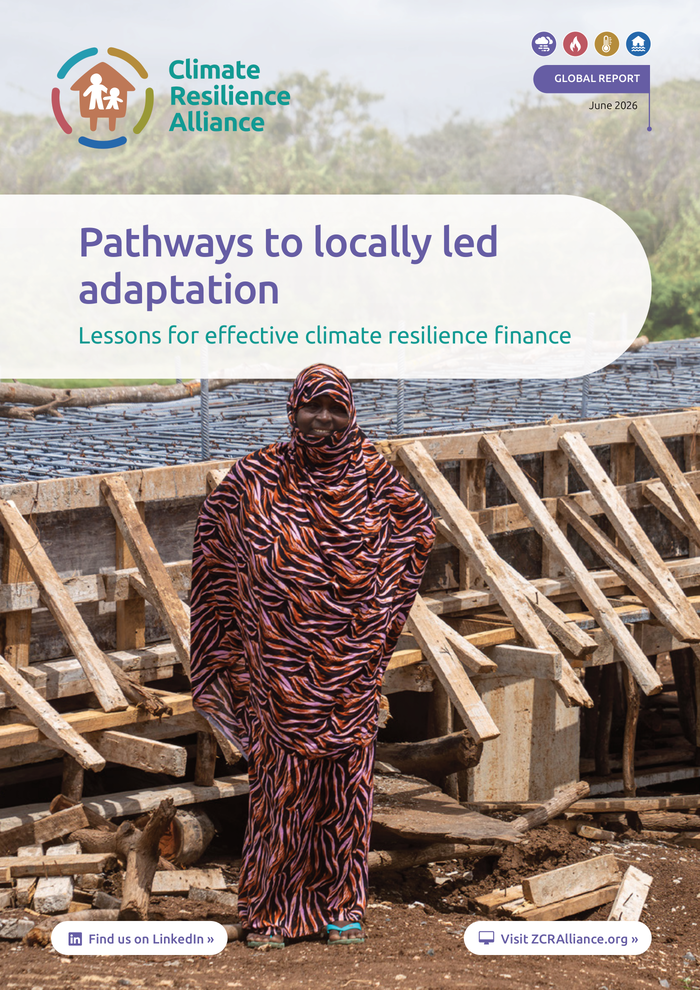
World: Pathways to Locally Led Adaptation: Lessons for effective climate resilience finance (June 2026)

RELATED ARTICLES


