


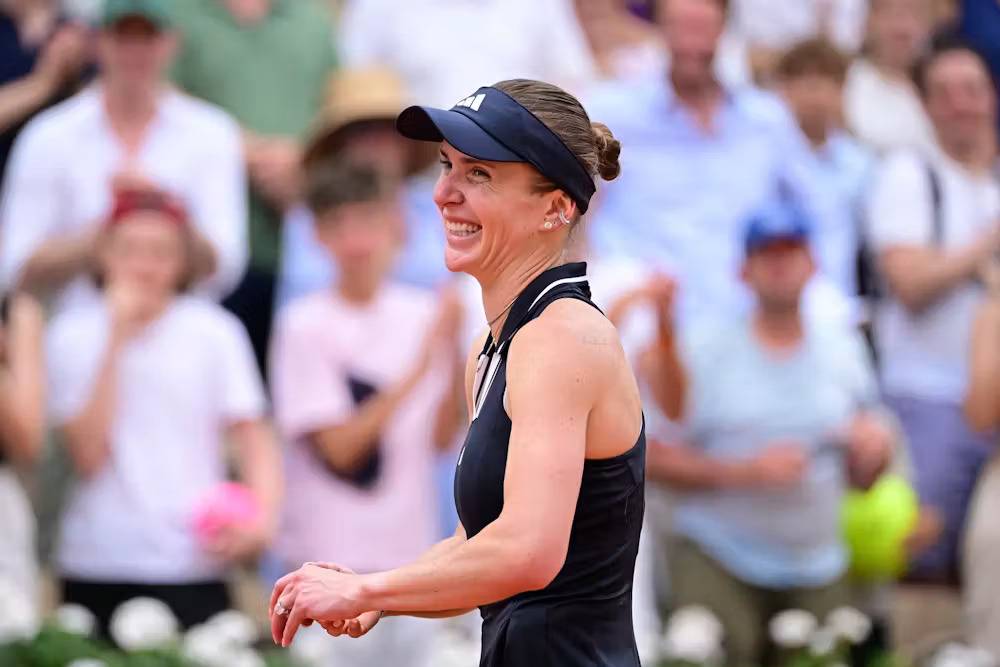
Elina Svitolina’s reaction said it all. After defeating Belinda Bencic to book her place in the Roland-Garros quarterfinals, she was already thinking ahead, not just about the next match, but about history. For the first time in the Open era, Ukraine will have a player in the women’s singles semifinals at Roland-Garros. That guarantee comes after Svitolina set up an all-Ukrainian quarterfinal clash with Marta Kostyuk, ensuring that one of the country’s two leading stars will continue their remarkable run in Paris. “I feel like it’s going to be an exciting battle for Ukraine; that there will be one Ukrainian in the semis. I think it’s really cool. It never really happened before, so yeah, it’s exciting, ” Svitolina said. Maryam Nawaz directs timely completion of Punjab road projects Both players arrive at the match carrying far more than tennis ambitions. With the ongoing situation in Ukraine, each has repeatedly spoken about perspective, resilience and the emotional weight of representing their country on the global stage. Tennis remains their profession, but never their only focus. On court, however, the contrast promises a high-level battle. Svitolina, 31, world No. 7, brings experience, steel and a reputation as one of the Tour’s fiercest competitors, having twice recovered from a set down to reach this stage. Kostyuk, 23 and ranked No. 15, enters in red-hot form, riding a 16-match winning streak built on a newfound consistency and mental clarity. Anter Isaac re-elected chair as Football Australia approves major reforms “I would say right now the biggest thing that I do is that nothing is that big, like not one point is that important, ” Kostyuk explained. “There is another one always coming. ” The head-to-head is finely balanced at one win apiece, underscoring how little separates the two ahead of their biggest meeting yet. Svitolina represents controlled intensity shaped by years at the top; Kostyuk brings fearless momentum and the confidence of a breakthrough season. Both players have also spoken openly about how events back home have reshaped their outlook on life and sport. For Kostyuk, it has brought a calmer perspective. For Svitolina, it has reinforced her belief in resilience through adversity. “It’s important that it doesn’t break you mentally, ” Svitolina said. “You can have bad days, but life is still good. ” Whatever the outcome on Court Philippe-Chatrier, Ukraine is guaranteed a semifinalist, a historic milestone for a nation whose players continue to carry both personal ambition and national pride onto tennis’s biggest stages. Australia announces FIFA World Cup 2026 squad Earlier in the day on Chatrier, rising star Mirra Andreeva faces Sorana Cirstea, who is enjoying one of the most unexpected late-career surges in recent memory. The Romanian, in her final season on tour, has rediscovered freedom in her game and arrives in the quarterfinal without dropping a set. “I’m really enjoying it. I think the last couple of years I realised how much I love this sport, ” Cirstea said. Andreeva, however, has already proven she is comfortable on the big stage, ending Cirstea’s run earlier this season in Linz and continuing her own rapid rise into the top 10 conversation. The final quarterfinal sees Alexander Zverev face 19-year-old Rafael Jodar, one of the breakout stories of the clay season. The German, now one of the tournament favourites, acknowledged the freedom young players enjoy but knows the responsibility that comes with his own position at the top of the draw. ECP allows Nawaz Sharif to campaign in Gilgit-Baltistan elections “I will focus on the matches that are ahead of me, ” Zverev said. “That’s the only thing I can control. ” From a historic Ukrainian clash to emerging teenage talent and seasoned contenders, Roland-Garros moves into a defining stage where experience, momentum and destiny all collide on the red clay of Paris.



GrowthPakistan brings you the latest news to keep an eye on Pakistan’s startup ecosystem. Business keeps you growing when you stay aware of your competitors' moves. GrowthPakistan offers Business, Tech, Global Tech, Global, Auto, and Startup News straight from industries all around the globe. This platform will help you identify upcoming opportunities not only in Pakistan but worldwide.
Email : growthpakistan@gmail.com
Whatsapp : +92320-9497079
© growthpakistan